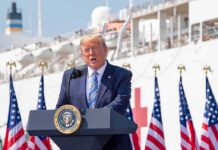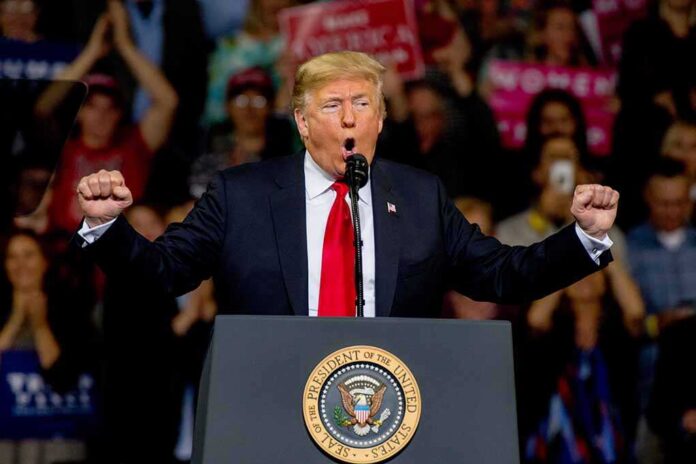
Trump said he will move the hot-button ads off taxpayer funds and pay for them himself.
Story Snapshot
- White House-backed TV spots drew bipartisan pushback over taxpayer funding.
- Trump said his super PAC, or his own money, will cover the ads going forward.
- Officials defended the commercials as public service announcements, not campaign ads.
- Lawmakers questioned the spending levels and the timing before midterms.
What Triggered The Funding Flip
National outlets reported that several television ads featuring President Trump aired with “Paid for by the U.S. Government” on screen. Critics in both parties said that crossed a line into political promotion with public dollars, even if labeled as public service messages. The White House said the spots were educational and patriotic, not political. Trump then said he would stop billing taxpayers and shift the cost to his super PAC or personal funds, framing it as a simple solution.
Ad tracking estimates put federal spending on the initial wave in the low millions, with larger sums cited as allocated within the Department of Homeland Security budget for the broader campaign. The message and tone echoed themes from Trump’s prior campaign material, which fueled claims that the content looked like an election ad more than a neutral public notice. The debate was not about a single line in a script. It was about who pays, what counts as public information, and when the line to politics is crossed.
The Ethics And Law Fight Everyone Saw Coming
Democrats pressed for watchdog reviews and said the ads could violate bans on propaganda with federal funds. Some Republicans said the message was fine but should not hit taxpayers. That bipartisan chorus made the funding optics hard to defend as Election Day neared. The White House answer stayed the same: these are public service announcements, not campaign spots, and similar messages appear under past administrations too. The legal bottom line will turn on purpose and content, not labels.
On the facts, the ads did not point people to a service, deadline, or safety alert. They presented a case for national direction and praised results. That is why critics argued they deliver political value that campaigns usually buy themselves. From a conservative view of limited government, moving such messaging off the federal tab lands on common sense. Private actors should fund persuasion, not taxpayers. Trump’s pledge aligns with that basic value and lowers the temperature fast.
Why The Payment Shift Matters Now
Shifting the bills to a super PAC or personal funds changes the arena. Once private money pays, campaign and disclosure rules apply, not federal appropriations limits. That switch removes the strongest critique and weakens calls to pull the ads outright. It also undercuts the charge that the administration is using government resources to boost the President’s image weeks before voting. The content can still spark debate, but the taxpayer hook—the part most people resent—drops away.
Voters rarely follow procurement details, but they feel the difference between “you paid for this” and “he paid for this.” The first breeds anger and suspicion. The second invites a fair contest of ideas. When a message sounds like a campaign pitch, the safest rule is to route it through campaign channels. That is not a partisan insight; it is basic stewardship. Trump’s move accepts that and, for now, puts the bill where it belongs—off your wallet and onto his.
Sources:
yahoo.com, democrats-judiciary.house.gov, ibtimes.co.uk, ms.now
© targetdailynews.com 2026. All rights reserved.