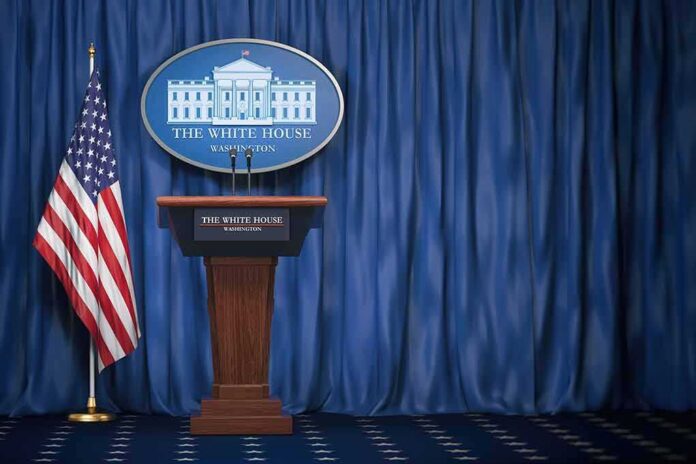
The White House turned a media feud into policy theater by posting an official “Fake News CNN” compilation — while defending its power to sideline the network from the press corps.
Story Snapshot
- The White House released a “Fake News CNN” video on its official site.
- Trump’s team argues press access is a privilege, not a right.
- A federal judge temporarily restored CNN and others’ access, citing due process.
- The legal fight now tests how far presidents can shape the press gate.
What The Video Did, And Why It Matters
The White House published a video labeled “Fake News CNN” on October 2, 2026, on its official website. The montage highlights President Trump mocking CNN and calling it corrupt and low rated during exchanges with reporters. The post came as the administration argued that years of false reporting justified limits on CNN’s access to the White House press campus. The move took a long-running clash and stamped it with the White House seal, raising the stakes beyond social media sparring.
White House officials backed the video’s message with a written statement titled “White House Access Is a Privilege — Not a Right.” The statement said the First Amendment protects publishing, but it does not guarantee a hard pass, a briefing room seat, or a place in the press pool. It said President Trump removed CNN, MS Now, and Politico from the grounds after years of false reporting. That framing set a clear theory of power: access is discretionary and can be pulled for cause.
The Legal Recoil In Federal Court
A federal judge quickly pushed back. Judge Timothy Kelly issued an order restoring access for CNN, MS Now, and Politico for two weeks. He said the White House revoked their badges without “constitutionally adequate due process.” His ruling leaned on decades-old federal appeals court precedent in Washington, which requires notice and a chance to respond before the government strips press credentials for non-security reasons. The judge did not settle everything, but he froze the ban while the case moves ahead.
News organizations asked the court to extend the block and sought a preliminary injunction to keep access intact while the case proceeds. Their filings argue the ban likely violates the First Amendment and due process and causes harm to the public’s right to timely information about the government. CNN and allied outlets also said the restrictions functioned as retaliation for coverage the White House disliked. Major television networks issued a rare joint statement warning that no administration should restrict a news group because it objects to its reporting.
Power To Shape Access Versus Rules That Restrain It
Two truths can be held at once. Presidents choose who they interview and can skip outlets for exclusives. But once the White House opens general facilities to the press, courts have said it cannot revoke access arbitrarily or based on viewpoint and must give due process first. The administration argues that chronic inaccuracy is a valid reason to pull credentials and that access is not a constitutional guarantee. The judge’s initial order says process still matters, and likely the reason must be more than bare dislike of coverage.
The White House Dropped a CRYPTIC Video… https://t.co/RwpjZXksaR via @YouTube
— velmahelker (@velmahelker) September 30, 2026
The Department of Justice added fuel by defending the bans in court and pressing a broad view of executive control over campus access. If the courts accept that position, presidents could set tougher standards and revoke more passes. If the courts reject it, the ruling could harden due process rules and narrow reasons that justify bans. Either way, this case will echo beyond CNN. Future presidents, of both parties, will operate under the lines drawn here.
How The Showmanship Plays With Voters
The compilation video is not just a clip reel; it is a tactic. It rallies supporters, defines a foil, and primes the public for a legal fight. From a conservative lens, the case for tough gatekeeping rests on fairness, accuracy, and order. A press pass should be earned and kept by honest work, not treated as an entitlement. But the law draws limits. The safer course is to set clear standards in writing, apply them evenly, and give due process that will stand in court.
Policy that can survive scrutiny beats stunts that spark lawsuits. The White House can keep making its case about false reporting. It can publish corrections data, cite specific stories, and lay out objective rules tied to conduct. That approach would honor the conservative principles of rule of law and equal treatment, and it would shrink the courtroom risk flagged by Judge Kelly’s early order. The video got clicks. The rulebook will decide who holds the mic tomorrow.
Sources:
whitehouse.gov, thewrap.com, npr.org, edition.cnn.com
© targetdailynews.com 2026. All rights reserved.