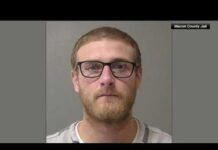
A self-proclaimed Pennsylvania Senate candidate landed in federal custody after leaving voicemails so explicit and violent that they triggered an immediate multi-agency response from the FBI, Secret Service, and Capitol Police.
Quick Take
- Raymond Chandler III arrested in Wilkinsburg for leaving multiple death threat voicemails targeting President Trump, an unidentified congressman, and the congressman’s daughter
- Threats included graphic descriptions of throat-slitting and explicit instructions to assassinate the president with a firearm in the Oval Office
- Chandler self-identifies as a Democrat running for U.S. Senate against John Fetterman in 2028, promoting his candidacy via YouTube and neighborhood flyers
- Federal agents conducted a hours-long search of his Wilkinsburg home; court documents detail the recorded voicemails as evidence
- The case underscores federal zero-tolerance policy toward political violence threats in an increasingly polarized climate
From Campaign Flyers to Federal Custody
Raymond Chandler III’s path from neighborhood Senate candidate to federal defendant unfolded over roughly two weeks in late April 2026. The Wilkinsburg resident, who distributed campaign flyers throughout his neighborhood and maintained a YouTube channel promoting his 2028 Senate run against incumbent John Fetterman, allegedly escalated from online political commentary to recorded death threats. On April 18, Chandler left a voicemail describing a violent scenario where 1,000 people would slit the throats of an unidentified congressman, his daughter, and others—motivated, according to court documents, by claims of wealth concentration in America.
The Escalation: From Rhetoric to Assassination Instructions
Eleven days later, on April 29, Chandler allegedly crossed a threshold that triggered immediate federal intervention. In a voicemail to the same congressman, he provided step-by-step instructions for assassination: take a firearm, walk into the Oval Office, place the gun to the president’s head, and pull the trigger. The congressman’s office, alarmed by the escalating pattern of calls, forwarded the recordings to the FBI. Federal officials characterized the voicemails as “chilling,” a descriptor that captures both their graphic nature and the methodical progression from violent imagery to actionable instructions.
Federal Response: Speed and Coordination
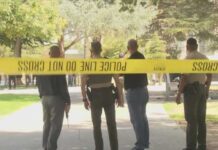
The arrest came swiftly. FBI Pittsburgh and the U.S. Secret Service, working with U.S. Capitol Police and the U.S. Attorney’s Office for Western Pennsylvania, moved to take Chandler into custody at his Wilkinsburg home on a Friday in late April. Agents spent hours conducting a thorough search of the residence, seizing evidence as investigators documented the threat pattern. The coordinated response reflected federal protocol for cases involving threats against the president and members of Congress—a protocol refined and reinforced in recent years amid heightened political tensions.
The Candidate Behind the Threats
Chandler’s self-identification as a Senate candidate adds a layer of complexity to the case. While he distributed flyers and maintained online presence positioning himself as a Democrat challenging Fetterman, there is no indication he achieved ballot status or gained institutional Democratic Party backing. His YouTube channel and neighborhood signage suggest a fringe candidacy operating outside traditional political infrastructure. Court documents reveal his motivation included anti-Trump rhetoric—referring to the president as “the antichrist” and a “liar”—paired with economic grievances centered on wealth inequality.
Pennsylvania Democrat Senate Candidate Raymond Chandler Arrested for Threatening to Kill President Trump https://t.co/IiLP7QjH6R #gatewaypundit via @gatewaypundit
— jerry (@jerry6724832032) May 4, 2026
The Broader Implication
The case reinforces a critical distinction in modern American politics: federal law enforcement treats recorded, specific threats against sitting presidents and members of Congress with absolute seriousness, regardless of the perpetrator’s political affiliation or fringe status. Chandler’s arrest, while rooted in his individual actions, occurs within a broader context of heightened vigilance following January 6, 2021, and ongoing concerns about political violence. The swift multi-agency response demonstrates that infrastructure exists to identify, investigate, and neutralize threats rapidly—a system tested repeatedly in recent years and now operating at full capacity.
Sources:
Wilkinsburg Man arrested: Threats to Trump & Congress
Wilkinsburg man charged with threatening Trump, family of senator