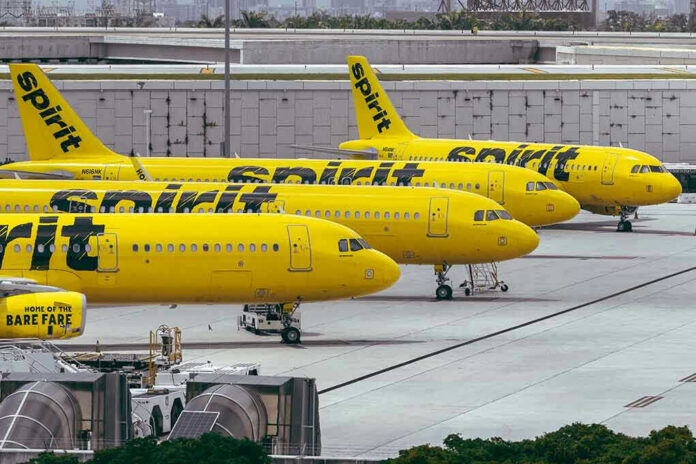
A viral push to “crowdfund” Spirit Airlines is racking up headline-grabbing pledges, but the numbers mask legal, financial, and logistical hurdles that could leave supporters grounded.
Story Snapshot
- Supporters pledged more than $132 million within days, but no money has been collected and pledges are non-binding [1].
- The campaign’s TikTok videos drew millions of views, fueling rapid sign-ups and website crashes [1][2].
- Organizers target $1.75 billion to outbid Wall Street, citing a cooperative model with equal votes per backer [1].
- Experts warn bankruptcy courts will favor real financing, not viral momentum, and major regulatory barriers remain [1].
What The Viral Pledges Actually Mean
Reports state the campaign quickly logged more than $132 million in non-binding pledges from tens of thousands of people after Spirit’s shutdown, propelled by attention on TikTok and short-video platforms [1][2]. Organizers set a minimum pledge near the cost of a one-way ticket and tout equal votes per participant in a cooperative structure. However, no money has been transferred, and the figures represent expressions of interest only. Website traffic spikes and social buzz are not proof of capitalization or investor due diligence [1].
Backers aim to raise $1.75 billion to acquire Spirit’s assets and preempt private equity bids, invoking the 2012 Jobs Act’s equity crowdfunding provisions as a pathway to convert pledges later [1]. The proposal cites involvement from lawyers, marketing specialists, and aviation enthusiasts to formalize a bid. Yet organizers acknowledge they remain in a “pledge phase,” with legal review underway and no formal offer submitted to Spirit’s bankruptcy proceedings. That gap between intent and binding financing is decisive in court-supervised liquidations [1].
The Missing Pieces: Court, Cash, And Certification
Bankruptcy courts prioritize creditor recovery backed by verified capital and executable plans, not enthusiasm. The group has not filed an acquisition bid, formed a purchasing entity tied to a docket, or posted proof of funds for the court to evaluate [1]. Aviation experts caution that distressed airline assets are typically parceled to carriers or buyers with financing in place and operational credibility. Without secured funding and a detailed transition plan, a viral movement faces long odds against professional bidders [1].
The operational checklist is unforgiving. Any restart requires aircraft access or leases, approval from the Department of Transportation and the Federal Aviation Administration, safety programs, maintenance control, union and workforce negotiations, and liquidity for fuel and operations. Public statements mention “Spirit 2.0” ideals like affordable fares and capped executive pay, but they do not detail certificates, manuals, crews, or near-term working capital. No plan is outlined for rehiring or retraining at scale or for near-term revenue while systems are rebuilt [1].
Social Momentum Versus Financial Reality
The videos powering this surge tally millions of views, and media coverage amplified the appeal of a Green Bay Packers-style cooperative where each backer gets one vote [1][2]. That populist framing resonates with Americans tired of faceless Wall Street deals and airline consolidation. Still, viral energy often fades before legal deadlines and financing milestones arrive. Even optimistic pledge totals remain far below the $1.75 billion target, and reports vary widely on average pledge size, reflecting volatility rather than reliable investor depth [1].
A TikToker launched a website to crowdfund the purchase of defunct 'Spirit Airlines', receiving over $88 million in pledges. https://t.co/OyxI0ndcx9
— Tallahassee Democrat (@TDOnline) May 4, 2026
Skepticism from industry veterans centers on feasibility in a liquidation timeline where assets move quickly to buyers who can close. Analysts argue that if an independent revival pencil‑ed out, it would need robust liquidity and immediate managerial execution, not future conversions from casual online sign-ups. Media framing frequently treats the movement as a curiosity, emphasizing novelty over substantiated capacity, which underscores how far organizers must go to win court confidence and satisfy regulators [1][2].
Why This Matters To Conservative Travelers
Consumers deserve more competition and lower fares, not fewer choices shaped by financial engineering that leaves families paying more. Grassroots investors stepping up reflects a healthy distrust of concentrated power and the desire to hold corporations accountable. But prudent stewardship also demands transparency, rule of law, and real numbers. A pledge page cannot replace certified financing, audited compliance, and a safety-first operating plan the Department of Transportation and Federal Aviation Administration will accept [1].
Conservatives value markets that reward discipline and personal responsibility. If this cooperative concept becomes a serious bid, supporters should demand third‑party verification, clear governance, and a timeline tied to bankruptcy court requirements. Until pledges convert into regulated investments, an entity appears on the docket, and an operational roadmap clears regulators, this remains a viral promise rather than an airline rescue. Enthusiasm is welcome; due diligence is non‑negotiable [1].
Sources:
[1] Web – Thousands support a TikTokers call to crowdfund Spirit. Could it …