Two Dan Sullivans on one Alaska ballot lit a fuse that reached the governor’s desk and the courts.
Story Snapshot
- Report says Democratic allies encouraged a second “Dan Sullivan” to run.
- Election official initially flagged the filing as meant to mislead.
- Alaska’s governor ordered a state investigation; federal lawyers went to court.
- State high court kept the second Sullivan on the ballot.
What the reporting says happened and why it matters
The New York Times, echoed by national outlets, reported texts, interviews, and documents that tied allies of Mary Peltola and national Democratic staff to Daniel J. Sullivan Jr.’s entry. The alleged goal was simple: siphon votes from incumbent Republican Senator Dan S. Sullivan by placing a near-name twin on the same ballot. That tactic has a long shadow in American politics, but Alaska’s case did not stay in the shadows for long.
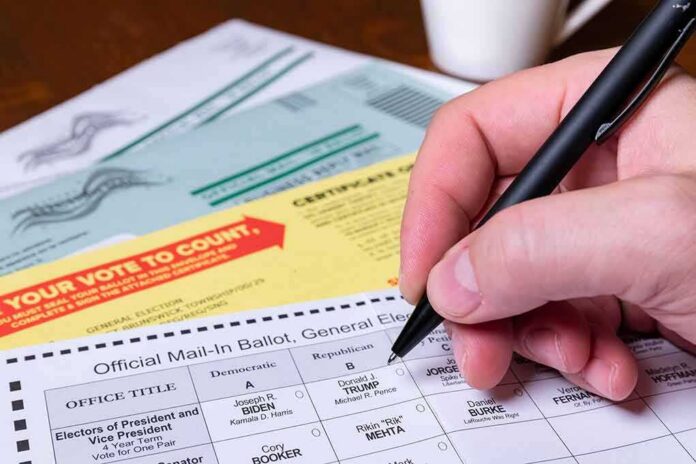
The ballot listed both men: Dan S. Sullivan, the Republican incumbent, and Daniel J. Sullivan Jr., an unaffiliated retired teacher. News accounts described a strategy to draw support away from the incumbent through name confusion, a move that can sway close races under ranked-choice rules and crowded fields. A state election official initially concluded the filing aimed to mislead voters and compromise ballot neutrality. That warning raised the stakes on intent and fairness.
How state and federal officials reacted, fast
Governor Mike Dunleavy directed the Alaska Department of Public Safety to investigate whether laws were broken and whether civil or criminal action should follow. That signaled the state saw more than a quirky ballot moment; it saw a potential attack on election integrity. The United States Department of Justice sought court action to delay or block certification if confusion changed results. That move ensured the fight would not stay only in Juneau.
The Alaska Supreme Court, however, allowed Daniel J. Sullivan Jr. to remain on the ballot. The justices did not bless the alleged tactic; they found the legal challenge did not meet the statutory bar to remove him. That ruling kept the door open to voters, and to post-election scrutiny, but it also undercut claims that the candidacy was illegal on its face.
What the campaigns and players say, in their own words
Mary Peltola’s campaign denied any role in recruiting Daniel J. Sullivan Jr., saying the campaign had no involvement with either Sullivan and did not recruit any candidates. The Democratic Senatorial Campaign Committee also denied involvement. These denials, while clear, leave a gap between what some operatives or associates may have discussed and what the campaign formally authorized. That gap is the contested ground investigators must map with records and testimony.
Daniel J. Sullivan Jr. reportedly said he entered the race on his own. That claim, if backed by evidence of independent action and no material support, weakens the case for a coordinated scheme. If messages and documents show guidance or help from operatives, the opposite inference grows. On balance, the public record so far reports alleged coordination but does not prove criminal conduct. That keeps this in the realm of ethics, intent, and transparency, not yet charges.
What common sense says about names, votes, and rules
Voters deserve a ballot that does not play tricks. Same-name recruitment dares the line between hardball politics and manipulating citizens. The state official’s early finding about misleading purpose deserves weight because it centers voter clarity, not partisanship. Conservative values favor clean rules, open sunlight, and equal play. If staff encouraged a decoy to cloud a choice, that crosses a moral line even if it skirts a legal one. If nothing improper happened, sunlight will clear the air.
The next steps determine trust. Investigators should secure the texts and documents cited in the reports and track any support that touched the second candidacy. Courts and the public should see a record that shows who asked whom, who paid what, and why. Alaska’s ranked ballots and labels help reduce confusion, but guardrails do not excuse bad tactics. Names on ballots should reflect real choices, not trap doors. That is how you keep faith in elections that belong to the people.
Sources:
abc7.com, afp.com, washingtonexaminer.com, nativenewsonline.net, bbc.co.uk
© targetdailynews.com 2026. All rights reserved.