President Trump staged an Oval Office appearance with freed American Stephen Hubbard, then let one reporter ask the questions.
Story Snapshot
- Trump met Hubbard in the Oval Office and restricted questions to one reporter.
- Most of the press pool was blocked while CBS personnel and photographers were let in.
- Hubbard’s release from Russia was announced days earlier by multiple outlets.
- Trump said he asked Vladimir Putin directly and that no swap was made.
A tightly controlled Oval Office appearance
The White House allowed a small group into the Oval Office for Trump’s appearance with Hubbard. Reporters from the Associated Press, The Hill, the Daily Caller, and Center Square were kept outside. Still photographers entered. A CBS News crew entered. The White House then recognized one journalist, Jennifer Jacobs of CBS, to ask questions, and then escorted the group out, according to a contemporaneous account. The setup was not typical of a broad press conference, even in a small room.
Trump used the moment to underline his role in the release. He told reporters he had asked Russian President Vladimir Putin to free Hubbard and said there was no swap. He also argued that the United States did not give up anything in return, framing the move as a success without concessions. The narrow press access ensured that message reached viewers with little back-and-forth. That choice shaped the public’s first look at the reunion.
Who Stephen Hubbard is and how he came home
Hubbard is a retired American teacher who spent more than four years in Russian custody. His case drew attention as Russia’s relations with the United States worsened during the war in Ukraine. Newsrooms across the spectrum reported his release on October 21, 2026. Reports noted the presence of a United States envoy, developer Steve Witkoff, in Moscow, and cited Russian statements calling the release a goodwill gesture. Multiple outlets captured Hubbard’s return home and first steps back on U.S. soil.
Trump’s team highlighted his direct outreach to Putin. Russian accounts linked the decision to Trump’s request. That direct linkage is common in diplomacy when leaders want to show personal sway. It also lets both sides claim credit for a humane act. The point that matters to most families is simpler: Hubbard left a Russian prison and came home alive after years behind bars.
How the White House shaped access
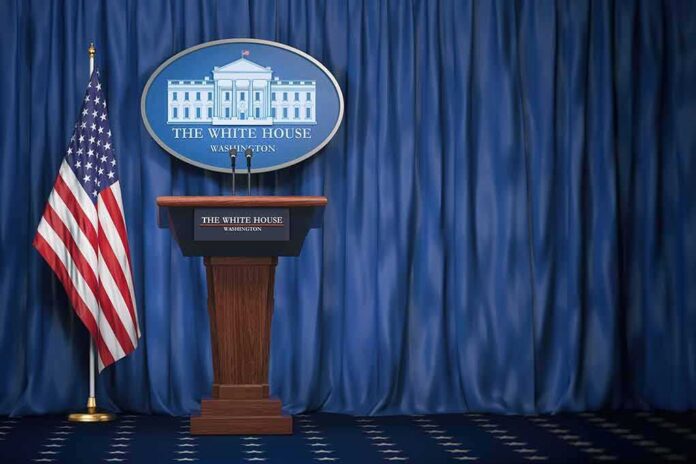
The Independent’s report laid out which outlets were kept out and who got in. The structure looked like a hybrid: television cameras and still photographers were present, but only one reporter asked questions on behalf of viewers. In small rooms like the Oval Office, space is tight. The traditional fix, for decades, has been the White House press pool, which rotates access among organizations so no president handpicks who gets the mic. That pool exists to make tight spaces fair.
Presidents of both parties have pushed the limits on access. The White House has argued that access is a privilege, not a right, and that prior administrations also excluded outlets in some cases. The better standard, rooted in American conservative values, is content-neutral fairness. Government should treat the press the same, even when questions are tough. Clear, even-handed pool rules protect credibility and prevent any leader from stage-managing scrutiny.
What the moment says about power, message, and media
The optics of one reporter asking questions in the Oval Office are the point. The White House showed a freed American and a president who said he got it done. The narrow format froze out follow-ups that might have shifted the storyline to sanctions or terms. That is message discipline by design. It is also a reminder of why process matters. When administrations choose the questioner, they choose the range of questions viewers hear.
Smart governance trusts sunlight. When the pool system does its job, tough questions land, but so do honest wins. Hubbard’s release is a win on its face. The way it was presented raised a separate, practical question: who gets to ask the nation’s questions in the people’s house. The country can hold both ideas at once. Celebrate a citizen’s freedom. Expect equal-access rules that let accountability breathe.
Sources:
reddit.com, cbsnews.com, nbcnews.com, detroitnews.com, bbc.co.uk, abc11.com, whitehouse.gov
© targetdailynews.com 2026. All rights reserved.