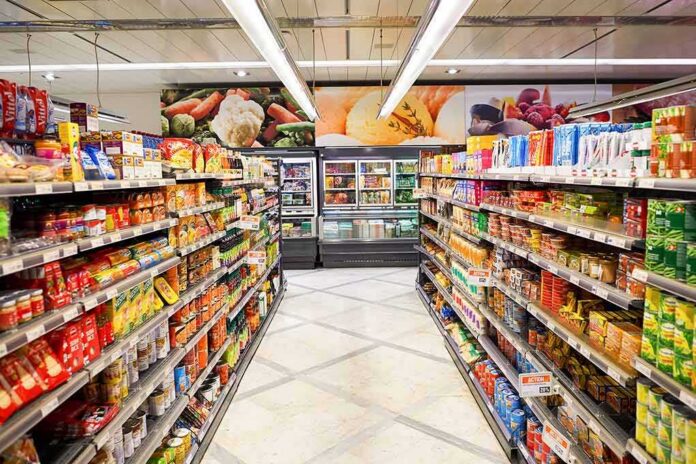
Grocery prices climbed again in 2025, and federal data confirm the squeeze on family budgets is real, even as officials in Washington argue over who caused it.
Quick Take
- Food-at-home prices rose 2.4 percent in 2025, according to the Bureau of Labor Statistics (BLS)
- Grocery prices remain far above pre-pandemic levels after huge jumps in 2022 and 2023
- Agriculture Secretary Brooke Rollins says some meals can cost about three dollars, a claim critics call out of touch
- Economists say tariffs, weather, disease, and labor costs all play a role, not just one cause
What The Numbers Actually Show
The Bureau of Labor Statistics reported that food-at-home prices rose 2.4 percent from December 2024 to December 2025, with a 0.7 percent jump in December alone. That increase touched most of the grocery cart, not just one item. Five of six major food categories got more expensive last year, and meat, poultry, fish, and eggs rose nearly 4 percent.
Slower inflation does not mean cheaper groceries. It means prices are climbing less steeply than before. Food-at-home prices jumped 11.8 percent in 2022 and 6.5 percent in 2023. Those increases stacked on top of each other. A family’s grocery bill today reflects all of them, not just the smaller 2025 bump.
The U.S. Department of Agriculture predicted a 3.3 percent rise for 2025, above the 1.2 percent increase seen in 2024 but below the brutal years before it. By midyear, grocery prices had climbed 1.8 percent since January, confirming the trend without reversing it. Prices went up. They did not come back down.
The Three-Dollar Meal That Set Off A Firestorm
Secretary Rollins told reporters that a meal built around federal dietary guidance could cost around three dollars: a piece of chicken, a piece of broccoli, a corn tortilla, and one more item. The comment spread fast on television and social media, often stripped of context and used as a symbol of government officials losing touch with real shopping trips and real stores.
Rollins has also defended boosting beef imports, noting the United States already brings in about 2 million metric tons of beef a year, mostly cheaper ground beef, arguing that more imports can ease prices without hurting American ranchers. Former Agriculture Secretary Tom Vilsack countered that input costs, fertilizer, and labor expenses drove much of the pain, and said those pressures were already easing, pointing to a 5 percent drop in the average Thanksgiving meal price.
Who Gets The Blame — And Why That’s Complicated
A Council on Foreign Relations poll found more than 65 percent of respondents blamed tariffs for making food and groceries less affordable. But the same report noted that food prices behave like commodities, swinging with global demand, weather, and supply-chain shortages that have nothing to do with trade policy. Economist Ernie Tedeschi put it bluntly: a little grocery inflation is normal, and presidents have few real levers to control it, since climate and disease have driven recent spikes in beef and egg prices.
That nuance matters, but it doesn’t erase the hardship households feel every week at checkout. Conservative voters know the difference between academic debate over causes and the plain fact that the same cart of groceries costs more than it used to. Pointing to tariffs, weather, or labor costs as partial explanations is fair. Using those explanations to wave away the squeeze on working families is not.
The Missing Piece: How Many Families Are Actually Skipping Meals
None of the federal price data proves how many Americans are skipping meals because of grocery costs. BLS and USDA numbers track prices, not dinner plates. Claims that half the country is going without meals need their own survey evidence, with clear sample sizes, dates, and questions, before they can stand next to the hard inflation numbers. That gap doesn’t mean the hardship isn’t real. It means the full picture isn’t finished yet.
🔴 Warren: $22B in food costs + SNAP cuts creating 'crisis' for millions
Sen. Elizabeth Warren told Agriculture Secretary Brooke Rollins on Oct. 21 that Americans face a "one-two punch" from rising food prices and food-stamp reductions. She calculated $17.2 billion in rising… pic.twitter.com/htUj8ofTlk
— NewsTongue (@NewsTongueX) October 22, 2026
What is settled is this: grocery prices rose again in 2025, on top of two brutal years before it, and the burden lands hardest on families with the least room in their budgets. Washington can keep arguing over tariffs, imports, and input costs. Meanwhile, the receipt at the register keeps telling its own story.
Sources:
independent.co.uk, bls.gov, ers.usda.gov, www-tx.ers.usda.gov
© targetdailynews.com 2026. All rights reserved.