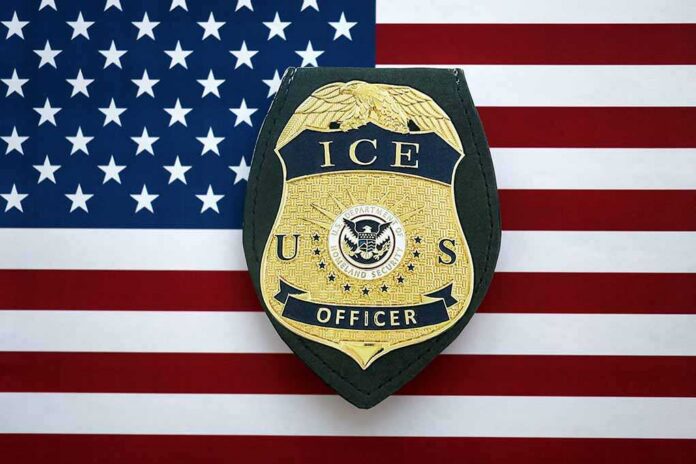
A South Los Angeles woman pleaded guilty to a federal conspiracy charge after staging a fake kidnapping and blaming federal immigration agents for it.
Story Snapshot
- Prosecutors say she faked an abduction and release to frame federal agents.
- The staged plot unfolded in June and July 2025 across Los Angeles and Tulare County.
- She admitted to a conspiracy that targeted Homeland Security Investigations’ work.
- Reports say she altered her appearance to look abused while in custody.
Plea Secures A Clear Outcome
The United States Attorney’s Office for the Central District of California announced the guilty plea on October 26, 2026. Prosecutors said the defendant, a Mexican national living in South Los Angeles, admitted to one count of conspiracy to impede, obstruct, impair, and defeat the lawful function of Homeland Security Investigations (HSI). The charge is a federal felony. It reflects a scheme that prosecutors say was aimed at undermining how HSI does its job. A sentencing hearing was scheduled by the court, according to officials.
Justice Department materials say the plot ran in June and July 2025. During that period, prosecutors said she faked being taken and later released by people she claimed were federal agents or acting for them. The plan reached beyond simple storytelling. It involved specific scenes, times, and places that gave the claim weight. The level of detail suggests an effort to make the lie hard to check and easy to share. That is how a hoax gains speed in the real world.
The Script: A Parking Lot, “Masked Men,” And A Planned Lawsuit
According to CBS News, the story started on June 25, 2025. She allegedly told someone that masked men grabbed her at a Jack in the Box lot in downtown Los Angeles. Prosecutors say she later asked a person in Tulare County to serve as a witness in her “case,” because she planned to sue Border Patrol. That ask shows a clear purpose: turn a false claim into legal and public pressure. When a scheme moves from talk to recruiting witnesses, it crosses into active deception.
Prosecutors and reporters also described a physical staging element. CBS News reported that she altered her appearance so she looked mistreated while in custody. That detail matters. A photo or appearance can fix a story in people’s minds faster than words. It also can fuel social media sympathy and news attention. The original federal complaint shows the government took the matter seriously from the start by charging both conspiracy and false statements to federal officers.
Why Target Federal Agents?
Justice Department officials framed the case as a plot to impede a federal mission, not only as a personal lie. Homeland Security Investigations, Border Patrol, and related agencies operate in a charged space. Real abuse claims exist, and real fear exists. But that is why a staged claim is so damaging. It steals focus from real victims and chips away at trust in actual oversight. It also wastes scarce resources. Every hour spent chasing a hoax is an hour not spent stopping smugglers or rescuing trafficking victims.
🛑 Illegal Alien Pleads Guilty to Faking Her Own ICE "Kidnapping" 🛑
The press conference, the media coverage, and the demands for her "release" were all built on a lie. The woman at the center of it has now admitted it in federal court.
Yuriana Julia Pelaez Calderón, 43, an… pic.twitter.com/oCMLH3ngcd
— Katie K USA (@KimKatieUSA) October 26, 2026
American conservative values prize truth, equal justice, and respect for law enforcement. On those terms, the government’s account hangs together. A targeted lie that seeks to paint federal agents as kidnappers attacks all three. It bends truth, games the courts, and smears the men and women asked to do a hard job on the line. When prosecutors bring a focused conspiracy charge and secure a plea, it signals the facts could carry the weight in court. That is the right channel for accountability.
The Stakes: Evidence, Pressure, And Public Trust
The case shows how precise claims can be staged to look real: a fast-food lot, masked men, a release, a bruised face. Each detail invites belief. Each also creates a task for investigators. Federal agents must check cameras, logs, times, and calls. That work costs time and money. Early materials from July 2025 show the complaint named conspiracy and false statements, which put her on a path to today’s plea. A single guilty plea does not fix the damage, but it sets a standard.
One fairness note applies. As always, a guilty plea covers the crime of conviction. Public reporting often adds color that falls outside the admitted elements. Here, the charge and the plea are clear. She admitted a conspiracy to obstruct HSI’s lawful function. That is the core. The reported timeline and staging fill in how prosecutors say she did it. The judge will impose a sentence based on the record. That is where consequences meet facts.
What Comes Next
Sentencing will close the legal loop and send a signal. Hoaxes that aim at law enforcement are not cost-free stunts. They chill real reporting, ignite politics, and erode trust. They can also tempt copycats who see attention as a prize. The answer is steady: verify, charge, and prove. That is what happened here. A loud claim met a careful case, and the plea followed. The message is simple: tell the truth, or face the law.
Sources:
foxnews.com, cbsnews.com, justice.gov
© targetdailynews.com 2026. All rights reserved.