More than 100 people were pulled from the Mississippi River after a docked cruise ship capsized when a tanker slammed into it in New Orleans.
Story Snapshot
- A tanker struck the docked American Heritage near the French Quarter, capsizing it.
- Rescuers pulled passengers and crew from the river; 32 went to hospitals.
- Officials shut river traffic and began a complex salvage and investigation.
- The Port of New Orleans moved to seize and sue over the tanker, Atlantic Asphalt.
Collision, Capsize, and a Race Against the River
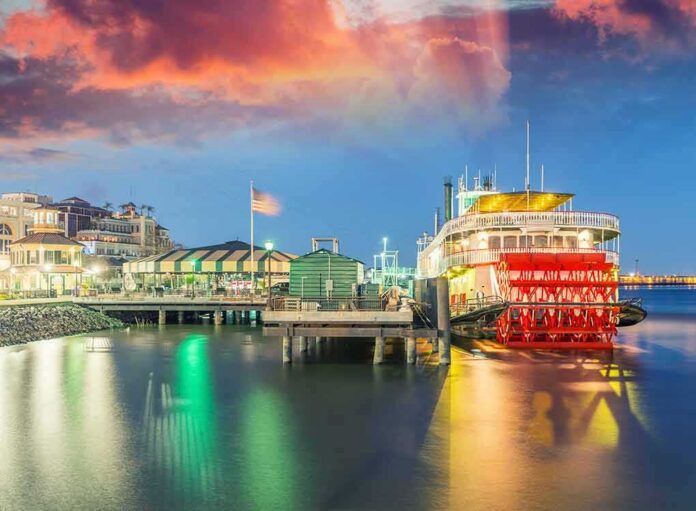
Officials said the tanker Atlantic Asphalt hit the American Heritage around midday while the cruise vessel sat moored near the French Quarter. The impact rolled the riverboat onto its side. Passengers clung to rails and some fell into the water as responders rushed in. Authorities accounted for everyone on board and sent dozens to local hospitals. Crews closed nearby river traffic and set up a perimeter to keep the scene stable and safe.
City leaders said the tanker lost control before impact. The river current, ship momentum, and tight quarters turned seconds into a crisis. Witness video showed the side blow and the slow tip that followed. Local and federal teams worked the banks and the waterline to get people out fast. Officials later confirmed 32 hospitalizations and no missing persons. They warned that raising and removing a capsized vessel on a working river will take time and care.
Rescue Logistics and River Shutdown
First responders used boats, ladders, and lines to pull people up and out. The United States Coast Guard paused traffic in the area to give rescuers space and to reduce wake near the scene. Salvage teams assessed hull damage and stability before making any heavy moves. The Coast Guard and port leaders planned next steps to right or remove the vessel without risking fuel spills or a secondary incident. The controlled closure kept the channel from turning chaos into catastrophe.
American Cruise Lines arranged support and lodging for displaced passengers. Medical teams treated shock, hypothermia risk, and blunt-force injuries common in falls and sudden ship movement. Crews monitored for sheens and debris, and boomed sections that needed protection. The channel is the region’s economic artery, so each hour matters. Leaders balanced commerce with caution, a choice that fits both common sense and the basic duty to protect life and property.
Investigation Focus: How a “Loss of Control” Unfolds
The National Transportation Safety Board opened an investigation and dispatched a team. Investigators will study steering and propulsion, pilot actions, bridge-team coordination, tug involvement, and radio traffic. Prior maritime cases show that “lost control” often masks deeper issues in lookout, communication, and decision speed. A 2019 Lower Mississippi tanker accident, American Liberty, traced its chain of errors to poor bridge resource management and missed cues between pilot and master.
New Orleans port aims to seize tanker with lawsuit after cruise ship collision | The Jerusalem Post https://t.co/FxrJg9dkc3
— newsoft332 (@newsoft33292530) November 15, 2026
Investigators will likely reconstruct the minutes before impact from voyage data, engine orders, and pilot logs. They will match statements to physical marks on steel. They will test steering gear and review alarms. Past findings on major collisions stress early, clear calls between bridge teams, timely engine and rudder orders, and keeping tugs on task until the ship is fully under control. The goal is not blame theater. It is a clear map of what to fix, so it does not happen again.
Legal Moves and Consequences on the Waterfront
The Port of New Orleans filed suit and sought control of the Atlantic Asphalt to secure evidence and damages. The complaint alleges responsibility for the collision and the sweeping emergency that followed. Lawsuits move slower than the Mississippi, but they bite harder. They also preserve the record that the National Transportation Safety Board and the United States Coast Guard will need to align safety steps with accountability. The port put a stake in the ground early.
Expect three tracks from here: a careful salvage, a methodical investigation, and a legal process that traces liability. The conservative test is simple: protect people first, then the waterway, then the wallets that rely on it. If the evidence shows sloppy bridge management, slow orders, or needless risk, fix the standard and enforce it. If hardware failed, demand the upgrade. The Mississippi rewards discipline and punishes drift. That was true yesterday. It will be true tomorrow.
Sources:
foxnews.com, azcentral.com, cnn.com, wlox.com, newsday.com, wdsu.com, ntsb.gov
© targetdailynews.com 2026. All rights reserved.