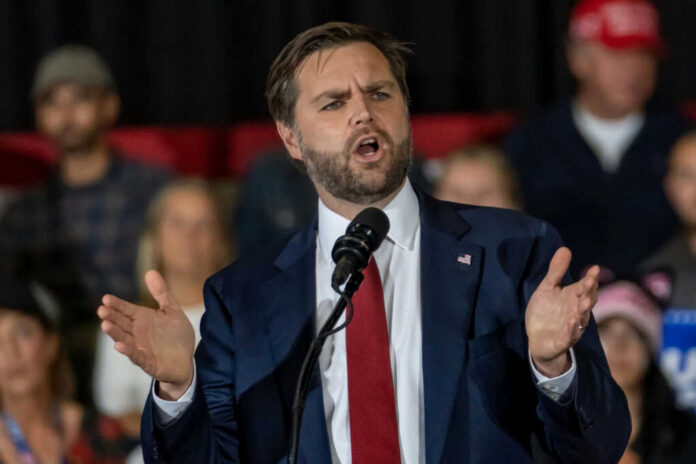
Vice President JD Vance says he has not decided on a 2028 run, but his team expects he will.
Story Snapshot
- Vance told voters he has not made a 2028 decision and might not run.
- He said President Trump would likely endorse him if he does run.
- Reports describe a competitive Republican field forming around Vance and others.
- Early polls and buzz matter, but they often mislead this far out.
Vance keeps the door open, not the launch pad
Vice President JD Vance told a CBS News town hall in Michigan that he has not decided whether to run for president in 2028, and allowed that he might not run at all. That plain answer did two things at once. It cooled feverish timelines and kept his options wide open. The message matched what voters reward: focus on the job today, leave the next campaign for later. It also preserved room for allies, donors, and activists to keep organizing without formal orders.
Two days later, Vance said aboard Air Force Two that if he runs, he believes President Trump will endorse him. He added that he has not spoken with the president about 2028, but he trusts that alignment if the time comes. That is conditional succession positioning. Vance is signaling respect for the sitting president while reminding the party he is a natural heir to the agenda. That balance guards unity now and keeps leverage for later.
The Republican map after a rough midterm cycle
Recent midterm losses shook Republican nerves and sped up 2028 chatter. Coverage placed Vance and Secretary of State Marco Rubio at the center of that conversation, even as both avoided formal moves. Rubio brushed off questions about his own plans and at times signaled he would defer to Vance, though his allies are active across Capitol Hill. Party leaders often test names in public after setbacks. That is normal regrouping, not a coronation or a snub.
Reports framed Vance as a likely frontrunner if he runs, given his standing with the base and his closeness to President Trump. That status invites pressure from rivals and fans alike to announce early. It would be a mistake. Conservative voters value performance, loyalty, and results. They dislike Washington games. By holding off, Vance avoids months of avoidable attacks and keeps attention on policy fights that matter more to families and small businesses right now.
Why the smart play is patience, not headlines
History shows that hype two years out rarely predicts the nominee. Scholars and analysts find that early polls have weak power compared with later measures that follow real contests and debates. Campaigns that peak on buzz often fade when voters see the grind of governing and retail politics up close. Vance’s restraint recognizes that truth. It keeps him from becoming a target-rich frontrunner before voters even tune in, while letting allies build infrastructure out of the spotlight.
There is also a practical lane-management benefit. Staying ambiguous respects President Trump’s role and keeps the party from splintering early. That aligns with conservative values of order and respect for the current officeholder. It also gives space for others to make their case without turning every policy debate into a 2028 proxy war. If Vance runs, he can claim he led with duty, not ambition. If he does not, he will have preserved capital to shape the field.
What to watch between now and next year
Watch for three signals. First, policy travel disguised as governing: more town halls, targeted visits to early primary states, and message testing on energy, the border, and inflation. Second, personnel: trusted campaign hands taking “unaffiliated” roles in outside groups. Third, permission slips from President Trump: comments that bless party-wide planning without naming a successor. Any one sign proves little. The cluster tells the story. If all three emerge, a launch is likely when he says he is ready.
Donald Trump suggested this week that he might not endorse J. D. Vance for president in 2028. @GrahamDavidA explores whether that would be good or bad news for Vance: https://t.co/ycgzFbybRp
— The Atlantic (@TheAtlantic) November 13, 2026
Until then, the right play is the boring one: do the job, keep the team tight, and let results talk. Voters are busy and want less drama and more delivery. Vance’s public stance matches that mood. He has not made up his mind, and he might not run. If he does, he expects the president’s support. That is enough for now. The rest is noise, and early noise is the worst guide to the final song.
Sources:
mediaite.com, thehill.com, politico.com, independent.co.uk, washingtonexaminer.com
© targetdailynews.com 2026. All rights reserved.