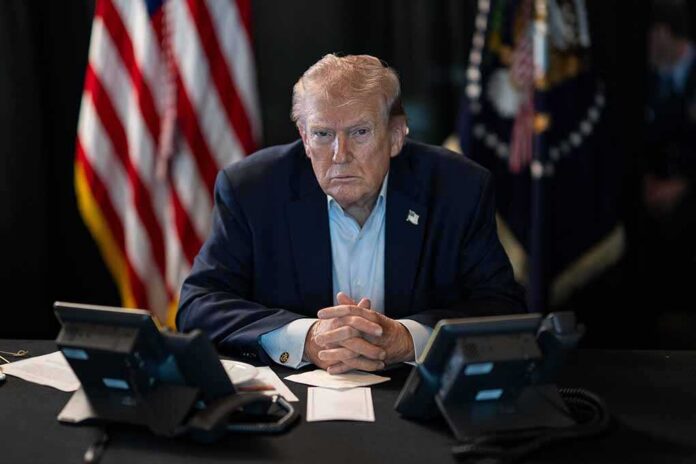
A federal judge told President Trump to sit for a videotaped deposition by December 11 or risk his $10 billion defamation case against the BBC getting tossed.
Story Snapshot
- A judge ordered Trump to be deposed by December 11, with dismissal on the table for noncompliance.
- The court allowed video recording over Trump’s objection, raising stakes for any disruption.
- Trump canceled an earlier October 16 deposition and sought January dates, citing official duties.
- Ex-White House lawyer Ty Cobb predicted Trump would walk out if he appears.
The Court Drew a Bright Line and a Firm Deadline
United States Magistrate Judge Enjoliqué Lett ordered Trump to answer questions under oath by December 11, warning that failure to comply could lead to dismissal of his lawsuit. The order set a clear path to finish discovery, which was nearing its close, and it put real penalties behind delay. That is how civil courts keep cases moving. File a $10 billion claim, and you should expect to take the hot seat on schedule.
Judge Lett also approved a videotaped deposition. Trump’s attorney opposed recording, but the judge allowed it. Video matters. Juries and judges can watch tone, pauses, and refusals. Any storming out does not vanish into a cold transcript; it lives on screen. That choice adds weight to every answer, every objection, and any break that runs too long. It signals the court intends to build a complete record if future sanctions are needed.
A Canceled Date, Then a Push to January
The British Broadcasting Corporation moved to compel after an agreed October 16 deposition fell apart. Trump’s legal team pointed to matters of national importance and proposed dates in January. Defendants often dislike delay when they want a plaintiff’s story under oath now. The court sided with the schedule and set the December 11 line. That placed the burden back on the party who chose to sue to show up and testify as promised.
Deadlines are not decorations. Federal judges use them to enforce fairness. When a party files a massive defamation claim, discovery is where facts get tested. Courts commonly warn that blowing off a key deposition can result in sanctions, even dismissal. This case fits that pattern. The judge did not guess motives. The judge set a date, named the consequence, and moved the case forward. That is standard, not special treatment.
Ty Cobb’s Walk-Out Prediction and What It Really Means
Former White House attorney Ty Cobb said Trump would either refuse to attend or, if he appeared, would walk out before finishing. That is a forecast, not an event. The record so far shows a canceled date, a request to delay, and a firm court order. The walk-out line is a media siren because it is vivid television. The stronger evidence right now supports the court’s enforcement muscle, not a guaranteed mid-deposition exit.
🚨 BREAKING NEWS | U.S.
Federal judge orders Trump to sit for a deposition by Dec. 11 in his $10B BBC defamation suit. Judge Enjoliqué Lett ruled from the bench after the BBC accused him of stalling.
📍 Florida | October 2026#USANewsNow #BBC #Trump pic.twitter.com/Ary1LnwvL8— USA News Now (@USANewsNowHQ) October 23, 2026
The smarter lens focuses on incentives. The court warned of dismissal, which would crush a $10 billion claim before trial. A videotaped session means any sudden departure would play poorly on the record. Those guardrails make a walk-out risky. Common-sense conservatives value rules that apply to everyone. If you sue, you sit. If you set a date, you keep it. The judge’s order reflects that simple contract of responsibility between citizen and court.
Why Depositions Decide Big Defamation Fights
Most defamation cases do not reach a jury. Many settle or end on legal grounds after discovery. Depositions drive those outcomes because they pin down what the plaintiff knew, when they knew it, and what harm they can prove. One shaky answer can shrink a headline number to near zero. One strong answer can push the other side toward a deal. That is why both sides fought over timing and taping. The camera changes leverage.
What Happens Next if the Date Holds
If Trump sits by December 11, expect quick follow-on moves. The British Broadcasting Corporation will use the footage to test actual malice, damages, and causation. Trump’s team will work to protect executive communications and limit off-topic questions. If he refuses to appear or walks out, the judge already laid the ground for sanctions up to dismissal. Either way, the case will shift from talk-show predictions to sworn answers that count.
Sources:
mediaite.com, us.cnn.com, euronews.com, courthousenews.com, afp.com, newsobserver.com
© targetdailynews.com 2026. All rights reserved.