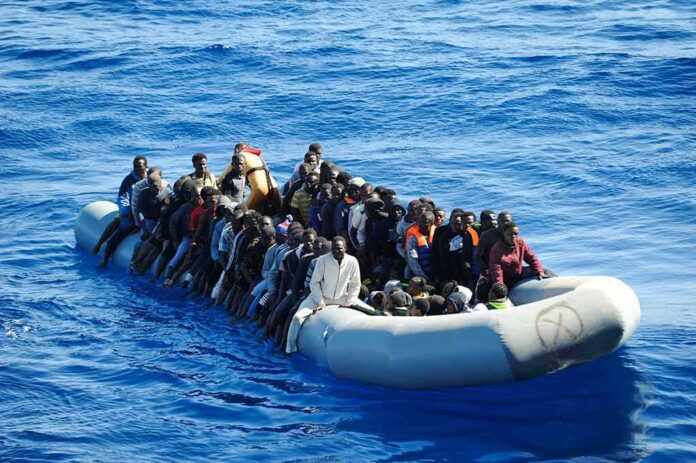
Sixteen people were hauled from the Pacific in the dark, some bleeding from wounds doctors suspect came from sharks, after a boat broke apart far off Baja California.
Story Snapshot
- U.S. Coast Guard rescued 16 people about 140 miles west of Ensenada after a distress call.
- Several survivors had severe injuries consistent with shark bites; medics gave lifesaving care.
- Hospitals in San Diego treated multiple patients, including at least one suspected shark bite.
- Officials reported 27 people in the water; 11 were missing when the search was suspended.
Rescue In The Dark, Far Offshore
The United States Coast Guard said a mayday call came in around 1 a.m. on October 16, reporting a boat taking on water about 140 miles west of Ensenada, Mexico. Air and surface crews reached a debris field, not an intact hull. Crews found people floating in the open ocean. They pulled 16 aboard and began care. Pilots from Air Station Ventura moved the injured toward San Diego. That distance buys time for currents and predators; it steals time from rescuers.
Coast Guard officials later said several survivors suffered severe injuries consistent with shark bites. That phrase matters. It is the language medics use when wounds match known bite patterns and tearing. It is also the fastest way to flag the right hospital resources. The immediate job was simple and urgent: stop bleeding, prevent shock, fight hypothermia, and move fast. Offshore rescues often come down to minutes, not miles.
From Debris Field To Hospital Bay
Crews flew survivors to San Diego, where hospital teams took over. Scripps Mercy Hospital confirmed it received three patients. Staff treated one person for a suspected shark bite and two people for cold exposure, which fits the profile of prolonged time in water at night. That medical note does more than soothe curiosity. It supports what rescuers saw on scene and helps match injury patterns to what likely happened in the water.
Authorities reported that 27 people were in the water when the call came in. Sixteen were rescued alive. Eleven remained missing when the Coast Guard suspended the search after extensive effort. Search suspensions are painful decisions. They follow probability models, aircraft track lines, current data, and survival curves. Cold water, distance from shore, and night conditions drive those models down fast.
The Route, The Risk, And What We Actually Know
Officials said the location and track align with routes often used by maritime smugglers. They also said they had not confirmed this boat’s purpose. That tension is common in cases like this. The pattern points one way; proof is a separate step. Common sense still bites hard here. Boats overloaded, underpowered, and far offshore put human life at needless risk. That is why maritime law treats overloaded and unseaworthy voyages as reckless, no matter the flag.
The setting explains the injuries. A capsized or sinking boat pushes people into black water. Night hides everything. Blood and thrashing draw fish. Sharks are not moral actors, but they are efficient. The Coast Guard’s description of severe injuries consistent with shark bites matches how these tragedies unfold when people drift among debris and fuel slicks for long periods. Hospitals in San Diego seeing suspected shark bites anchor that account in clinical reality.
Why California Keeps Seeing Deadly Sea Crossings
The stretch from Baja to Southern California has become busier and more dangerous. Reported maritime smuggling events in the California area of responsibility rose from 308 in fiscal year 2020 to 736 the next year, an increase of nearly 140 percent, according to U.S. Customs and Border Protection reporting cited in press accounts. More trips mean more wrecks. Small craft flip in surf zones. Pangas swamp in chop. Engines die in cold fog. When luck fails, the Pacific offers no favors.
Sixteen people were pulled from the Pacific early on Friday, 16 October, several with wounds consistent with shark bites, after their boat capsized roughly 140 miles (225 kilometres) west of Ensenada in waters associated with suspected migrant smuggling routes to California. pic.twitter.com/WNZT4dC4DA
— Jim Manzon (@manzonjj) October 19, 2026
American conservative values and basic duty say the same thing here. Secure the border, punish the exploiters, and save lives without blinking. The Coast Guard did its job at 1 a.m. with skill and courage. Law enforcement should keep doing its job ashore and at sea to break the business model that packs human beings into flimsy boats. Clear policy and firm consequences deter chaos. Deterrence on land reduces body counts at sea.
Sources:
usnews.com, cbc.ca, abc7.com, people.com
© targetdailynews.com 2026. All rights reserved.