A party built on small donors just told its own candidates the door costs $25,000.
Story Snapshot
- The Republican National Committee tied midterm convention access to a $25,000 “minimum donation” ask for candidates.
- State parties offered packages from $5,000 to $20,000, with premium donor tiers far higher.
- Former Governor Chris Sununu blasted the move as backward: conventions should raise money for candidates, not from them.
- The approach fits a decade-long trend toward high-dollar convention financing and access perks.
What sparked the uproar
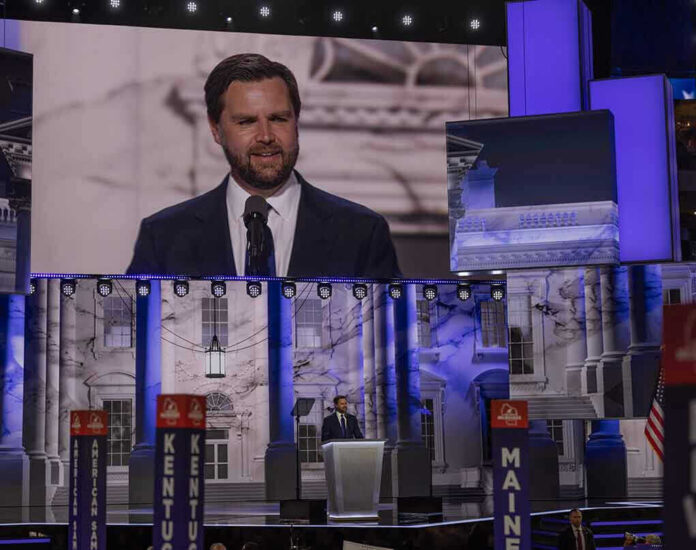
The Republican National Committee structured its Dallas midterm convention as a fundraising engine. Reporting described a $25,000 minimum attendee donation for House members, along with tiered packages sold by state parties that ran from $5,000 to $20,000. Politico detailed even pricier options, including a $250,000 “golden VIP member” level, signaling that donor access would anchor the week’s activity. The party pitched the setup as fuel for victory. Many candidates heard it as a cover charge that raids their war chests.
Former New Hampshire Governor Chris Sununu said he had never seen anything like it. He argued the point of a convention is to rally support and raise funds for the ticket, not drain candidates before the stretch run. “He’s supposed to be raising money for the candidates,” Sununu said, pushing the idea that leaders should lower barriers for people actually on the ballot, not hike them when time and cash run tight. That critique resonated with grassroots donors who already feel squeezed.
The money mechanics behind modern conventions
National conventions long ago outgrew banner drops and balloons. Production costs, venue fees, security, and programming now run into the tens of millions, much of it covered by private fundraising, host committees, and sponsor events. After campaign finance changes in 2014, parties leaned more on big checks and packaged access to cover these bills. Scholarship in political science shows how host committees and large private donors increasingly underwrite convention operations. The result is predictable: more velvet ropes, fewer cheap seats, and sharper trade-offs for candidates down the ladder.
None of this excuses a model that puts candidates on the hook to attend the party’s own showcase. But it explains the logic. When donor tiers balloon, every minute on stage or in a green room gets priced. Parties claim this maximizes revenue during intense media windows. Skeptical members counter that it drains campaign accounts they need for ground game and ads. On the facts, the $25,000 figure was described as a suggested minimum donation, not a literal ticket invoice. That distinction matters on paper and less in practice for a cash-strapped challenger.
How this hits real campaigns
House candidates run on razor-thin budgets and brutal calendars. They count every mile and every minute. A $25,000 ask for access, plus travel, hotels, and staff time, pushes many to skip prime-time party optics. Texas and other states added their own participation tiers, ranging between $5,000 and $20,000, which layered even more cost on members and hopefuls. Politico’s reporting on a $250,000 top-tier donor level underscored the week’s core purpose: capture big checks while the cameras roll. That may help the national brand but sideline the bench.
LOL
"The Republican National Committee is staging a two-day midterm convention in Dallas next month — once nicknamed “Trumpapalooza” — with Trump headlining the second night.
The idea is to drag MAGA voters to the polls in an election where Trump isn’t on the ballot.…
— Lorraine E-Van-Off (@LorraineEvanoff) August 27, 2026
American conservative values prize stewardship, fairness, and results. On those terms, Sununu’s knock has weight. A party that says it champions small donors should not force its candidates to compete with them. The smarter structure is simple: tap major donors for access and underwrite candidate presence as a party expense. The benefit flows both ways. Candidates get the stage and the network. Donors get wins worth their checks. Voters get a slate that actually shows up.
The practical fix that aligns with common sense
Leaders can keep the donor tiers and still remove the sting. First, codify that nominated and listed candidates attend for free. Second, fund travel stipends for targeted districts with tight polls. Third, publish the tiers and benefits in plain language so no one learns about a “suggested minimum” the week before wheels up. The rule-of-thumb stands: donors buy access, not necessity. Party committees exist to lift candidates, not toll them at the door. That is how you turn a splashy show into real wins.
Sources:
mediaite.com, wiod.iheart.com, wsj.com, algop.org
© targetdailynews.com 2026. All rights reserved.