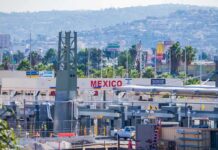
Four people ended a night of World Cup joy in East Los Angeles bleeding on the asphalt, while police and media still cannot agree on what, exactly, turned celebration into gunfire.
Story Snapshot
- Four people were shot across three crime scenes in East Los Angeles after Mexico’s World Cup loss.
- Police declared a citywide tactical alert as fan celebrations spilled into streets and grew unruly.
- A separate Koreatown World Cup watch party ended with a heroic bystander shot while tackling a gunman.
- Media framing links the violence to Mexican fans, while little is known about the actual shooters or victims.
Violence spread across East Los Angeles after the match
Four people were shot across three different crime scenes in East Los Angeles following Mexico’s World Cup elimination, according to multiple local reports. The shootings happened as crowds packed Whittier Boulevard and nearby streets for late-night celebrations tied to Mexico’s match against England, with coverage describing packed sidewalks, honking cars, and flags waving over clogged intersections. Deputies said at least one of the attacks appeared gang-related, yet public details about the victims, their ages, and motives behind the gunfire remain scarce.
Los Angeles County sheriff’s deputies reported that three of their own were hurt while trying to control volatile celebrations in East Los Angeles that same night. Two people were arrested in connection with the clash that left deputies injured, underscoring how fast a party atmosphere can slide into a street fight when crowds, alcohol, and long-standing tensions mix. Yet even here, investigators have not publicly released the names of those arrested, the exact charges, or a clear narrative tying deputy injuries to the shootings of civilians.
Police scrambled as World Cup crowds overwhelmed the city
The Los Angeles Police Department moved into citywide tactical alert about an hour after Mexico’s match ended, a step officers reserve for moments when there are more serious incidents than on-duty units can handle. Tactical alert lets commanders hold over shifts, call in extra officers, and move resources to hot spots without getting tangled in red tape. On this night, those hot spots were the fan zones, car caravans, and street takeovers that erupted as Mexico advanced against South Korea and then later faced elimination.
Video from local stations shows officers in riot gear forming lines along major corridors as crowds blocked intersections, donuts burned rubber into the pavement, and fireworks or gunshots cracked overhead. The images feed a familiar media storyline: “rowdy” or “frenzied” Mexico fans turning victory into chaos. That framing speaks to a real law-and-order concern—people have a right to expect safe streets—but it also risks painting an entire community as violent based on the actions of a few criminals blended into a massive, mostly peaceful crowd.
Koreatown watch party ended with one man’s courage and a bullet
Almost two weeks before the East Los Angeles shootings, another World Cup gathering in Koreatown showed how fast things can shift from joy to survival. During Mexico’s match against South Korea, hundreds watched on a big screen near Seoul International Park when a 19-year-old suspect allegedly opened fire into the crowd. Police say a 50-year-old man, later identified as Luis Romero, tackled the gunman to stop him from shooting others.
Romero was shot in the leg during the struggle, and officers arriving on scene used a tourniquet to save him after the bullet severed an artery. The suspect, Andy Rodriguez, was arrested near the intersection of Normandie Avenue and James M. Wood Boulevard within minutes and now faces felony assault with a firearm and special allegations for causing great bodily injury. That Koreatown case is striking for one reason: unlike East Los Angeles, police and courts have already identified a suspect, a victim, and charges, thanks in part to viral video and a crowd that detained the shooter.
Media narratives clash with missing facts and community reality
Newsrooms raced to frame the East Los Angeles incidents as another example of “violent” Mexico fan celebrations, focusing on images of reckless driving, fireworks, and lines of officers, while sharing little about the four people who were shot. Social media posts from the area push back, asking why cameras focus on the worst few blocks while ignoring other parts of East Los Angeles where families waved flags, grilled food, and then went home without trouble.
Mexico's World Cup loss ends with four shot in East L.A.
East Los Angeles, California.
Whittier Boulevard was packed with energy following a World Cup match between Mexico and England. Flags, traffic, crowds, celebration in the streets.
Then the night fractured.
Authorities…
— Media (@MediaWasHereX) July 6, 2026
From a common-sense, conservative view, two truths can stand together. Communities deserve strong policing and swift consequences when people bring guns to public celebrations and turn streets into danger zones. At the same time, it is sloppy and unfair to blame an entire fan base or ethnic community for shootings that may be driven by gang disputes or personal grudges that simply piggyback on big events. Research on gun violence shows it clusters in long-neglected, high-poverty neighborhoods, not across whole cities or nations.
Separate incidents, shared pattern, and unanswered questions
Evidence so far suggests the Koreatown shooting and the three East Los Angeles crime scenes were separate events linked only by timing and the World Cup, not by a single chain of command or one roaming shooter. Law enforcement has moved decisively in Koreatown, naming Rodriguez and Romero, but remains quiet about suspects and victim conditions in East Los Angeles. That gap leaves room for rumor, political spin, and culture-war hot takes to fill in what officials have not yet clearly explained.
Big games have long been tied to brief spikes in certain crimes, especially assaults and domestic violence after unexpected losses. World Cup nights in Los Angeles now fit that pattern: emotion is high, crowds are dense, and in neighborhoods already battling poverty and gangs, one spark can light up an entire block. The real test for leaders is not how tough their press conference sounds the next morning, but whether they follow through with real investigations, honest communication, and long-term investment that makes it less likely the next match ends with four more people on the pavement.
Sources:
nypost.com, instagram.com, abc7.com, lapd.com, facebook.com, aol.com, now.org, crimrxiv.com, pmc.ncbi.nlm.nih.gov, irlaw.umkc.edu
© targetdailynews.com 2026. All rights reserved.