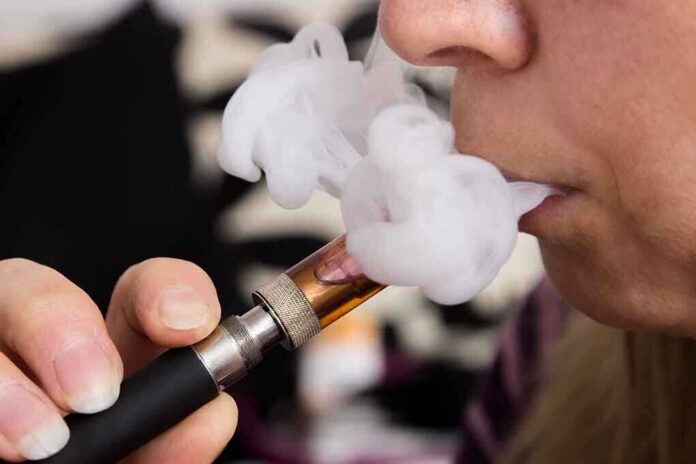
Doctors warn that vaping while taking GLP-1 weight-loss drugs can turn routine nausea into a fast track to dehydration and emergency care.
Story Snapshot
- No direct chemical clash exists between nicotine and GLP-1 drugs, but symptoms can stack.
- GLP-1 medicines often cause nausea, vomiting, reflux, and diarrhea on their own.
- Vomiting and low fluid intake raise dehydration and kidney stress risks.
- Clinicians urge extra hydration and caution with nicotine during dose changes.
What clinicians are flagging now
Clinicians report a clear pattern: patients on GLP-1 injections who vape nicotine often feel sicker. They do not point to a chemical “interaction.” They point to symptom overlap that adds up. Nicotine can irritate the stomach and trigger reflux. GLP-1 drugs slow stomach emptying and already cause queasiness for many users. Together, that mix can push mild nausea toward repeated vomiting and poor fluid intake, which raises dehydration risk and strain on the kidneys.
Guidance lines up across sources. Consumer-facing clinicians, national drug-safety bulletins, and peer-reviewed reviews all stress hydration and early management of gastrointestinal symptoms with GLP-1 therapy. They advise small, bland meals, pausing rich or greasy foods, and spacing drinks away from meals to ease nausea. They advise contacting a doctor for persistent vomiting, dizziness, or confusion. Some patients, when symptoms become severe, may even need intravenous fluids to recover.
Why GLP-1 drugs and nicotine make a rough pairing
GLP-1 drugs, like semaglutide and tirzepatide, slow how fast the stomach empties. That helps people feel full, but it can also cause nausea, reflux, and vomiting. These problems are common in the early weeks and during dose increases. Many users handle them with diet tweaks and patience. Add nicotine on top, and the stomach gets hit from two sides: acid rises easier, and the irritated gut fights slower emptying. The result can be more nausea and more reflux, which can lead to less drinking and more dehydration.
Health agencies warn that vomiting and diarrhea can dehydrate people on GLP-1s. Dehydration can, in rare cases, be tied to kidney injury. The risk grows when people cannot keep fluids down or avoid drinking due to constant nausea. That is the practical danger of vaping while sick to the stomach: it can push the body over the edge from “annoying” to “unsafe.” Red flags include dizziness on standing, very dry mouth, little or no urine, rapid heartbeat, or confusion. These signs mean call a clinician right away.
What this is—and what it is not
This is a lifestyle warning built on known side effects, not a ban. There is no official contraindication that says “do not vape” on these drugs. There is also no proof that nicotine cancels out GLP-1 benefits. The concern is practical and rooted in common sense: when two things each upset the gut, using both tends to feel worse, not better. The conservative choice is to cut the avoidable trigger—nicotine—until your stomach settles and your dose stabilizes.
Patients deserve plain talk. People reach for GLP-1s to lose weight, protect their hearts, and move better through life. That progress stalls fast if you end up dehydrated and off your meds. If nicotine makes your queasiness spike, set it aside and protect the gains you want. Quitting nicotine also pays off beyond the stomach. It helps blood pressure, sleep, and long-term health. The short-term win is simple: fewer bathroom sprints, more steady meals, and better hydration.
How to lower your risk this week
Start by timing. Plan dose increases for calm weeks, not travel days. Eat small, bland meals. Sip fluids between meals, not during them. Stock crackers, toast, rice, applesauce, ginger tea, and peppermint. Skip heavy, spicy, and greasy dishes. If nausea spikes after vaping, stop vaping. If you cannot stop fully, cut way down and avoid vaping near meals and dose times. Call your prescriber early if vomiting lasts more than a day or you cannot keep fluids down.
Set guardrails if symptoms flare. Track your urine color and output. Add electrolyte drinks if you sweat, exercise, or vomit. Stand up slowly if you feel lightheaded. If you pass the red flags—dizziness on standing, chest thumping, very dry mouth, sunken eyes, almost no urine, or confusion—seek care now, not tomorrow. Your plan can resume once you are rehydrated and your stomach calms. Protecting your kidneys and keeping your dose on track is not drama. It is smart self-care.
Sources:
mirror.co.uk, ubiehealth.com, goodrx.com, pmc.ncbi.nlm.nih.gov, medsafe.govt.nz, jurniglp.com, rehab.com, practicalgastro.com, gov.uk, jumpstartmd.com
© targetdailynews.com 2026. All rights reserved.