Passengers watched a man get duct-taped to his seat as an American Airlines jet diverted mid-flight.
Story Snapshot
- An American Airlines flight from Dallas-Fort Worth to Newark diverted to Baltimore.
- A disruptive passenger was restrained with duct tape in his seat, photos and video show.
- Witness accounts reported racist and anti-gay slurs during the outburst.
- American Airlines said safety comes first and law enforcement met the aircraft.
What Happened In The Cabin And Why The Plane Diverted
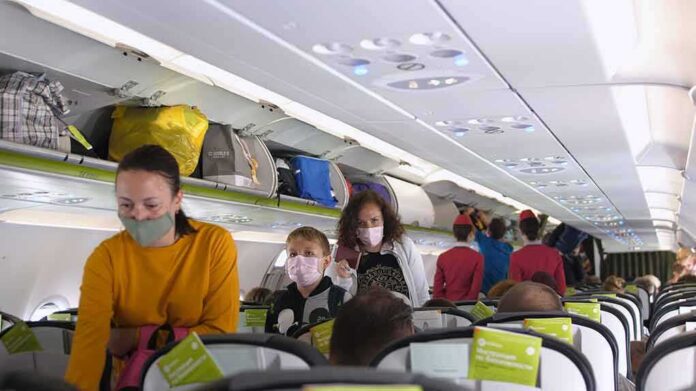
American Airlines Flight 618 was en route from Dallas-Fort Worth to Newark when a passenger’s behavior forced a change of plan. Crew and passengers restrained the man in his seat with duct tape after he shouted slurs and disrupted the cabin, according to contemporaneous reporting that included photos and video. The pilots diverted to Baltimore/Washington International Thurgood Marshall Airport, where law enforcement met the plane and assisted with deplaning the passenger, according to broadcast coverage.
American Airlines said the safety and security of customers and crew are the airline’s top priority and that violence will not be tolerated, consistent with language the carrier uses in these events. That stance reflects the rule on every carrier: the captain is responsible for safety, and the crew must be able to do their jobs without threats or interference. Airlines back their crews when they act to stabilize a volatile situation inside a pressurized metal tube miles up.
The Duct Tape Detail And How Restraint Protocols Actually Work
Cabin crews train on restraint. The standard tools include flex cuffs and restraint kits. Duct tape shows up when nothing else keeps a person still. United States and international rules give the captain and crew authority to restrain someone who threatens safety. The United States Department of Transportation warns that interfering with a crew member can bring fines and even prison time when it crosses into criminal conduct. Some airlines advise against duct tape, but front-line crews will improvise when seconds matter.
Images of a taped passenger can go viral in minutes, but the underlying logic is simple. A person who will not comply can distract the crew, scare the cabin, and add risk during takeoff, landing, or turbulence. Restraint limits movement until the plane can land and police can take over. The goal is not punishment. The goal is control. The right time to remove tape is never in the air. The right place is at the gate, with officers present.
Why Crews And Regulators Take Unruly Behavior So Seriously Now
The Federal Aviation Administration (FAA) adopted a “zero tolerance” enforcement push after unruly incidents surged during the pandemic. The agency says the campaign drove incident rates down by nearly 60 percent from the peak, yet enforcement continues because cases still happen. The FAA’s message is blunt: assault, threats, intimidation, or interference with crew can trigger civil penalties per violation and referral for criminal charges, depending on the facts. The rule set puts order over chaos, which aligns with common sense.
New images show an American Airlines passenger duct-taped to his seat and restrained with zip ties before the flight diverted to Baltimore.
The 67-year-old man was later arrested, and the FBI & FAA are investigating.
READ MORE: https://t.co/FGeR5Ky4yn pic.twitter.com/8DYqrFg3tp
— 7News DC (@7NewsDC) September 5, 2026
For travelers who roll their eyes at cabin drama, here is the bottom line. Air travel is a shared space with hard rules. Talk crosses a line when it threatens crew or sparks a fight. Flight attendants are not bouncers, but they must keep the cabin calm and the cockpit focused. When a person refuses, the toolbox comes out. Sometimes that means flex cuffs. Sometimes that means tape. Either way, the next stop is a jet bridge lined with badges, not a debate in row 12.
The Legal And Practical Consequences After The Plane Lands
Law enforcement met the diverted flight in Baltimore and assisted with the passenger’s removal, confirming the incident rose above a simple argument. Reported follow-up indicated the individual faced charges tied to the outburst, a common outcome when an incident forces a diversion and crew intervention. The FAA’s civil side can also propose fines for each violation, which can add up fast. Federal law allows tough penalties when someone interferes with crew duties. Actions have costs, especially at 35,000 feet.
Sources:
the-independent.com, nypost.com, abc7news.com, yahoo.com, cbsnews.com, aol.com, workerscompensation.com
© targetdailynews.com 2026. All rights reserved.