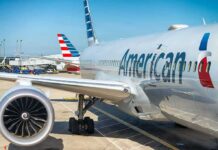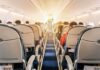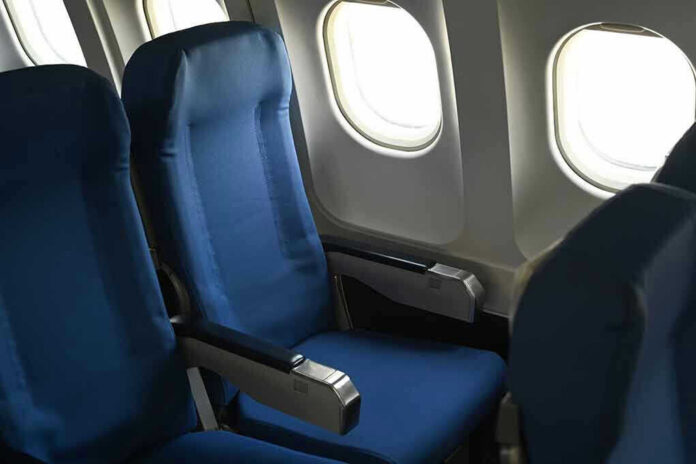
A man on a Ryanair flight from Thessaloniki to Memmingen was nearly pulled toward a “detached” window before fellow passengers and his seat belt kept him inside, according to breaking reports.
Story Snapshot
- Passenger reportedly dragged toward a failed window midflight on Thessaloniki–Memmingen route
- Seat belt and nearby travelers prevented a partial ejection, per early accounts
- No official airline or regulator report yet confirms a window detachment
- Separate reports about Memmingen cite severe turbulence and storm injuries, creating confusion
A harrowing scene at altitude, told in first waves of reporting
Breaking posts on social media described urgent moments inside a Ryanair cabin, with one man pulled toward a compromised window and restrained by his seat belt and nearby passengers. The flight reportedly departed Thessaloniki and headed for Memmingen when the incident unfolded. The phrasing “detached window” triggered a wave of alarm because a sudden breach can cause explosive decompression. Early summaries did not include a time-stamped cockpit call, detailed maintenance history, or photographs linked to the specific aircraft.
Reports also placed the flight on a route that has drawn attention for weather-related diversions on other days. Several mainstream outlets, however, documented a distinct Memmingen emergency involving violent turbulence from severe storms, with nine injuries, and made no mention of any window failure. These parallel threads—one about a structural breach, another about storms—have run side by side, which often happens as news breaks in pieces online before officials weigh in.
What a failed window would mean at 30,000 feet
A modern airliner can lose a window and still land safely, but the cabin may depressurize in seconds. Oxygen masks drop. Crew dives to a safe altitude. Passengers close vents and secure masks. A tight seat belt is the simplest, most effective restraint when pressure tries to pull loose objects toward the breach. The 2018 Sichuan Airlines windshield failure showed how fast forces can act and how discipline and training matter when a window or windshield loses integrity during cruise.
Airplane windows use layered acrylics and strict design rules to handle pressure cycles and temperature swings. The Federal Aviation Administration publishes guidance for how manufacturers prove windows can survive critical loads over many years. These parts do not fail often. A Forbes analysis, citing National Transportation Safety Board data, counted only 29 window incidents on United States commercial airliners across a decade, an extremely small number for millions of flights. That rarity is why any claim of “detached window” draws instant scrutiny.
Competing narratives, and why confusion spreads fast
Early posts about the Thessaloniki–Memmingen flight centered on a near-ejection and a “detached” window. At the same time, widely read stories described a separate Ryanair emergency tied to storms and turbulence near Memmingen, with injuries and an emergency landing, but no structural breach. That clash fuels public doubt and creates a vacuum for hot takes. When details are thin, the most dramatic frame tends to spread first, while verified detail arrives later. Patients in the cabin deserve facts, not fog.
A Ryanair passenger was saved by his seatbelt after a window shattered midflight, almost sucking him out of the plane.
Full story here: https://t.co/BZH9MNBDBv pic.twitter.com/wFmp6rJZA8
— AeroTime (@AviationNews) July 10, 2026
Aviation authorities will need to answer simple, high-stakes questions. Did the crew report a pressurization alarm? Did maintenance logs show prior window crazing, delamination, or replacement? Did the flight data recorder record a rapid descent profile typical of a depressurization? Did the cockpit voice recorder capture checklists tied to a pressure loss? A clear statement from the airline or the national authority would settle the core dispute and either confirm a structural event or close the loop on a rumor cycle.
What responsible flyers and airlines should take from this
Passengers should wear seat belts low and tight whenever seated. Most in-flight injuries happen when people are unbelted. A seat belt can also resist the pressure gradient if a seal gives way. Airlines should move fast with transparent updates when break-the-internet claims hit. Conservative common sense favors facts over spin: show the inspection logs, the flight profile, and the cabin pressurization data. Regulators should publish preliminary notes quickly to stop speculation from outpacing the truth.
Why this story matters beyond one flight
Public trust in flying depends on swift, factual disclosure. If a window truly detached, that demands a root-cause review and a fleet check where needed. If storms, not structure, drove the risk on the Memmingen end, then training and passenger belt discipline are the headline. The industry has strong design rules and rare failure rates. The fastest path to calm is sunlight on the data, not viral fog. Until then, keep the belt on, watch the crew, and respect the checklist culture that saves lives.
Sources:
reddit.com, instagram.com, tridentengineering.com, leesfield.com
© targetdailynews.com 2026. All rights reserved.