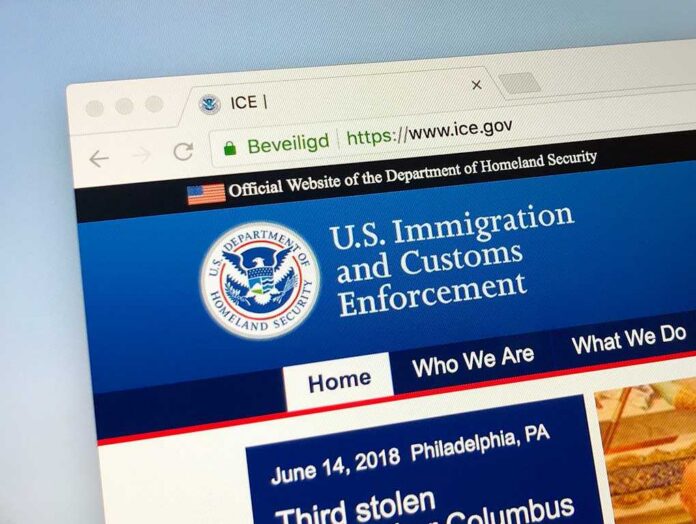
Federal agents tracked a Rochester father from his home to a New York hotel over a harsh email, and now a lawsuit says that is exactly how free speech dies in a quiet, official knock at the door.
Story Snapshot
- A New York man sent a furious email to the acting head of Immigration and Customs Enforcement after deadly shootings tied to an immigration crackdown.
- Five months later, federal agents went to his house, then tracked him to an airport hotel, carrying a “warning notice” that described his words as a possible crime.
- He is now suing the Department of Homeland Security and Immigration and Customs Enforcement, claiming their response was retaliation that violates the First Amendment.
- The case taps into a growing national fight over whether federal immigration agents can turn criticism of the government into something that looks and feels like a criminal investigation.
How One Angry Email Turned Into A Federal Knock On The Door
David Streever, a forty‑five‑year‑old Rochester resident, was watching reports from Minneapolis earlier this year when federal immigration agents shot and killed two Americans during an immigration crackdown. Upset and angry, he wrote a short, harsh email on January 26 to Todd Lyons, then the acting director of Immigration and Customs Enforcement. In that message, Streever called Lyons “a monstrous human being” who “will never know peace” and compared him to a Nazi official, expressing moral outrage at the shootings.
Five months passed with no reply. Then, in late June, while Streever was in Finland on a trip with his seven‑year‑old daughter, two agents with Homeland Security Investigations went to his suburban Rochester home. They rang the doorbell and, finding him gone, handed his wife a “Warning Notice” stamped with stark phrases: “YOU MAY BE IN VIOLATION OF FEDERAL LAW.” The form said his email “may” violate statutes that make it a crime to threaten federal officials, and urged him to “discontinue” the behavior.
The Unusual Warning Notice And What It Really Signals
The warning notice was not a standard criminal charge or subpoena. It was a one‑page form telling Streever that an internal office in Immigration and Customs Enforcement believed his email might be a threat and that his receipt of the notice could be “taken into consideration” if he continued such “criminal activities.” Streever’s lawyers say they have never seen anything quite like it. Civil liberties advocates argue that the language reads less like neutral guidance and more like a shot across the bow meant to scare critics into silence.
When Streever and his daughter flew back into John F. Kennedy International Airport two days later, they checked into a nearby airport hotel to rest before heading home. That evening, the front desk told him a federal agent from the Department of Homeland Security had come asking for him and left a business card. His wife had not told the agents their travel plans, raising pointed questions about how the government tracked him from Finland to a specific hotel room near the airport. For many Americans, that detail turns the story from odd to deeply unsettling.
The Lawsuit: Free Speech, Retaliation, And A Father On Edge
Streever has now filed a federal lawsuit in Washington, District of Columbia, against Homeland Security Secretary Markwayne Mullin, current Immigration and Customs Enforcement leadership, and the agents involved. The Foundation for Individual Rights and Expression, a free speech watchdog that often takes on universities, is representing him and calls the case a textbook example of government retaliation for protected speech. The suit asks the court to declare the warning notice and tracking unconstitutional and to block similar actions against other critics in the future.
In the complaint, Streever says the agents’ actions pushed him to self‑censor, making him afraid to speak openly about immigration policy and law enforcement. He describes coaching his seven‑year‑old on an Amtrak train ride home, warning her they might be approached again by federal agents because of his words. For many parents, that image—explaining federal surveillance to a child after a family vacation—cuts through legal theory and lands squarely in the realm of everyday fear.
A Broader Pattern Of Immigration Agents Targeting Critics
Legal scholars and advocacy groups say Streever’s case is not a one‑off story but part of a broader pattern where immigration authorities go after people who speak out against them. Over the past decade, immigrant rights activists and observers have filed lawsuits claiming that Immigration and Customs Enforcement systematically surveils, detains, or tries to deport those who protest its practices. In one major case, Migrant Justice v. Wolf, immigrant farmworkers in Vermont accused the agency of building dossiers on them and carrying out retaliatory arrests after public protests, leading to a settlement that limited deportations of the plaintiffs.
A New Yorker hits #ICE with a massive lawsuit after they sent intimidation agents to his house for sending them an upset email.
These thugs have completely lost their minds…
“I cherish our right to speak openly about issues of public concern,” said David Streever, the… pic.twitter.com/faQt58UrkS
— #Anonymous (@TheStripesGirl) July 9, 2026
Similar legal challenges argue that the First Amendment bars the government from turning peaceful protest, harsh criticism, or public monitoring of agents into grounds for punishment. Former staff from the Department of Justice have urged courts to hold Immigration and Customs Enforcement and other federal agencies accountable when they retaliate against citizens who film or observe law enforcement activity, warning that such behavior moves the country toward a “police state” mentality. For many conservatives who value limited government and strong individual rights, the shared concern is simple: if federal officers can intimidate a citizen over an angry email today, what speech will be chilled tomorrow?
Where Security Ends And Intimidation Begins
The Department of Homeland Security says it investigates credible threats against its employees and declines to comment on ongoing matters. No one disputes that real threats against federal officers must be taken seriously. But court fights like Streever’s ask a hard question at the heart of the American experiment: when does “investigating threats” cross the line into punishing dissent? That line matters to every citizen, because the First Amendment was written not to protect polite praise, but to protect angry, uncomfortable criticism of the people in power.
Sources:
military.com, newsnationnow.com, spectrumlocalnews.com, youtube.com, instagram.com, facebook.com, fire.org, justfutureslaw.org, ccrjustice.org, law.nyu.edu, knightcolumbia.org
© targetdailynews.com 2026. All rights reserved.