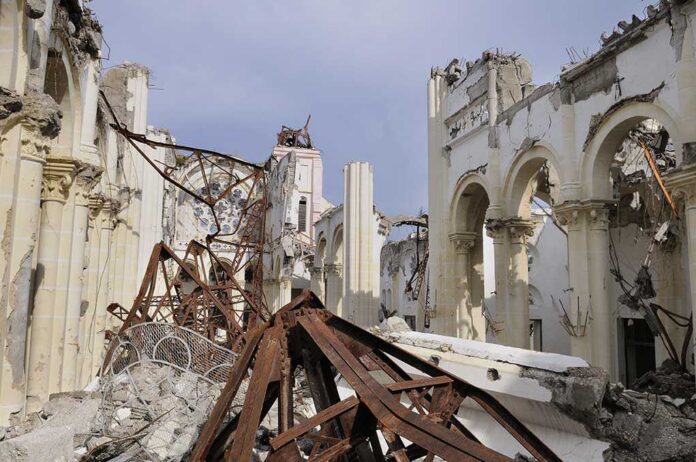
Two historic Catholic sites burn on the same day in France, and no one can yet say whether it was tragic bad luck or a sign of something darker.
Story Snapshot
- Two historic French Catholic sites were gutted by fire within hours, shocking locals and believers worldwide.
- France already sees dozens of church fires a year, with a mix of accidents and proven arson behind them.
- Notre-Dame in Paris and other cases show how aging buildings, bad wiring, and renovation work can turn small risks into huge losses.
- Rising attacks on churches and anti-Christian acts mean people are right to ask whether deeper hostility is also at work.
Why two fires in one day hit such a raw nerve
French Catholics woke up to see two different historic sites blackened and smoking, both in a single day. The social media posts that spread the images did not cite police files or fire reports, but they did tap into something real: France is burning through its religious heritage at a steady clip. France’s own religious heritage watchdog says there were 27 church fires in 2023 and 26 in 2024, with a growing share classed as criminal rather than accidental.[20]
The first reaction from many believers was not, “What a freak accident,” but, “How many more?” That reflex did not come from nowhere. Recent reviews of fires across Europe show hundreds of church blazes over 30 years, driven by old wiring, poor maintenance, careless work crews, but also deliberate arson and hate crimes.[5] In other words, when two historic churches burn on the same day, people see a pattern because there really is a pattern—just not a simple one.
What we know – and what we do not – about cause
Here is the hard truth: the public record for these two June 12 fires is thin. There is no fire brigade origin-and-cause report released, no prosecutor press conference laying out whether investigators saw forced entry, accelerants, or obvious electrical faults. That silence forces everyone to lean on comparisons. At Notre-Dame in Paris, for example, prosecutors found no evidence of a break-in or fuel and ruled out arson, focusing instead on a cigarette or electrical short during renovation.[1][4] Many other French church fires also start while work crews are on site or where wiring is decades out of date.[19]
Yet treating everything as “probably an accident” does not match recent history either. In Nantes, a volunteer eventually confessed to setting three fires inside the cathedral, after forensic work showed the blaze started in several different spots.[1] A broader review found that in 2023 there were 27 French church fires, eight criminal; in 2024, 26 fires, 14 criminal.[20] That is more than half of recorded church fires in 2024 judged to be deliberate. Common sense says you cannot write off two same‑day heritage blazes as random until you see actual scene evidence, not just wishful thinking.
Anti-Christian hostility, neglect, or both?
French and European monitors paint a double threat facing churches today. On one side, aging stone shells hide “creaky” electrical systems and no sprinklers, making any spark dangerous.[5] On the other, anti-Christian vandalism and arson are rising. One European analysis notes almost 50 arsons or attempts on Christian sites in France in 2024, up over 30 percent from the year before.[15] Another report counts 27 church fires in 2023 and flags the sharp increase in criminal cases the following year.[20] That mix creates a toxic blend: unsafe buildings in a culture where some people now treat churches as targets, not treasures.
For conservatives who care about ordered liberty and inherited culture, this is not just about property damage. Churches anchor neighborhoods and carry memory. When those places burn, whether from negligence or hate, a society that shrugs is a society that has lost its sense of duty. The French state’s own inquiry into solved anti‑church cases found attackers ranging from Islamists to far‑right and far‑left radicals, satanists, unstable loners, and minors.[2] That variety supports one key point: there is no single villain, but there is a shared failure to guard sacred space.
How narrative warfare twists every new church fire
Every time a steeple goes up in flames now, you can almost script the response. Advocacy accounts rush to declare a wave of Christian persecution, often naming suspects long before police do. Others rush just as fast to wave it off as another “random accident,” sometimes even before investigators reach the scene. Fact‑checkers have already had to debunk recycled fire clips falsely claimed as fresh “Muslim attacks” on French churches.[9][21] That kind of noise makes it harder, not easier, to see what actually happened in any given case.
🏛️💔 A Heritage in Ashes: Two Historic French Churches Affected by Fire on the Same Day
"How many more churches will we have to see burn before we take action?" 🏙️
Friday, June 12, 2026, marked a profoundly tragic day for French history and religious heritage. Within hours of… pic.twitter.com/flRR1oF717
— SG News (@SGNews123) June 15, 2026
Two same‑day fires at historic sites plug straight into that narrative war. One side uses them as instant proof that France is at war with its own Christian roots. The other treats any concern about targeted hostility as paranoid. A saner, more conservative approach does two things at once. It demands real transparency on cause—scene photos, electrical inspections, arson lab results—while also pressing officials to harden these sites against both accident and attack. Sentiment is not enough; stewardship demands action.
What a serious response would look like
A serious country would not wait for the next spire to fall. France’s own data already show most church fires start with bad infrastructure or renovation mishaps, but that a growing minority are criminal.[5][19][20] That should drive a clear set of moves: modern fire detection and sprinklers where possible, strict rules and oversight on contractors in historic buildings, and real security upgrades where attacks are more likely. At the same time, prosecutors and police should treat every significant church fire as a potential crime scene until evidence proves otherwise, and then publish their findings. You do not protect heritage by hiding the truth; you protect it by facing it head-on and fixing what you can control.
Sources:
[1] Web – Two historic Catholic sites gutted by fires in a single day
[2] Web – Church volunteer confesses to setting French cathedral on fire | News
[4] Web – France, The Country Where More Churches Are Set On Fire – Zenit.org
[5] YouTube – Investigation into Notre-Dame fire, five years on • FRANCE 24 English
[9] Web – Two Historic French Churches Affected by Fire on the Same Day …
[15] Web – All cases – OIDAC Europe
[19] Web – List of fires at places of worship – Wikipedia
[20] Web – The need to make sure religious buildings are safe | E-001662/2024
[21] Web – Is church vandalism rising across Europe? – The Pillar
© targetdailynews.com 2026. All rights reserved.