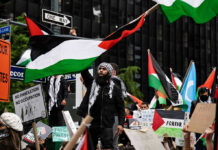
The Los Angeles Police Department’s rulebook reveals a paradox of tight regulations and alleged misapplications regarding the use of ‘non-lethal’ weapons.
Story Overview
- LAPD’s rulebook sets strict criteria for using 40mm less-lethal weapons.
- These weapons are restricted to single-target scenarios under threat conditions.
- Unauthorized use in protests has led to legal scrutiny and city council debates.
- Recent court rulings further restrict LAPD’s use of these weapons in crowd control.
Understanding the LAPD Rulebook
The Los Angeles Police Department’s official policy manual dictates the deployment of 40mm less-lethal launchers, such as foam rounds. These weapons can only be used when there is an immediate threat to officer or public safety, or when a suspect resists arrest violently. The rulebook prohibits their use for crowd control, but discrepancies between policy and practice have surfaced, particularly during protests where allegations of misuse have been made.
Despite these restrictions, accusations of LAPD deploying these weapons indiscriminately during protests are rife. This dichotomy between policy and practice has led to significant legal challenges and public outcry, particularly from civil rights groups advocating for protester rights and safety.
The Legal and Historical Context
The roots of LAPD’s less-lethal policies trace back to the reforms following the Rodney King riots and the 2020 George Floyd protests. These events prompted federal injunctions limiting the use of 40mm munitions to cases of violent resistance or immediate threats. Requirements included proper training, warnings, and prohibitions on targeting vulnerable body areas. These policies aimed to balance law enforcement needs with civil liberties, yet recent incidents have tested their effectiveness.
In 2025, LAPD’s use of 40mm weapons during protests against federal immigration raids resulted in injuries and legal action against the department. The city council’s decision not to ban these weapons despite documented injuries has further fueled debates about the appropriateness and accountability of less-lethal weapon use.
Recent Developments and Court Rulings
On January 14, 2026, a federal judge ruled the LAPD in contempt for violating previous injunctions regarding the use of 40mm less-lethal weapons. The ruling resulted in an immediate ban on using these weapons for crowd control. This decision marks a significant shift in the department’s operational tactics and highlights ongoing tensions between law enforcement practices and judicial oversight.
The LAPD issued a department-wide memo enforcing the ban and directing legal and risk management inquiries. Investigations into excessive force complaints are underway, potentially leading to disciplinary actions and financial settlements.
Implications for the Future
The immediate impact of this ruling means the LAPD must adapt its crowd control tactics without relying on 40mm launchers. In the long term, this may set a precedent for stricter regulations on less-lethal weapon use across California and potentially influence national standards. The decision also underscores the financial implications for the city, already burdened by substantial settlements related to excessive force claims.
LAPD rulebook shows when cops can — and can’t — fire ‘non-lethal’ weapons
https://t.co/OHa5YTOpfMLAPD rulebook shows when cops can – and can’t – fire ‘non-lethal’ weapons.
— Lets Go Buffalo (@NYMetsfan11279) January 18, 2026
Communities, particularly protesters and journalists, may feel a heightened sense of protection with these restrictions, while law enforcement officers face the challenge of managing public order with fewer tools. The balance between maintaining public safety and upholding civil rights continues to be a pivotal issue in the ongoing discourse about policing practices.