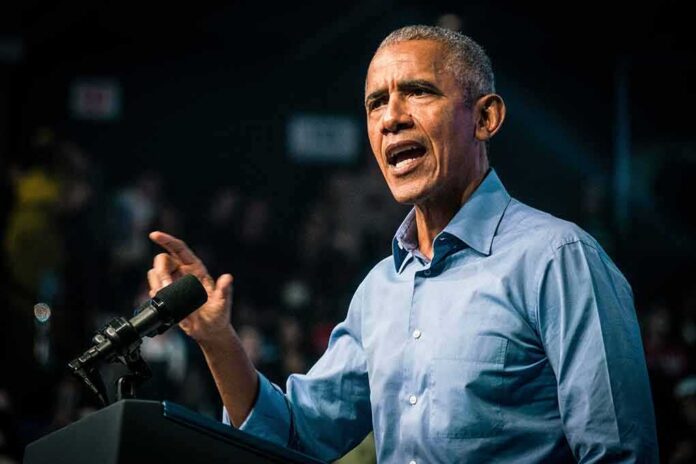
The plan to showcase party unity in Detroit now doubles as a test of political memory and message discipline.
Story Snapshot
- Barack Obama will rally with Abdul El-Sayed in Detroit on October 24, the start of early voting.
- El-Sayed’s campaign cast the event as a coalition push with top Michigan Democrats.
- Media framed Obama’s visit as a major boost in a tight Senate race.
- Past El-Sayed critiques of Obama resurfaced ahead of the rally, raising awkward optics.
Obama’s Timed Drop-In Meets a Tight Calendar
Obama is set to campaign alongside Abdul El-Sayed in Detroit on October 24, the first day of Michigan’s early in-person voting. That timing is not random; it is vote-chasing strategy in a battleground that often swings on turnout. The Associated Press and other outlets describe the stop as a high-profile lift for Democrats in a must-win Senate race. El-Sayed’s team confirmed and promoted the appearance as part of a broader “get out the vote” push with statewide leaders.
The stagecraft matters. Detroit is the heart of Democratic margins in Michigan, and launching on the opening day of early voting captures news cycles and mobilizes weekend ground games. Campaigns know the math: bank votes early, shorten lines later, and harden soft support before late attacks can land. Obama’s brand still moves low-frequency Democratic voters. He has long served as the party’s closer when races hinge on city turnout and late deciders.
The Coalition Picture: Unity Photo, Frayed Backstory
El-Sayed’s operation framed Obama’s rally spot as coalition-building with statewide figures, including Secretary of State Jocelyn Benson. The goal is plain: knit together primary factions and channel attention into action at the polls. Press coverage has echoed that arc, calling the event a lift at a critical moment. This is the muscle memory of modern campaigns. Surrogates validate, energize, and simplify a choice. They also let candidates share a headline and borrow trust with one handshake and a single camera frame.
The alliance, however, lands with baggage. Obama stayed out of the Senate primary for months, which created space for speculation about distance between his orbit and El-Sayed’s lane. That gap is not fatal, but it is real. Voters read sequence. Silence during a bruising primary, then a general-election rally, looks tactical. That does not cancel the value of a joint event, but it narrows its message to turnout and party unity rather than shared policy.
Awkward Quotes Resurface as the Motorcade Rolls
On cue, old El-Sayed comments about Obama have come back. A CNN KFile review highlighted years of sharp critiques on civil liberties, deportations, drone strikes, and the Affordable Care Act, which he called “watered-down” and too friendly to lobbyists. Another outlet recapped lines labeling Obama “centrist” and not the change many hoped for. These quotes complicate a unity tableau and invite foes to call the rally performative rather than principled.
El-Sayed now describes a “warm” talk with Obama and a shared aim to unite Democrats to win in November. That is the correct play when the mission is votes, not a seminar on doctrine. Still, the earlier rhetoric hands opponents an easy script: if Obama’s record was that flawed, why embrace his help now? The facts suggest a simple answer that fits common sense and conservative instincts about politics: campaigns prioritize coalition math over purity tests when deadlines hit.
What Matters on October 24
The test is not whether El-Sayed and Obama agree on every policy point. The test is whether the event moves votes where it counts. Detroit turnout has decided Michigan races many times. A well-timed rally can amplify door knocks, build early-vote habits, and shape local media narratives for several days. If the crowd is large, the lines for early voting grow, and the earned media is positive, Democrats get a tangible edge. If the event feels forced, the edge fades fast.
Republicans should not mistake awkward optics for automatic advantage. A disciplined ground game can beat a polished rally. The crucial counter is targeted outreach to swing and right-leaning union households, plus relentless messaging on inflation, public safety, and border security. Those issues cut across factions and speak to everyday stakes. If Democrats use star power to patch over differences, Republicans can answer with concrete plans and consistent presence where votes are still movable.
Bottom Line
Obama’s Detroit rally with El-Sayed is a classic turnout play tied to the early-vote clock. The event signals alliance, not ideological merger. The resurfaced quotes make the moment awkward, but not incoherent; campaigns evolve to win. Measure success by ballots cast and precinct energy, not by harmony on past debates. If Democrats convert ceremony into numbers, the rally did its job. If not, it is a headline without a harvest — and late October offers little time to fix that.
Sources:
townhall.com, pbs.org, abdulforsenate.com, politico.com, thehill.com, rollcall.com, spectator.com.au
© targetdailynews.com 2026. All rights reserved.