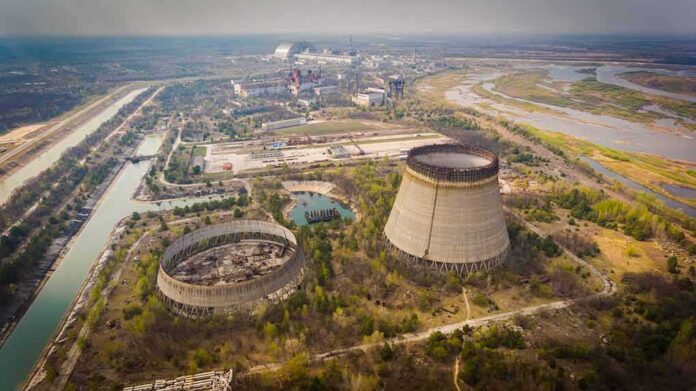
A drone hit the cooling tower of an operating reactor at Russia’s Kursk nuclear plant, and the reactor kept running with no fire, the United Nations’ nuclear watchdog said.
Story Snapshot
- The International Atomic Energy Agency (IAEA) said a drone struck a Kursk cooling tower while the unit was operating.
- The reactor’s operating mode did not change and no fire broke out, according to the IAEA summary.
- IAEA Director General Rafael Grossi condemned all attacks on nuclear facilities as unacceptable.
- The Kursk event fits a wider pattern of wartime risks around nuclear plants flagged by the IAEA.
What the IAEA reported about the Kursk strike
The International Atomic Energy Agency said it had been informed that a drone hit the cooling tower of a reactor unit at the Kursk Nuclear Power Plant. The unit was operating at the time. The agency’s summary said the operating mode did not change and that no fire broke out. These facts point to damage limited to non-nuclear systems and no radiological impact. The IAEA did not name a perpetrator in the public comments cited in press reports.
IAEA Director General Rafael Grossi responded with a clear warning. He said any attack on a nuclear facility is unacceptable because it can threaten nuclear safety and security. He also urged military restraint to reduce the risk of an accident. That stance is consistent with the agency’s guidance during the war, which stresses that even indirect strikes near a plant can create cascading risks to cooling, power, and emergency response systems.
Why a hit on a cooling tower matters
A cooling tower is not a reactor vessel or a spent fuel pool. It mainly dissipates heat to the air. A strike on a tower can still affect plant safety if it disrupts cooling capacity or forces unsafe workarounds. The IAEA’s note that the unit kept its operating mode and that no fire occurred suggests built-in redundancy worked as designed. That outcome matters, because fire and loss of heat sink are common pathways to more serious events at power stations.
Power plants use multiple systems to move heat away from the reactor core and spent fuel. Most systems sit outside the thick reactor containment, which makes them more exposed in a conflict. When these parts are hit, operators lean on backups and tested procedures. Quick containment of damage buys time. The Kursk report shows those layers held. That is good news today, but it also highlights a basic truth: repeat hits raise odds that luck runs out.
The broader war pattern around nuclear sites
The Kursk episode lines up with months of warnings from the International Atomic Energy Agency. The agency has said the situation at Ukraine’s Zaporizhzhia plant remains precarious. It urged all sides to avoid actions that could harm nuclear safety. It has also logged reports of drone fragments and nearby blasts at facilities in the region since 2024. The pattern is simple and stark: more drones and more strikes mean higher safety risks, even when reactors avoid direct damage.
Drone hits cooling tower of an operating reactor at Russia's Kursk nuclear plant – The IAEA confirms no radiation release after a direct strike, testing whether four years of nuclear safety warnings have heldhttps://t.co/DxTkKzeCqu
— Crisis.Zone (@CrisisZoneHQ) September 18, 2026
Facts in this case support a common-sense view rooted in conservative priorities: protect critical infrastructure, reduce risk to civilians, and keep energy reliable. When a plant can keep running after a strike, it shows good engineering and discipline. When leaders ignore warnings about nuclear sites, it is reckless. The right policy is also the simplest: keep fighting away from reactors and fuel, and let operators focus on safe, steady power, not war-zone triage.
What to watch next
Investigators may document the extent of physical damage to the cooling tower and any short-term repairs. Plant managers will likely review cooling margins and confirm that backup systems remain ready. The International Atomic Energy Agency will continue to press for restraint near all nuclear facilities. If military activity near nuclear plants keeps rising, the risk of a cascading failure will rise too. That is the red line the agency has flagged again and again for over a year.
Sources:
insiderpaper.com, world-nuclear.org, stimson.org, kleinezeitung.at
© targetdailynews.com 2026. All rights reserved.