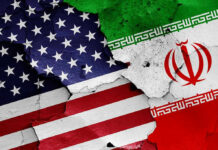
Iran’s threat to “close” Hormuz collides with U.S. claims of record traffic—and the truth sits in the gap between law, ships, and leverage.
Story Snapshot
- Iran’s parliament endorsed closure after U.S. strikes, but it lacks final authority [1][2].
- The Supreme National Security Council and Supreme Leader decide actual closure [1].
- U.S. Vice President JD Vance says the Strait is open with heavy traffic and no tolls, for now [9][12][13].
- History shows threats outnumber real closures; leverage, not shutdown, is the usual play [8].
What Iran’s Parliament Actually Did, And Why It Matters
Iran’s parliament publicly backed a closure of the Strait of Hormuz after U.S. strikes on nuclear sites at Fordo, Natanz, and Isfahan. Reports describe a unanimous, consultative endorsement that signaled resolve, not a binding order. Iran’s own system reserves any real closure call for the Supreme National Security Council and the Supreme Leader. This gap between fiery vote and final authority matters, because markets and skippers act on facts, not floor speeches [1][2].
Lawmakers had already floated bills to formalize control over the Strait before the strikes. That track set up a faster political pivot to retaliation when bombs fell. A senior member said parliament would soon approve a plan to exercise Iran’s “management and sovereignty” over the waterway, framing it as a two-country domain run by Iran and Oman. This is messaging as much as law. It sets the stage for fees, “hostile” vessel rules, and bureaucratic friction—even without a hard blockade [3].
Who Can Actually Close The Waterway
The chain of command runs through the Supreme National Security Council and the Supreme Leader, not the parliament. That design is not a quirk; it is how Iran calibrates escalation under pressure. When the legislature “endorses” closure, it boosts the threat value but does not flip the switch. Outside observers should read it as leverage, not a literal stop sign. The claim tracks with prior crises where Tehran talked tough while keeping options open [1][8].
Leverage works only if someone feels the pinch. The Strait moves a large share of the world’s oil. That is why even symbolic steps can push prices and reroute ships. Yet closing it would also cut Iran’s own exports and could invite direct conflict at sea. Analysts have called a real shutdown an “effective declaration of war,” which is why Tehran often chooses gray-zone tools: slow-walking, inspections, and selective harassment over universal closure [1].
The U.S. Says It Is Open—With Numbers To Prove It
Vice President JD Vance says the “blockade is off” and the Strait is open. He describes a plan that delivers toll-free passage now, under a short-term deal, while longer governance talks continue. He also points to immediate results: heavy throughput and a restart already visible on the water. This message does two things at once—calm markets and challenge Iran’s narrative that it calls the shots at the world’s energy choke point [9][12].
⚠️ IRAN THREATENS HORMUZ CLOSURE AND BLOCKS IAEA ACCESS AS ISRAELI OFFICIALS WARN OF SHIFTING U.S. SUPPORT AND RISING TURKISH INFLUENCE
⚓ HORMUZ THREATS ESCALATE: Iranian state media and hardline Islamic Revolutionary Guard Corps-linked reports threatened the indefinite closure… pic.twitter.com/TLsCxMjZFF
— Israel Realtime (@IsraelRealtime) June 19, 2026
Reporters have echoed the traffic claim, citing millions of barrels moved in a single night and a daily ship count that is climbing back toward normal. Those numbers, if sustained by independent tracking, undercut any claim of an actual closure. The key test is not a podium line. It is the automatic identification system pings, satellite shots, and insurer signals that either verify a flow or flag a squeeze. Early accounts point to flow [11][13].
How To Square The Circle: Threats, Ships, And Common Sense
Both narratives can be true at once. Iran can raise the cost of passage without slamming the door. The United States can keep ships moving while conceding that the next sixty days decide whether this holds. Common sense says watch behavior, not bravado. American conservative values put a premium on deterrence, free commerce, and clear rules. That means backing escorts, exposing any hidden toll plan, and refusing legal games that tax the world’s energy lane by fiat [9][8].
What To Watch Next—And Why Your Wallet Cares
Three needles will tell the story. First, a formal decree from Iran’s top security bodies would mark real escalation; its absence keeps this in the realm of pressure. Second, maritime notices and insurer circulars will show whether industry sees risk rising or falling. Third, traffic data versus pre-crisis baselines will confirm whether “record” flow is hype or proof. If flows hold and tolls stay at zero, prices ease. If Tehran adds friction, every fill-up feels it [1][8][11].
Sources:
[1] Web – JUST IN: Iran Says It’s Closing the Strait of Hormuz After Accusing US …
[2] Web – Iran Parliament Backs Strait of Hormuz Closure After US Strikes
[3] YouTube – Iran Parliament votes to back Hormuz closure, top security body …
[8] Web – An anti-Iran resolution related to the Strait of Hormuz has failed …
[9] Web – Strait of Hormuz | International Crisis Group
[11] YouTube – Vice President Vance shares plan on keeping Strait of Hormuz open
[12] Web – VP Vance says U.S. expects Strait of Hormuz to be open ‘toll … – …
[13] Web – Trump is urging tankers to sail through Hormuz. Vessels aren’t so …
© targetdailynews.com 2026. All rights reserved.