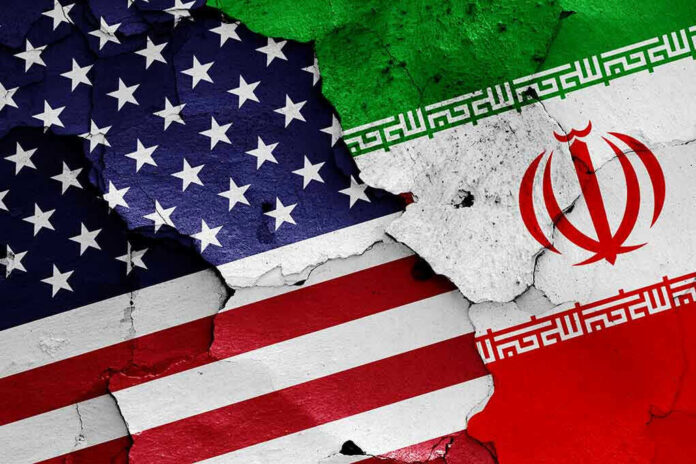
The real story here is not a soccer draw in Los Angeles, but how a World Cup team found itself treated like a security risk that had to be hustled off U.S. soil before it could even sleep.
Story Snapshot
- Iran’s coach says his team was ordered out of the U.S. just hours after its World Cup match, with no night to rest.
- U.S. officials insist the same-day in-and-out rule was set in advance as part of a national security plan, not a punishment.
- Some Iranian officials and staff never got visas at all, raising sharp questions about who Washington really wanted in the country.
- The clash shows how “security” rules can turn a global sports festival into a rolling border fight.
Why a tied soccer match turned into a political flashpoint
Iran drew 2–2 with New Zealand in Los Angeles, but the real drama began after the final whistle. Coach Amir Ghalenoei told reporters his team was told to leave the United States and head straight back to its training base in Tijuana, Mexico, without even one night to recover.[1] For a team that just played at the highest level, no hotel, no ice baths, no late-night diner — just pack your bags and get on the bus. The message, to them, felt blunt: game over, now get out.
U.S. officials pushed back hard on that story. Andrew Giuliani, who leads the White House World Cup task force, said this was never a surprise rule cooked up after the game.[1] He said the team knew the deal: Iran would be “permitted entry one day before each match” and “required to leave on the day of the match, after the game concludes.”[1] In other words, this was not an expulsion, it was the operating plan. Two sides, two very different realities.
The security logic behind the one-day rule
To understand why the United States drew such a hard line, you have to zoom out from the pitch to the security map. The Trump administration has treated the World Cup as a high-risk magnet for bad actors from high-risk states, and Iran is at the top of that list.[1][13] Secretary of State Marco Rubio has made clear that anyone with direct ties to Iran’s Islamic Revolutionary Guard Corps — a key arm of the regime’s power — would not be allowed entry on the World Cup’s coattails.[1] American officials see that as common sense when you mix a terror-sponsoring regime, a war, and stadiums full of people.
That policy did not stop at speeches. The United States has suspended or sharply limited visas for dozens of countries, including Iran, for World Cup travel.[13][15] Players, coaches, and “necessary” staff get narrow exceptions so the games can go on, but almost everyone else faces walls of red tape, extra scrutiny, or outright bans.[14][15][16] From a conservative, security-first view, this is a classic balancing act: protect Americans first, then open the gate as little as needed so the tournament still works.
Who got in, who didn’t, and why it matters
The Iranian roster itself cleared that bar. Every player and coach received a visa, and some support staff did too.[1][3] But others did not. U.S. officials have acknowledged that certain officials and staff linked to the delegation were denied entry, and Giuliani tied those denials directly to the broader red line about individuals with Revolutionary Guard connections.[1][3][14] Iran’s side called that political, especially when its own federation president failed to get a visa for an earlier World Cup draw event in Washington.[2][15]
Here is where the optics get messy. On paper, the rules carve out space for “necessary support staff,” and the administration claims it followed those rules while screening for security threats.[15][16] In practice, Iran says crucial people were blocked, and that the skeleton crew which did arrive could not even stay overnight in the host country.[2][4][8] That is fertile ground for claims of selective enforcement, even if the underlying vetting remains classified. When the government will not show its work, people assume the worst.
Was this logistics or leverage?
The clash over the same-day exit rule sits right on the fault line between logistics and pressure. Giuliani insists the schedule — fly in, play, fly out — was standard procedure agreed to in advance.[1][5] A Department of Homeland Security spokesperson told CNN the team had consented to the arrangement, though no written consent has surfaced in public.[5] That version fits a clean narrative: the United States offered a narrow but workable path; Iran took it; then complained later for political gain.
💥Los Angeles City Hall | June 10
Community members gathered in solidarity as the NCRI-US (@NCRIUS) hosted a press conference and photo exhibition honoring Iranian athletes who have been executed by the Iranian regime.From a 16-year-old wrestler to former Iranian-national team… pic.twitter.com/Asz90PDLqh
— CSDI (@CaliSDI) June 13, 2026
The team’s account points the other way. Ghalenoei and his players said they expected to stay in Los Angeles overnight for recovery and were blindsided by the order to leave.[4][8] From their view, the rule felt less like neutral crowd control and more like a humiliating reminder of Iran’s pariah status. With a war still shaping public feeling and protesters in American streets demanding Iran be kicked out of the tournament altogether, it is easy to see why Tehran framed its squad as the “most oppressed” team at the World Cup.[4]
What this reveals about modern mega-events
This fight is bigger than one team’s sore legs. World Cups and Olympics now collide with hard-edged immigration systems, terror threats, and culture-war politics. The United States has layered bond requirements, travel suspensions, and narrow athlete exceptions on top of a visa regime that already confuses most normal visitors.[13][14][16][19] That mix almost guarantees that some teams, officials, and fans will feel singled out, even when rules are written to be uniform.
For Americans who value secure borders and do not want their country to roll out the red carpet for a regime like Iran’s, the core principle here rings true: sports do not erase security realities. You can host the party without letting every guest roam your house unsupervised. The open question is whether the Iran case was a fair, tightly tailored version of that principle, or a clumsy, half-explained show of toughness that handed Tehran an easy victim story to sell to the world.
Sources:
[1] Web – No Late Night Waffle House for Iran: Iranian World Cup Team Booted …
[2] Web – US says Iran knew team would have to leave shortly after match
[3] Web – Iran Team Forced To Leave U.S. Immediately After World Cup Draw
[4] Web – Iran World Cup team ordered out of US right after opener, coach says
[5] Web – Iran ‘most oppressed’ team at World Cup, coach says after being …
[8] Web – Trump’s World Cup czar calls early entry for Iran team a … – …
[13] YouTube – Iranian coach says team told to leave U.S. after match
[14] Web – US official says Iran knew team would have to leave shortly after …
[15] Web – Iran’s World Cup team was reportedly ordered to leave the United …
[16] Web – Iran World Cup team booted from U.S. right after first match, coach …
[19] YouTube – Some World Cup fans face US visa hurdles despite teams qualifying …
© targetdailynews.com 2026. All rights reserved.