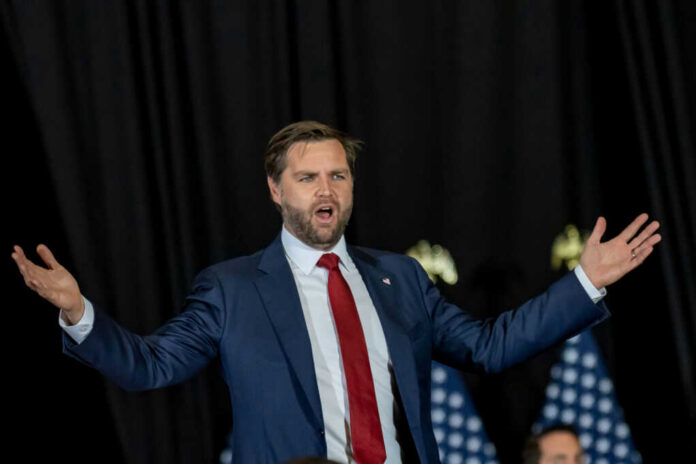
JD Vance named the war with Iran as the reason Republicans lost — then sketched a four-step plan to win 2028 back.
Story Snapshot
- Vance blamed the Iran war for the GOP’s 2026 midterm losses and cited Trump’s own remarks.
- He proposed four moves: end the war, fight inflation, put America First, and reset Israel policy.
- Coverage linked the war to higher oil prices amid already high costs, stinging voters at the pump.
- Critics say inflation, tariffs, and weak approval also drove losses, not just the war.
Vance’s Diagnosis: The War Cost the Majority
Vice President JD Vance posted on November 4 that “the reason we lost is the war,” pointing to the Iran conflict as the core driver of Republican midterm defeats. He said President Trump had acknowledged the war’s effect on gas prices on election night, and he framed those prices as a pocketbook punch that flipped enough voters to matter. This claim fit the moment. News reports tied the conflict to higher oil prices while families were already stretched by rising costs.
Vance did more than point to blame. He named four issues he said defined the defectors who backed Trump-Vance in 2024 but chose Democrats in 2026: end the war, attack cost of living and inflation, put America First, and change the United States’ relationship with Israel. He cast these as a roadmap to bring those voters “back to our team.” The message aimed at action, not just Monday-morning analysis, and it spoke in plain terms most voters track every week at the pump and the checkout.
The Economic Link: Gas, Groceries, And Voter Patience
Higher oil prices during a war land fast and hard in American life. Gas rises first. Then shipping costs squeeze groceries and goods. Vance’s focus on price pain lines up with how elections punish the party in power when bills keep climbing. Reporters tied the conflict to oil price spikes, and they echoed how voters linked pain at the pump to their votes. That story tracks with decades of midterm history: when costs rise and patience thins, swing voters swing.
His theory also rests on a common-sense test. Families budget in cash, not cable talking points. If war nudged gas up while inflation was still hot, voters saw cause and effect. That does not prove the war explains every seat lost. But it explains why a simple story — war raised prices, prices drove votes — caught fire so quickly. On the facts in view, that link clears the bar of plausibility and lines up with conservative instincts about economic tradeoffs.
The Four-Part Fix: A Coalition Repair Plan
Vance’s fix begins with ending the war. He adds a direct focus on inflation and the cost of living, a return to an America First frame, and a recalibration of the United States–Israel relationship. He says these four points reflect what 2024 Trump-Vance voters told a trusted pollster, and that the same voters could return if Republicans deliver on them. The strongest part of the case is its clarity. It offers voters a short list and a timeline: end the war, lower costs, reprioritize home.
Two caveats follow from the record. First, the poll behind the four points has not been published, and the pollster is unnamed, limiting outside review of the data. Second, even if these issues dominated answers, there is no guarantee that ending the war or shifting policy would flip votes back at scale. Voters watch results, not press releases. A plan helps, but outcomes decide.
The Pushback: More Than One Cause, More Than One Risk
Other outlets argue that the war is only part of a larger story. Analysts cite a broader affordability crisis that includes tariff-driven price pressure and weak presidential approval. They also point to candidate quality and general fatigue with Republican governance in 2026. This critique has weight because it fits the data we can see. When many bills rise at once, voters blame more than one policy. That does not erase Vance’s war-price link. It limits how far that link can carry the whole loss.
Commentary also frames Vance’s move as positioning for 2028 while keeping ties to President Trump. That political reading may be true and still miss the core point. If the war raised costs and costs sank the midterms, then ending the war and easing prices remains the most direct repair. The conservative test is results: safer streets, cheaper gas, secure borders, and fewer wars we do not need. If Vance’s four steps deliver, voters will not ask who got credit first — they will feel it.
Sources:
bbc.co.uk, nbcnews.com, cbsnews.com, premiumtimesng.com, thewrap.com, economictimes.com, independent.co.uk
© targetdailynews.com 2026. All rights reserved.