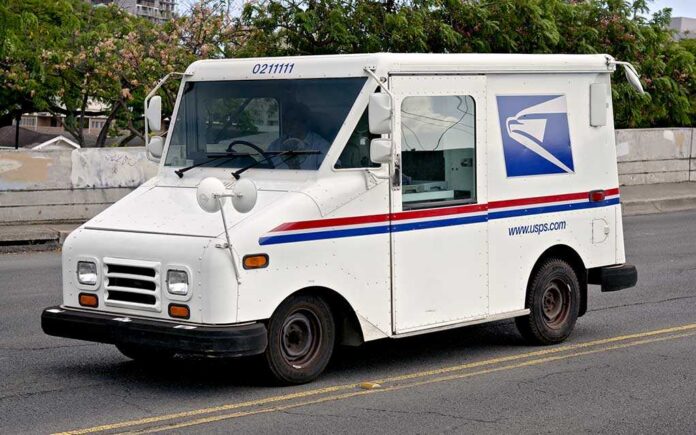
USPS faces collapse within a year, proposing a near-$1 stamp that burdens everyday Americans already squeezed by years of government waste and inefficiency.
Story Snapshot
- USPS reports $9 billion loss in FY 2025, warns of cash exhaustion by February 2027 without immediate action.
- Postmaster General David Steiner proposes hiking first-class stamps from 78 cents to 90-95 cents in congressional testimony.
- Chronic mail volume decline from 220 billion pieces in 2010 to 110 billion today evaporates $86 billion in revenue.
- U.S. stamp prices remain lowest globally despite vast geography, but regulatory hurdles block fixes.
Financial Crisis Hits USPS Hard
USPS posted a $9 billion net loss for fiscal year 2025, ending September 2025, despite a 1.2% revenue bump from shipping services. Mail volume halved over 15 years as digital communication surges, slashing $86 billion in annual revenue since 2010. Postmaster General David Steiner, who took office in July 2025, warns of cash depletion by February 2027 absent reforms. This self-funded agency avoids taxpayer bailouts but struggles under outdated mandates from a 2006 law, partially eased by the 2022 Postal Service Reform Act.
Steiner’s Bold Testimony Before Congress
On March 17-18, 2026, Steiner testified to the House Oversight subcommittee, pitching three levers for survival: price hikes, cost cuts, and revenue growth. He targets first-class stamps at 90-95 cents—a 15-22% jump from 78 cents—to curb controllable losses. Additional pleas include raising the $15 billion borrowing cap and diversifying pension investments beyond Treasuries. Steiner, former FedEx board member, contrasts U.S. prices—lowest in industrialized nations—with France at $3 and U.K. at $2.50, citing vast U.S. distances from Puerto Rico to Alaska.
Regulatory Roadblocks and Historical Precedents
The Postal Regulatory Commission limits pricing flexibility, tying Mailing Services to CPI while package revenue subsidizes letters. USPS Governors approved January 2026 shipping hikes of 5-8%, but first-class stamps stayed flat. Precedents include Louis DeJoy’s 2021 “Delivering for America” plan, which missed 2024 profitability goals amid FY 2024’s $9.5 billion loss. Multiple postmasters since 2006 sought reforms; the 2022 Act ended retiree health prefunding but retained constraints, leaving USPS vulnerable to irreversible digital shifts.
Stakeholders like Congress hold keys to borrowing and pensions, while PRC oversees pricing. Employees and vendors risk payment delays, and rural communities depend on universal service.
Americans may soon pay almost $1 to mail a first-class letter. The U.S. Postal Service wants to raise first-class stamp prices to between 90 cents and 95 cents as it faces a financial crunch.https://t.co/hE3iobVbSX
— WJZ | CBS Baltimore (@wjz) March 18, 2026
Impacts on Americans and Path Forward
Short-term, higher stamps hit rural and low-income users reliant on mail for essentials, potentially deterring bills and small businesses. Long-term, approvals could stabilize operations and boost package subsidies, but accelerate volume decline. Potential Saturday cuts and post office closures loom with cost reductions implying 20,000 layoffs. Under President Trump’s administration, Congress faces pressure for bipartisan fixes like 2022, favoring private-sector efficiencies over endless government propping. Global affordability ends, but survival demands common-sense changes now.
Steiner asserts 95 cents largely solves controllable losses, yet pessimists doubt even $1 suffices without volume rebound. No implementation yet; proposals await PRC and congressional action.
Sources:
USPS wants to raise first-class stamp price to as high as 95 cents.
USPS could raise first-class stamp price over $1 in proposal
United States Postal Service Eyes Stamp Prices Near $1
USPS Recommends New Competitive Prices for 2026