Five rival TV networks paused presidential pool coverage together, and the Justice Department says that joint pause might be an illegal boycott.
Story Snapshot
- Five major networks halted pooled White House video after some outlets were barred.
- The Justice Department issued civil investigative demands to the networks.
- Officials signaled a possible group boycott under the Sherman Act.
- Networks argue their protest was protected press freedom, not collusion.
What triggered the antitrust spotlight
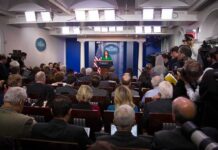
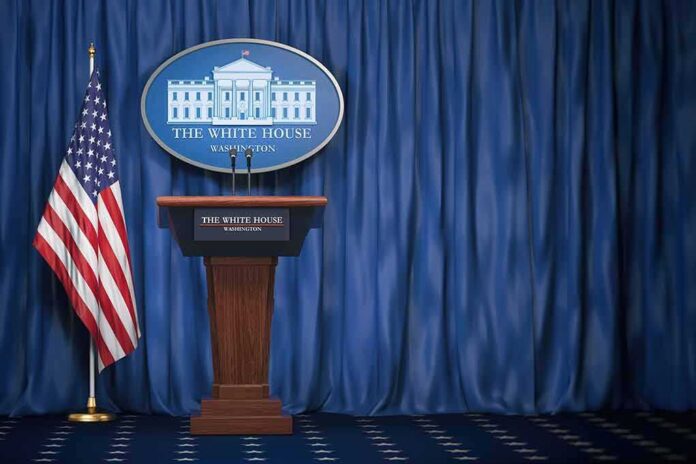
ABC, CBS, CNN, NBC, and Fox News stopped pooled television coverage of President Trump after the White House restricted CNN, MS NOW, and Politico. Reports place the halt on September 21, 2026, and say the pause followed a joint announcement by the television pool members. The Department of Justice then opened a probe and asked for emails and other records. That move signaled a real investigation, not just a press statement.
Department of Justice spokesperson Emily Covington framed the legal theory in simple terms. She said pool members “have boycotted covering White House events,” and that group boycotts among competitors can violate antitrust law. The department’s Antitrust Division sent civil investigative demands seeking communications and pool documents. Outlets including NBC News and Agence France-Presse reported on the demands and the scope of requested material.
Why a press-pool protest can look like a boycott
Antitrust law treats collective refusals by competitors as suspect when they restrict output or access. The Federal Trade Commission’s own guidance warns that an agreement among rivals not to deal with a target can be an illegal boycott if the group has market power. The press pool is a shared pipeline. When the five dominant television outlets pause that feed at once, the practical effect resembles a lockout, even if the intent was protest rather than profit.
The Department of Justice is testing whether the networks’ coordination crossed the line from parallel editorial choices into an agreement to withhold a shared service. Investigators want to know who proposed the suspension, who agreed, and whether anyone blocked replacement coverage. Deutsche Welle reported the networks not only paused coverage but also declined to offer replacement programming, which would magnify the impact. If documents show a pact to cut off access, that fits classic boycott concerns.
The counterclaim: protest, not price-fixing
The networks say the pause defended the public’s right to independent reporting and pushed back on the White House excluding outlets for their coverage. Their joint statement argued that no administration should block a news organization because it objects to its reporting. Former antitrust chief Jonathan Kanter, quoted by CNBC, argued the press pool’s cooperation in response to a perceived First Amendment breach is protected speech, not an antitrust conspiracy.
The Reporters Committee for Freedom of the Press added that the First Amendment protects editorial decisions about what to cover. It warned the probe could intimidate journalists. Commentators at Reason, republished by Yahoo, stressed that Sherman Act boycotts usually target marketplace rivals to gain advantage. They argued the networks were not trying to boost profits or kneecap competitors, but to defend press freedom. That argument strikes a chord with many readers, but it does not end the legal question.
The narrow path between rights and rules
Courts draw lines between protected expression and agreements that constrain markets. The Supreme Court has policed group boycotts even outside classic price-fixing, while also limiting per se rules when context matters. The press pool complicates the picture. Pooling is a cooperative system that lets many newsrooms share scarce access to a single public official. That structure is useful and lawful, but it can turn a coordinated pause into a market-wide blackout of a unique feed.
Common sense and conservative values can hold two ideas at once. The White House should not bar reporters because of tough coverage. The public needs more sunlight, not less. But competitors do not get a free pass to switch off a vital, shared pipeline together. The right test is evidence. If each network made an independent editorial call, that is protected speech. If executives agreed to withhold supply as a bloc, that starts to look like a boycott that the law forbids.
What matters next
The case turns on documents and timelines, not slogans. Civil investigative demands aim to reveal emails, call logs, pool-rotation notes, and any direction to refuse replacements. If the records show parallel but independent choices, the probe likely fades. If they reveal a coordinated pact to shut down coverage and prevent substitutes, the department may press forward. Until then, the facts support exactly this: an active investigation, a clear legal theory, and a defense rooted in press rights.
Sources:
reason.com, cnn.com, cnbc.com, nbcnews.com, npr.org, yahoo.com, deadline.com, afp.com, inquirer.com
© targetdailynews.com 2026. All rights reserved.