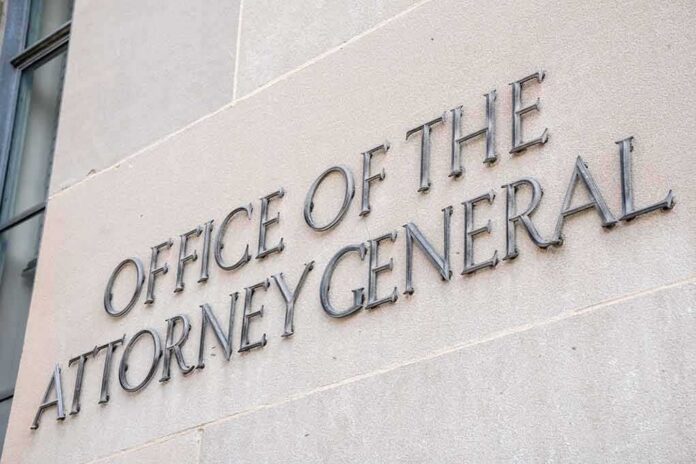
Harmeet Dhillon resigned as the Justice Department’s civil rights chief days after the midterms, closing an 18-month run that remade a powerful unit and left deep arguments in her wake.
Story Snapshot
- Attorney General Todd Blanche said he accepted Dhillon’s resignation on November 5, 2026.
- Dhillon told staff she planned a return to private practice after the midterms, according to reports.
- Coverage credits her with a sweeping overhaul and an exodus of career staff during her tenure.
- Reports differ on motive; the fact of her exit and timing are uncontested.
What Happened And When
Attorney General Todd Blanche announced he accepted the resignation of Assistant Attorney General Harmeet Dhillon on Thursday, November 5, 2026. He praised her leadership and thanked her for service. Reports describe her as having led the Civil Rights Division for about 18 months, starting in the spring of 2025, and departing days after the November 3 midterm elections. Several outlets framed the move as the first major post-election exit from a senior Justice Department post.
Dhillon reportedly sent a resignation letter and a staff email that pointed to a planned return to private practice after the midterms. The Los Angeles Times reported she told staff she informed President Trump in early October of her plan to leave after the elections. Blanche’s statement used standard language for a voluntary exit, saying he accepted her resignation and wished her well. Outlets agreed on the resignation’s timing and fact, while they differed on why she left.
How Her Tenure Reshaped The Division
Coverage across networks and newspapers described major changes to the Civil Rights Division during Dhillon’s time in charge. Reports said she redirected priorities, reassigned senior career lawyers, and pressed a harder line on campus speech and election-related issues. Several accounts tied her tenure to a large wave of departures among career attorneys, portraying an internal shift that affected cases and culture. One public radio report detailed broader changes in the unit’s mission and workforce in 2025 and 2026.
These changes sit inside a long-running tug-of-war over how the division sets priorities. Administrations often shift focus, yet the division’s hiring rules were designed to shield career jobs from politics after a 2008 inspector general finding. Reporting in late 2025 and 2026 said those guardrails were under strain as supervisors gained more hiring say and long-serving lawyers exited, while leadership argued the work defended civil liberties across the board. The net effect was a civil rights office that looked and acted very different by late 2026.
The Stated Reasons And The Reported Friction
Dhillon’s reported explanation emphasized timing, not turmoil: a planned return to private practice after the midterms. That aligns with Blanche’s public thanks and an orderly handoff tone. Other outlets reported she clashed with department leaders over election legal strategies and messaging. One network said sources tied her departure to frustration at court losses. Those accounts cited unnamed sources and did not carry on-record confirmation, but they shaped how some framed the move. The core fact stands: she resigned, and Blanche accepted it.
DOJ civil rights chief Harmeet Dhillon resigns, says White House asked her to wait until after midterms https://t.co/Fc3qtdPFkt
— FOX 7 Austin (@fox7austin) November 6, 2026
Common sense says both things can be true. Senior appointees often time exits after elections, and high-pressure legal fights create strong views on strategy. Conservative readers will see a leader who took on entrenched bureaucracy, faced pushback, and left on her terms. Others will stress the internal churn and the cost of rapid change. The record shows she pursued the agenda she was hired to carry out, and that agenda met fierce resistance inside and out.
What Changes Next And Why It Matters
The practical questions now sit with cases in motion, hiring already underway, and the acting lead who will carry files forward. Reports did not name an acting successor in the hours after the announcement, and they did not give an effective date for the handoff. That means line lawyers and section chiefs will hold the wheel in the near term. Expect continuity where directives are clear and pauses where priorities were driven from the top.
The stakes are not small. The Civil Rights Division decides what to investigate, what to file, and what to settle. A leader’s exit can reset emphasis across policing, voting, schools, housing, disability rights, and faith and speech claims. Dhillon’s tenure moved those levers fast and far, and her departure will test which moves were structural and which were tied to her presence. Watch for revised guidance memos, staffing updates, and court filings that signal the next chapter.
Sources:
hrc.org, cnn.com, latimes.com, nytimes.com, npr.org, abcnews.com, nbcnews.com, cbsnews.com, politico.com
© targetdailynews.com 2026. All rights reserved.