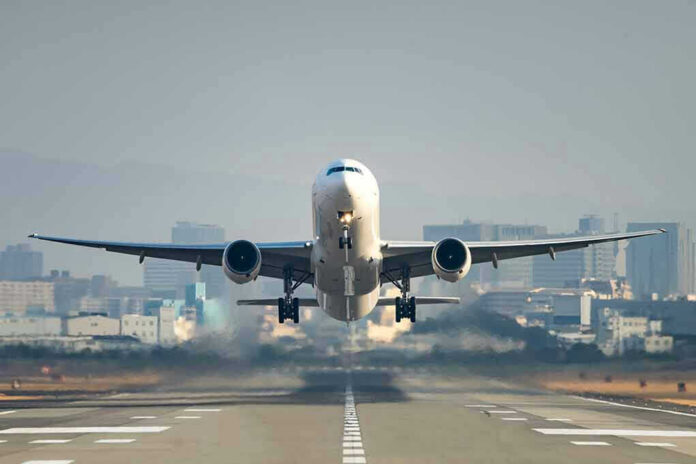
In the high-stakes world of air traffic control, one near-miss involving a U.S. Air Force B-52 and a Delta jet has everyone asking: who dropped the ball?
At a Glance
- A near-collision between a B-52 bomber and a Delta Connection jet raised alarms.
- The incident occurred near Minot International Airport, North Dakota.
- Lack of radar coverage forced reliance on visual separation by air traffic controllers.
- The professionalism of the SkyWest pilot averted a disaster.
The Incident Unfolds
On July 18, 2025, a B-52 bomber narrowly avoided a mid-air collision with a Delta Connection regional jet near Minot International Airport, North Dakota. The B-52 was completing a pre-approved flyover for the North Dakota State Fair, while SkyWest Flight 3788, carrying 76 passengers, was on its final approach to land. The Minot air traffic control tower, operated by a private company, failed to warn the SkyWest crew of the B-52’s proximity.
The lack of radar coverage at Minot International meant the controllers relied on visual separation, a risky method in complex operations. This scenario unfolded despite the event being coordinated in advance with the FAA, highlighting a critical communication breakdown. The SkyWest pilot, exhibiting exceptional skill, executed an aggressive maneuver to avoid the B-52, averting what could have been a catastrophic collision.
Key Players and Their Roles
SkyWest Airlines operated the commercial flight, ensuring passengers’ safety remained paramount. The U.S. Air Force showcased its B-52 bomber in a public relations move, while Minot’s air traffic control was tasked with managing the airspace. The FAA, overseeing safety regulations, launched an investigation into the incident. The FAA’s role is vital, as it regulates both civilian and military aviation, mandating coordination between the two during special events.
Minot International’s air traffic control, being privately operated, is not directly managed by the FAA. This raises questions about the adequacy of oversight and resource allocation in such privatized settings, particularly in airspaces involving military operations. The power dynamics underscore the need for seamless integration and robust communication protocols between military and civilian airspace management.
Investigations and Implications
The FAA has initiated an investigation into the incident, and both the Air Force and SkyWest have acknowledged the event, affirming their commitment to safety. Preliminary findings suggest a failure by Minot ATC to inform the SkyWest crew of the B-52’s presence. This near-miss has prompted a review of ATC procedures at Minot, focusing on civil-military coordination during special events. The absence of radar coverage and reliance on visual separation are under scrutiny, with potential regulatory changes on the horizon.
The incident has triggered discussions on the adequacy of privatized ATC operations, especially at airports with significant military activity. Upgrading radar or surveillance infrastructure at Minot could mitigate risks, enhancing safety measures in mixed-use airspace. The aviation industry might see a reassessment of communication protocols, reigniting debates over the privatization of air traffic control services.
Long-Term Effects and Expert Opinions
The incident’s long-term implications could lead to regulatory changes and infrastructure upgrades. The psychological impact on passengers and crew, public confidence in air safety, and the economic costs of potential procedural changes are significant. Aviation safety experts point out the risks of visual-only separation and call for improved technology and stricter protocols for special event flyovers. Analysts emphasize the need for better integration of military and civilian airspace management, with some highlighting the professionalism of the SkyWest pilot as a critical factor in preventing disaster.
Experts argue that privatized ATC towers may lack the resources or oversight of FAA-run facilities, increasing risk in complex scenarios. This incident underscores the importance of seamless communication and resource allocation in air traffic management, especially in environments where civilian and military operations intersect.