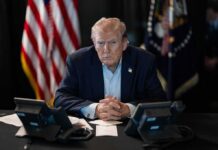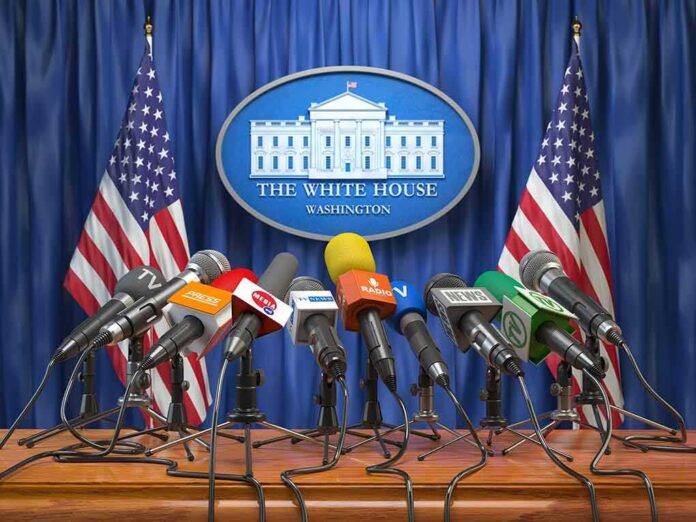
Three big newsrooms were blocked at the White House gates after President Trump said they spread “fake news,” and now they are heading to court to get back in.
Story Snapshot
- Trump announced bans on CNN, MS NOW, and Politico; security enforced them the next day.
- The outlets call the move unconstitutional and plan legal action to restore access.
- Prior court fights over Associated Press access split across venues and rules.
- The case will test where criticism ends and government retaliation begins.
The Ban Was Announced, Then Enforced at the Gate
President Trump said he was banning CNN, MS NOW, and Politico from the White House because of “constant ‘reporting’ FAKE NEWS!” That message ran on Friday. The next morning, White House security turned reporters from those outlets away. This was not theater; it was action. Reuters reported the denials and pass seizures on site, confirming immediate follow-through on the order. The Associated Press captured the president’s own words that framed the rationale.
CNN called the ban an “illegal assault” on press freedom and said its reporters were denied entry on Saturday morning. MS NOW argued the White House belongs to the people and should allow news coverage funded by taxpayers. The pushback sets up a direct clash: a president asserting control over access to his workplace, and national outlets arguing that viewpoint-based blocks cross a constitutional line. The stage is set for quick filings and fast hearings.
What Courts Have Already Said About Press Access
Prior fights over the Associated Press laid the groundwork for this one. Reporting shows courts split the question by venue. Judges treated the Oval Office and Air Force One as more restricted, but flagged viewpoint-based exclusions as unlawful when the government opens access to journalists in broader spaces. Politico reported that an appeals panel reinstated parts of Trump’s Associated Press limits while leaving access in larger venues intact, a mixed result that both sides now cite. A BBC report noted a judge called other Associated Press limits “contrary to the First Amendment,” which favors the challengers.
That split matters. If the government can label an area restricted, it gains room to manage space and security. But when officials open a room to multiple outlets, courts warn them not to punish a particular viewpoint. The White House might argue these bans are targeted to controlled areas, not a total blackout. The newsrooms will argue the practical effect is broader, because the grounds and key rooms shape the daily news cycle and public understanding.
The Administration’s Rationale Versus the Legal Test
The stated reason for the bans was “fake news,” not a detailed finding of misconduct. That is a political claim, not a legal standard. The Associated Press and others have reported no written criteria, no notice, and no appeal channels tied to these denials. Courts look for neutral rules and due process when the government manages press credentials. When an official points to disfavored coverage, judges tend to see viewpoint discrimination. On the evidence now public, the challengers open with the stronger First Amendment hand.
"A threat to our National Security." That's how Trump just described news coverage he doesn't like – the same morning the banned outlets sued him in federal court.
In a Monday Truth Social post, Trump insisted the media ban isn't an attack on press freedom, just on what he calls…— Top Stories (@TopStories77) September 21, 2026
A conservative view prizes both order and the Constitution. Government should set clear, neutral rules and enforce them fairly. If an outlet breaks rules, state the rule and show the proof. When the rationale is simply “we do not like their stories,” it sounds like retaliation, not stewardship. That does not mean every room in the White House must be open. It does mean the door cannot swing shut because of tough reporting or sharp questions.
What the Lawsuits Will Try to Prove
The outlets will seek an emergency order to restore access. Expect filings that map which doors closed, which badges failed, and which events they missed. They will press for internal emails and directives to show motive and scope. They will anchor their claim on past rulings warning against viewpoint-based bans in opened spaces. The White House will likely argue logistics, security, and narrow venue rules, and may point to the prior appeals ruling as cover for limited restrictions.
The outcome may split again. A judge could order access to the briefing room and major events, while allowing tighter control over the Oval Office or small sprays. If facts show a blanket, outlet-by-outlet block with no neutral rule, the court is more likely to force a broad reset. Either way, the fastest path back to normal is a published, viewpoint-neutral policy with clear conduct standards and an appeals track the press can trust.
Sources:
cnn.com, npr.org, abc45.com, bbc.com
© targetdailynews.com 2026. All rights reserved.