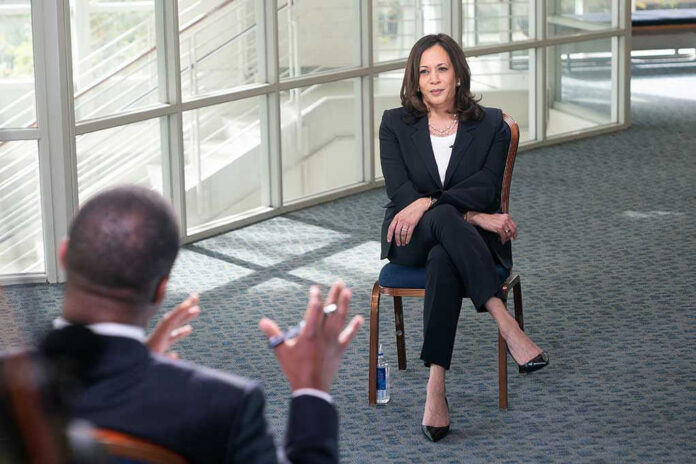
Kamala Harris’s confession that she “had no idea” her televised remarks would become a media “hand grenade” exposes the dangers of unchecked media power and the lingering legacy of divisive identity politics that many Americans are eager to leave behind.
Story Snapshot
- Harris’s viral “hand grenade” moment on “The View” exemplified the volatility of political media and the risks faced by public figures.
- The incident fueled renewed debate over media bias, racial politics, and double standards for conservative Americans.
- Her reflection in her memoir underscores the enduring impact of viral moments on political reputations and policy debates.
- This episode highlights the importance of transparency and accountability, values central to the current conservative movement.
Harris’s “Hand Grenade” Moment Reveals Media Power Dynamics
In January 2019, then-Senator Kamala Harris appeared on ABC’s “The View,” delivering a response to questions about her record as a prosecutor and her stance on marijuana legalization. Unbeknownst to her at the time, her answers would ignite a political firestorm. Harris later described this as “pulling the pin on a hand grenade” in her memoir, reflecting on the unpredictable nature of modern media. The incident quickly became a talking point across news outlets, with critics and supporters dissecting her every word. For conservative observers, the episode epitomized how media can selectively amplify certain narratives, often to the detriment of those with differing viewpoints.
Harris’s controversial appearance was far from an isolated event. Many high-profile politicians have experienced similar “gotcha” moments, where a single comment—often taken out of context—mushrooms into a full-blown controversy. In Harris’s case, her remarks resurfaced repeatedly in political debates and media coverage, influencing perceptions of her authenticity and leadership. This phenomenon is not unique to the left; conservatives have long pointed to the double standards in media coverage, where slip-ups by right-leaning figures are amplified while progressive missteps are downplayed. Such incidents erode public trust in the media’s ability to provide balanced reporting and reinforce the need for greater journalistic accountability.
Identity Politics and Media Scrutiny: A Persistent Challenge
The media fallout from Harris’s appearance intersected with broader debates about identity politics and media bias. As a Black and South Asian woman, Harris has often positioned herself as a trailblazer, but her critics argue that this focus on identity has come at the expense of substantive policy discussion. The viral nature of her “hand grenade” moment only intensified scrutiny, with some commentators suggesting that the media’s obsession with viral soundbites undermines serious debate on issues affecting American families, constitutional rights, and economic security. For many Americans, especially those frustrated by years of “woke” agendas and divisive rhetoric, the incident underscores the urgency of returning to merit-based, common-sense governance.
Academic and media analysts have since dissected the Harris incident as a textbook example of the unpredictable power of viral moments in shaping political fortunes. Political scientists note that such episodes disproportionately affect politicians who already face skepticism or opposition, whether due to their policies or personal style. In Harris’s case, the incident contributed to her reputation as a polarizing figure—one whose messaging sometimes faltered under pressure. The experience serves as a cautionary tale for all public figures navigating a media landscape that prioritizes controversy over clarity.
Lessons for the Conservative Movement: Transparency, Accountability, and Media Reform
The enduring relevance of Harris’s “hand grenade” moment is a stark reminder of why so many Americans, especially those who value constitutional rights and traditional principles, demand greater transparency and accountability from both politicians and the media. As the nation moves forward under new leadership, there is renewed momentum to challenge media narratives that undermine American values, promote government overreach, or distract from substantive policy solutions. Restoring trust in public discourse requires vigilance against the kind of media manipulation that fueled the Harris controversy and a steadfast commitment to the ideals that unite Americans across the political spectrum.
Kamala Harris says she 'had no idea' she 'pulled the pin on a hand grenade' with 'The View' answer about Biden https://t.co/X4ypdweijZ
— Thomas Payne (@TPayneCommon) September 19, 2025
Ultimately, the lessons of Harris’s viral episode extend beyond partisan lines. For conservatives, it serves as a rallying point—proof that vigilance against media bias and the defense of constitutional principles remain as vital as ever. By focusing on transparency, merit, and accountability, the country can ensure that future political debates are shaped by facts, not fleeting controversies or divisive identity politics.
Sources:
Kamala Harris ‘had no idea’ she ‘pulled the pin on a hand …
Kamala Harris says she ‘had no idea’ she ‘pulled the pin on a …
Kamala Harris on disastrous ‘The View’ appearance