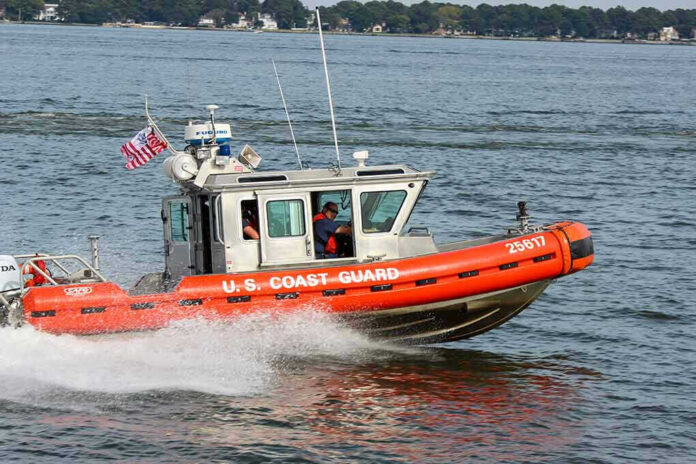
Imagine intercepting enough cocaine to hypothetically wipe out the population of three large U.S. states; that’s precisely what the U.S. Coast Guard has accomplished.
At a Glance
- U.S. Coast Guard seized over 240,000 pounds of cocaine since 2017.
- This quantity could kill over 91 million people.
- Cartels are shifting tactics due to stricter land border security.
- The Coast Guard’s efforts have doubled cocaine seizures compared to last year.
The Mighty Wave of Cocaine Seizures
The U.S. Coast Guard has long been on the front lines of the nation’s battle against drug smuggling, but recent efforts have taken their operations to new heights. Since the start of the Trump administration in January 2017, the Coast Guard has seized a staggering 240,000 pounds of cocaine. This is not your average day at sea; it’s like chancing upon a treasure chest, albeit one filled with perilous powder instead of gold. The increase in maritime seizures coincides with heightened land border security, prompting cartels to take their chances on the open seas.
The recent operations have been nothing short of dramatic. In April 2025, the Coast Guard netted over 45,000 pounds of cocaine in a single daring swoop, with ties to major Mexican cartels like CJNG and Sinaloa. Talk about a catch of the day! This haul alone was valued at over $500 million, underscoring the financial stakes involved for these criminal enterprises. The Coast Guard’s oceanic crusade signals a major shift in the war on drugs, where “catch and release” is not part of the playbook.
Who’s Who in the Drug-Busting Theatre
Several key players orchestrate this high-seas drama. The Coast Guard is the star of the show, backed by the Department of Homeland Security, the Department of Justice, and an ensemble cast of international partners. Their motivation? National security and public safety, as they work tirelessly to keep America’s coastal borders from becoming a smuggler’s paradise. The villains in this narrative are, of course, the drug cartels, who are constantly adapting their tactics to evade capture. However, as the Coast Guard Acting Commandant Adm. Kevin Lunday aptly put it, “We own the sea, not you.”
The Trump administration’s policies on border security and drug interdiction set the stage for this maritime showdown, while the Biden administration’s focus on human smuggling has created new challenges for cartels, forcing them to rethink their strategies. Local law enforcement and international partners provide critical support, ensuring this isn’t a one-ship operation.
The Ripple Effects of Seizures
The implications of these massive cocaine seizures extend far beyond the immediate grab-and-bag operations. Short-term, they represent significant financial losses for drug cartels, disrupting their supply chains and planned distribution networks. For U.S. communities, each intercepted shipment means fewer drugs on the streets, potentially saving countless lives and reducing crime associated with drug trafficking.
In the long run, however, cartels are nothing if not resourceful. As maritime interdiction ramps up, these nefarious networks may pivot to new smuggling methods or shift their focus to other illicit activities, such as human trafficking. This constant game of cat and mouse requires law enforcement to stay one step ahead, continually adapting their strategies to counteract evolving threats.
The Broader Picture
Experts agree that while these seizures are a substantial victory, they are just one piece of a much larger puzzle. Interagency cooperation, advanced technology, and international alliances are credited with achieving these record-breaking results. Yet, many law enforcement officials caution that, while disrupting supply is vital, it rarely eliminates demand. The insatiable appetite for narcotics continues to fuel these dangerous enterprises.
Drug policy scholars argue for a balanced approach, combining enforcement with prevention and treatment strategies to address the root causes of drug abuse. Without tackling the underlying demand, these impressive seizures, though essential, might have limited impact in the grand scheme of things. Still, every pound seized is a step toward a safer society.