A Turkish court froze an Iranian airliner on the runway over about €3 million, and passengers watched debt enforcement happen at 30,000 feet of stress before takeoff.
Story Snapshot
- Turkish authorities seized a Caspian Airlines Boeing 737 at Istanbul Airport under a court order over an unpaid debt of about €3 million.
- Passengers were told to disembark, and the aircraft was placed under arrest on the spot.
- Iran’s aviation regulator confirmed the court-ordered seizure and linked it to airport service fees.
- Caspian Airlines called it an administrative issue and said legal steps were underway to resolve it.
Debt Order Turns a Routine Departure Into a Courtroom
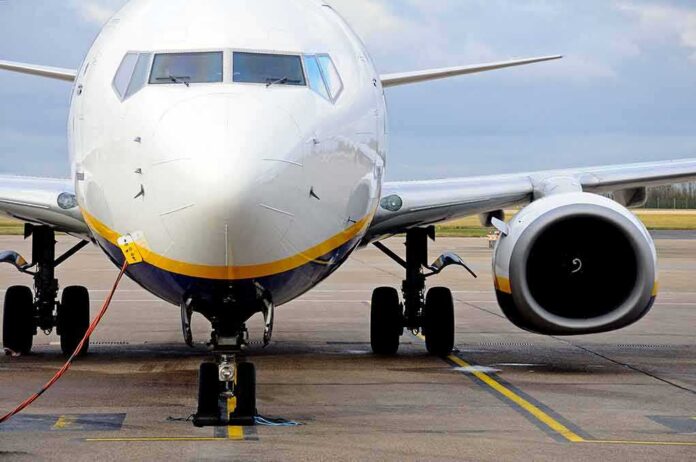
Enforcement officers boarded a Caspian Airlines Boeing 737 at Istanbul Airport and served a court seizure order tied to a debt of about €3 million. Reports identify the aircraft as registration EP-KPB. The court action halted the flight as passengers sat ready to depart and were then told to return to the terminal. Iran’s Civil Aviation Organisation later confirmed a Turkish court had issued the order and said the debt was for airport services.
Newsrooms in Turkey and abroad reported the creditor as ACM Temsil Gozetim, a local aviation representation and supervision firm. Outlets said the company pursued legal proceedings after unpaid invoices mounted. The sum, described as roughly €3 million or $3.4 million, matches across multiple reports. The courtroom piece explains the speed and certainty of the move: a seizure order gives bailiffs the power to stop a jet before it leaves the ground.
Who Owed What, and Why the Plane Was the Leverage
Airlines run on tight cash and hard deadlines. A parked plane bleeds money, so a grounded one gets attention fast. That is why creditors sometimes attach the aircraft itself: it is visible, valuable, and cannot flee a court’s reach while the wheels are on the tarmac. This tactic is unusual but not rare. When normal collection fails, a court order makes the dispute impossible to ignore, and it often pushes quick talks or payment.
Details differ on the exact nature of the debt. Some reporting frames it as airport service fees. Others point to a private aviation services provider that handles ground and dispatch work. Both paths point to the same business reality: service firms front costs to keep flights moving, and when bills go unpaid, they have limited tools beyond the courts. The choice to act as passengers sat on board underscores urgency and leverage.
What Officials and the Airline Said Next
Majid Akhavan, a spokesman for Iran’s Civil Aviation Organisation, told media a Turkish court ordered the seizure on September 28 and said the debt related to airport services. That admission lines up with the court basis cited in other outlets. Caspian Airlines, for its part, downplayed the drama as a temporary administrative issue that restricted use of one of its Boeing aircraft, adding that legal steps were underway to resolve it.
An Iranian Boeing 737 owned by Caspian Airlines was seized at Istanbul Airport over a €3 million debt claim, following a Turkish court order. Passengers were removed as the aircraft was preparing for takeoff to Iran. This seizure occurs amid heightened US sanctions affecting… pic.twitter.com/q4tyqWzWNF
— AL Khammas (@ALkhammas2) September 29, 2026
That softer framing may soothe anxious travelers, but it does not change the core facts. A court order is not a paperwork hiccup; it is a legal remedy for a debt that has not been paid. The unvarnished timeline—order issued, officers board, passengers step off—tracks with standard practice in asset attachment cases. The airline’s stated goal to return the jet after procedures finish suggests a settlement path rather than a fight over first principles.
Implications for Flyers, Airlines, and the Rule of Law
Travelers care about one thing: will my plane leave? This incident shows how a private debt can walk down the aisle and cancel a trip in minutes. The message to carriers is simple and stern: if you use services in a country, expect courts there to enforce bills. That aligns with basic conservative values—contracts matter, debt has consequences, and law and order protects honest players who remit what they owe and keeps markets fair for everyone.
Gaps remain. Reporters did not publish the court order itself. Officials in Turkey have not released detailed filings that spell out invoices, notices, and the enforcement timeline. Those documents would answer questions about proportionality and process. Yet the shared facts across outlets—named creditor, named jet, passenger removal, court authority—build a coherent picture. The fastest way out now is the oldest: pay, secure, or settle, then fly home.
Sources:
insiderpaper.com, nampa.org, today.lorientlejour.com, iranintl.com, caliber.az
© targetdailynews.com 2026. All rights reserved.