President Trump formally signed Marco Rubio’s commission as national security adviser, locking in the rarest two-hat job in American foreign policy since Henry Kissinger.
Story Snapshot
- Trump signed a commission making Rubio the permanent national security adviser.
- Rubio keeps serving as secretary of state, holding both roles at once.
- The move capped Rubio’s 16 months as acting national security adviser.
- The appointment became public during Trump’s United Nations trip to New York.
What the appointment does, and why it matters
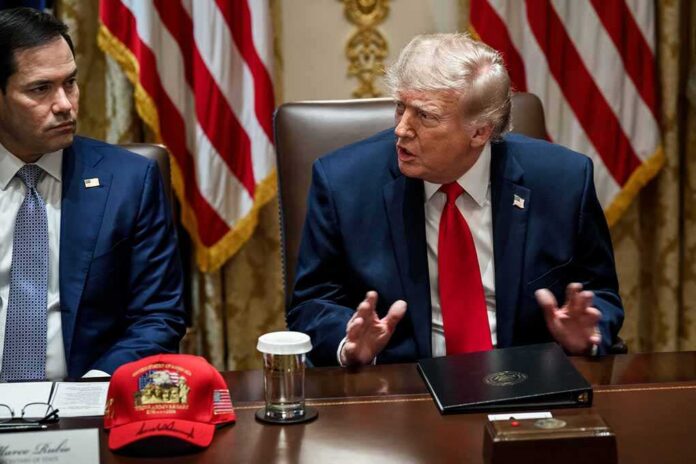
The White House confirmed that President Trump signed a commission naming Secretary of State Marco Rubio as the permanent national security adviser. This formal step ends Rubio’s acting status and cements his lead role over National Security Council policy and process. Rubio will keep both jobs. That puts him in a class that only Henry Kissinger held, uniting the State Department and the national security adviser’s post under one person.
Rubio has already been running national security meetings for over a year. Reports said Trump tapped him to replace Mike Waltz on an acting basis in May 2025. The permanent commission does not change Rubio’s day-to-day oversight as much as it codifies it. It clarifies lines of authority for staff and foreign counterparts, who often look for formal titles before they move on sensitive matters.
How the dual role changes the chessboard
One person now steers both the nation’s diplomacy and the White House’s security process. That speeds decision-making and cuts turf fights. Ambassadors, the Pentagon, and intelligence leaders get one message source. That can sharpen strategy and make allies and rivals read America’s signals faster. It also means Rubio will set the pace and tone of crisis response, from sanctions to talks, without the usual gap between State and the National Security Council staff.
Critics often warn that this setup can centralize too much power. They point to Kissinger’s era, when Congress pushed back and forced a return to split roles. Supporters answer that today’s threats move too fast for slow, committee-style policy. The lesson many conservatives draw is simple: put one accountable adult in charge, demand results, and judge by outcomes, not org charts. That aligns with a focus on clear lines of authority and fewer bureaucratic vetoes.
Timing, setting, and the optics that will stick
The commission became public during Trump’s New York trip for the United Nations General Assembly. That stage sends a signal. World leaders gather there to trade messages. Announcing Rubio’s formal role during that week tells allies and adversaries that Washington’s foreign policy voice will be unified and fast. It sets expectations for how the administration will handle flashpoints in the Middle East, Asia, and the Americas this fall.
After formally receiving the appointment letter signed by President Trump, Rubio has become the first person since Kissinger to simultaneously hold the two key positions of Secretary of State and National Security Advisor. Does this signify the dawn of a new era?
— jeff lee (@Jefflee8084Lee) September 23, 2026
Reporters noted that the White House did not roll out a separate replacement adviser. The lack of a second name confirms the point: Rubio is keeping both portfolios. That simplicity cuts noise and sets a single chain of command. It also puts weight on process discipline inside the National Security Council and the State Department to avoid burnout and blind spots. The test will come with the first major crisis that requires late-night calls and next-morning deliverables.
What changes for America’s partners and rivals
Allies now have one flight path to the top. If you want to test an idea, get a waiver, or push back on a red line, you go to Rubio’s team. That concentrates leverage. It also raises the cost of mixed messages. If Rubio says yes, partners will bank it; if he says no, they will adjust and move on. Adversaries will probe for seams. A tight, single-center structure gives them fewer seams to exploit if it stays disciplined.
Rubio’s public brief has stressed firmness on Iran, watchful engagement on China, and tight coordination with key allies. That stance pairs well with a dual-hat model that prizes speed and cohesion. The administration also gains a clearer scoreboard. Voters can ask one question: is the world safer and America stronger? If the answer trends yes, the structure will get credit. If it trends no, the buck stops with the person holding both jobs.
Bottom line
Trump turned a long-running acting setup into a permanent, Kissinger-level arrangement. Rubio will run diplomacy and the National Security Council with a single voice. The bet is that unity beats bureaucracy and speed beats drift. History shows the model can deliver results if it stays accountable and keeps Congress informed. The coming months will show if this tight formation makes America’s foreign policy faster, clearer, and tougher where it counts.
Sources:
pjmedia.com, usatoday.com, foxnews.com, washingtonexaminer.com, vinnews.com, bloomberg.com, apnews.com
© targetdailynews.com 2026. All rights reserved.