Philadelphia’s chief prosecutor promised Trump’s planned White House ballroom would be “blown up” in a future ceremony—and said he’d keep a piece on his desk.
Story Snapshot
- Larry Krasner made the remark at a public commemoration event in Philadelphia.
- His comment targeted a proposed White House ballroom tied to President Trump.
- Video captured Krasner’s “we’re going to blow it up” line to applause.
- Law experts say political hyperbole is generally protected speech, not a threat.
What Krasner Said, Where He Said It, And Why It Landed
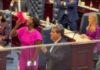
Philadelphia District Attorney Larry Krasner spoke at the annual slavery commemoration at the President’s House site in Old City. During his remarks, he blasted President Trump’s proposed White House ballroom and said, “In an official ceremony, we’re going to blow it up,” while adding he would keep a piece as a paperweight. Local outlets reported the quip as part of a longer criticism of the project, and video of the moment spread online the next day. His phrasing drew strong reactions, as it often does with heated political speech.
👔 WHITE HOUSE: Philadelphia DA says ‘we’re gonna blow it up’ when discussing Trump’s White House ballroom
Philadelphia District Attorney Larry Krasner has an explosive vision of the future of the White House ballroom. During a press conference on Tuesday, Krasner said the White…
— Cyber Hunter (@Gene_SD) August 26, 2026
The setting mattered. The event focused on the legacy of slavery, public memory, and what government chooses to honor. Krasner tied his point to that theme. He argued taxpayer dollars should not fund a ballroom that, in his view, symbolized the wrong values. He used a vivid image to say the room should not stand. The crowd responded as if it were a punch line, not a plan. The tone and timing signaled theater more than instruction.
How First Amendment Rules Sort Heat From True Threats
American law gives wide room for political talk, even when the words sound harsh or extreme. The First Amendment protects advocacy unless it aims to spark immediate lawless action and is likely to do so, as the Supreme Court held in Brandenburg v. Ohio. That means the government cannot punish most fiery rhetoric. Courts also separate “true threats” from hyperbole. A true threat puts a specific person or place in fear with a believable promise of harm; broad, conditional jabs at policy usually do not meet that test.
Context decides the line. Who said it, to whom, and with what goal matters. Krasner spoke at a civic event, not in a back room or a secure site. He used future-tense and ceremony language that hinted at symbolism, not sabotage. The remark lacked a call for immediate action and did not give steps to carry it out. That makes it fit the pattern of protected political hyperbole, not prosecutable threat, under common First Amendment guidance.
Why The Words Still Carry A Cost In Public Life
Political speech can be free and still be reckless. Leaders shape civic norms. When top officials talk about “blowing up” a presidential project, many voters hear contempt for institutions they fund. That cuts against conservative values like respect for property, rule of law, and restraint. It also feeds a cycle where each side raises the volume to score points. As the temperature rises, trust falls, and everyday problems—crime, schools, taxes—get less oxygen.
A district attorney has a special duty to calm, not inflame. The job asks for equal justice, clear laws, and careful words. Krasner’s critics will say the line glamorized destruction and sets a poor example for a law enforcement leader. His defenders will answer it was satire aimed at waste and ego. Both can be true in part. The First Amendment lets him say it. Voters will judge if he should have. That is the balance free speech creates in a democratic system.
The Policy Fight Under The Punch Line
The clash is bigger than one room. It is about what government builds, what it removes, and what it chooses to honor. Cities and the federal government face choices each year about monuments, exhibits, and public spaces. Those choices carry messages about history and values. Krasner’s barb tried to flip the script: spend on public safety and truth-telling instead of a ballroom. The crowd’s reaction showed that message lands with some citizens who want frugal, mission-first government.
There is a better way to make that point. Start with numbers, not napalm metaphors. How much would the room cost? What would that money buy in police radios, case backlogs, or victim services? Voters reward leaders who turn sharp phrases into sharper budgets. They tire of stunts. If this episode pushes a real debate on priorities, it will have served a public good. If not, it will be one more clip that burns hot and fades fast.
Sources:
redstate.com, washingtonexaminer.com, nbcphiladelphia.com, youtube.com, whitehouse.gov
© targetdailynews.com 2026. All rights reserved.