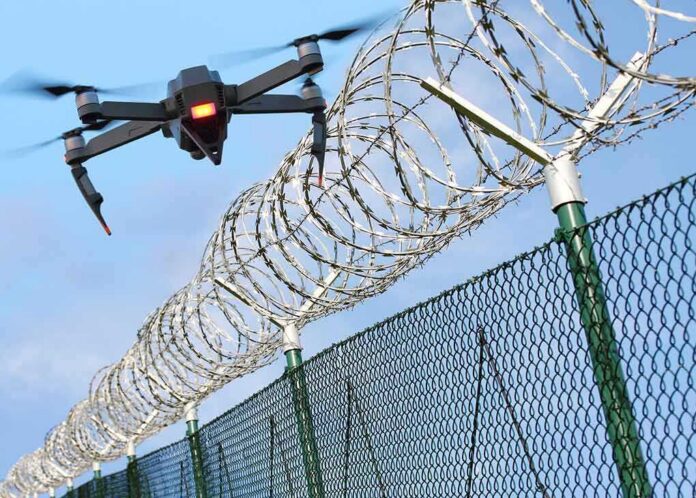
Federal agents have seized over 400 drones at FIFA World Cup 2026 venues across the United States, filed four federal charges, and not one of those drones carried a weapon.
Story Snapshot
- More than 400 drones were seized at World Cup host cities across the U.S. by late June 2026, with four people facing federal charges.
- North Texas led all cities with 53 seizures, and the first federal felony charge was filed for owning an unregistered aircraft, not terrorism.
- The Federal Aviation Administration (FAA) set strict no-fly zones around stadiums and fan zones, with fines up to $100,000 and up to one year in prison.
- None of the seized drones were found carrying explosives or dangerous materials, raising fair questions about the gap between the threat claimed and the threat proven.
The Numbers Behind the World Cup Drone Crackdown
Federal agents seized more than 300 unauthorized drones at World Cup venues in just the first ten days of the tournament. [1] By late June, that number had climbed past 400 across eleven U.S. host cities. [8] North Texas led the country with 53 seizures — 34 at Dallas Stadium and 19 at a nearby fan zone. Kansas City reported 14 seizures and five federal criminal citations since June 11. [3] FBI Atlanta added 26 more by June 18. [2] The scale is hard to ignore.
The FAA drew clear lines around every venue. Stadiums got a three-nautical-mile no-fly radius up to 3,000 feet. Fan zones got a one-nautical-mile buffer up to 1,000 feet. [2] Flying inside those zones without approval is a federal violation. Penalties include civil fines up to $75,000, criminal fines up to $100,000, up to one year in prison, and permanent loss of the drone. [3] The rules were posted publicly. The warnings were loud. Hundreds of people flew anyway.
The First Federal Charge Tells a Complicated Story
The first felony charge filed in North Texas went to Luis Mauricio Flores Ordonez. Prosecutors say his drone triggered an alert when he powered it on inside the restricted zone, which they argue proves he knew about the no-fly rule. [1] The charge? Owning an unregistered aircraft. Not terrorism. Not attempted attack. A regulatory violation. U.S. Attorney Ryann Raible confirmed that none of the 53 drones seized in North Texas carried explosives or dangerous materials. That fact matters and deserves honest weight.
Former Federal Bureau of Investigation (FBI) Special Agent Nicole Parker has warned publicly that drones can carry explosives, disrupt events, or harm players, pointing to a foiled plot near the White House during a UFC event. [1] That threat is real in theory. But enforcement data from this tournament shows the vast majority of violators appear to be careless or uninformed operators, not bad actors. [2] The threat is not imaginary, but the evidence so far does not match the most alarming version of the story being told.
FBI Director Kash Patel and the Technology Behind the Takedowns
FBI Director Kash Patel highlighted two things as central to the security operation: training state and local law enforcement partners, and deploying mid-flight drone disablement technology. [1] That technology is real and effective. Detection systems using radar and radio frequency scanners can spot unauthorized drones fast and shut them down before they get close to crowds. The FBI also used its own drones to monitor venues and coordinate responses. This is serious, well-organized enforcement, and it deserves credit for running smoothly at a tournament of this size.
On June 24, 6 drones were seized from operators who violated flight restrictions, totaling 22 drone seizures to date during the World Cup around Seattle Stadium. Before you fly your drone, always check airspace restrictions using FAA-approved B4UFLY apps or visit… pic.twitter.com/CsbdCfxjNz
— FBI Seattle (@FBISeattle) June 26, 2026
Private companies like Airspace Link supplied detection technology backed by federal grants. That financial relationship is worth watching. When a company profits from expanded enforcement, the public deserves transparency about how threat levels are assessed and whether the tools are calibrated fairly. No independent audit of those systems has been made public. That gap does not prove wrongdoing, but it does leave an open question that oversight bodies should answer.
Ignorance of the Law Is No Excuse, But It Changes the Conversation
Here is the honest tension in this story. The rules are strict, the penalties are steep, and the enforcement has been aggressive. That is appropriate for an event watched by billions. You do not get to fly a drone over 80,000 people and say you did not know the rules. The FAA published the no-fly zones. Apps flagged the restrictions. Warnings ran on local news for weeks. Willful ignorance is still a choice, and choices have consequences.
At the same time, four charges out of 400-plus seizures suggests most cases are being handled as civil violations, not criminal ones. That proportionality is reasonable. The system appears to be working as designed: catch violators, seize equipment, reserve criminal charges for the clearest cases of willful defiance. [3] No attacks happened. No one was hurt. The crackdown did its job. The honest takeaway is that the security posture was justified even if the worst-case scenario never materialized, because the point of good security is that the worst case never does.
Sources:
[1] Web – Feds charge four as World Cup drone crackdown tops 400 seizures across …
[2] Web – Haye Kesteloo’s Post – LinkedIn
[3] Web – More Than 50 Drones Seized Near World Cup Events – Dronelife
[8] Web – FBI Seizes Over 300 Drones at World Cup Venues
© targetdailynews.com 2026. All rights reserved.