targetdailynews.com — A man who walked into a Chase Bank in downtown Bakersfield with what he claimed was a bomb did more than take hostages; he exposed how thin the line really is between public safety, media panic, and hard facts.
Story Snapshot
- Man barricades inside Bakersfield Chase Bank, claims to have explosives and holds multiple hostages.
- Police lock down downtown, call in crisis negotiators, and treat the threat as real from the first minute.
- Media and social feeds blast “bomb strapped to his chest” before any forensic proof of a real device surfaces.
- The standoff shows why Americans must demand both strong security and honest, disciplined reporting.
A downtown bank turns into a war zone perimeter
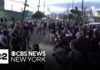
Tuesday afternoon in downtown Bakersfield, California, routine traffic around 17th Street and Chester Avenue suddenly met flashing lights, barricades, and officers yelling at people to get back. Police announced an active hostage situation at a Chase Bank branch and ordered city buildings nearby into lockdown.[1] Officers said a man inside claimed to have a bomb and had taken hostages, immediately transforming an ordinary financial errand into a full-blown public safety emergency.[1][2][3]
Bakersfield Police described the situation as a confirmed bomb threat, and witnesses watched as streets emptied, businesses shut doors, and armored vehicles rolled into position.[1][2] Negotiators contacted the suspect, who had barricaded himself in the bank with “several community members,” language that underscored these were ordinary locals caught in the wrong place at the wrong moment.[2] Officers treated the device as live because the cost of assuming a bluff, in a busy downtown, was measured in lives, not in headlines.
“Bomb strapped to his body” and the problem of early certainty
Local and national outlets quickly repeated that the man “allegedly” had a bomb strapped to his body and was armed with an explosive device, carefully adding qualifiers even as on-screen graphics screamed about a bomb-wearing hostage taker.[1][2][3] Coverage emphasized that police believed he had an explosive, not that they had confirmed one, a distinction that disappears fast once social media and cable panels start amplifying the most dramatic version of events.[3]
No report in the available record shows a bomb squad photograph, a recovered live device, or a detailed law enforcement statement proving that the suspect’s explosives were operational rather than a hoax or an unverified claim.[1][2][3] Reporters described what police and witnesses believed and what negotiators were told, not what forensic technicians ultimately logged into evidence. That gap is common in fast-moving crises, but it matters when fear spreads faster than facts and people at home are left guessing how real the danger truly was.
Hostages, negotiations, and an ending written by force
Police confirmed that at least one person, and ultimately several people, were held hostage inside the bank as the hours ticked by.[1][2][3] Crisis negotiators remained in constant contact, working to secure the release of individuals and to contain a suspect who, by all accounts, showed no intention of simply walking out peacefully.[2][3] Some hostages were released during the night, with officers publicly celebrating that progress while refusing to relax the heavy perimeter around the building.[3]
The standoff stretched close to fifteen hours, long enough for fatigue and tension to set in for everyone involved.[3] According to later reporting, the ordeal ended when law enforcement personnel fatally shot the suspect, and all hostages emerged alive.[1] From a common sense and conservative perspective, that outcome reflects the grim reality of such threats: when a suspect claims to have an explosive and controls innocent lives, the state has a moral duty to prioritize victims’ safety over the attacker’s survival, while still answering later for every round fired.
Why police must act on claims before proof catches up
Events at the Bakersfield Chase Bank fit a broader pattern seen in modern hostage and bomb threats: officers and first responders must operationally assume the worst long before they can scientifically prove it.[2][3] From New York to smaller cities, law enforcement has learned that the price of skepticism in the face of a claimed bomb can be mass casualties, while the price of over-caution is traffic, inconvenience, and sometimes accusations of overreaction the next day.
A hostage situation in downtown Bakersfield, California, ended after FBI personnel fatally shot a suspect who had barricaded himself inside a building housing a Chase Bank branch and a school district office, according to authorities.
The standoff began on June 2 following… pic.twitter.com/c3ocH7CuSD
— APT News (@APT__News) June 3, 2026
American conservatives often talk about the “duty to protect,” and this case shows exactly what that looks like under pressure: block streets, evacuate buildings, call in negotiators, and trust the front-line officers who confront the threat face to face.[1] At the same time, a rights-respecting society should also demand clean, post-incident transparency about what was real, what was a bluff, and which official descriptions were based on fear rather than confirmed evidence. Security and honesty are not rivals; they either stand together or fall together.
Sources:
[1] Web – DEVELOPING: Man with Bomb Strapped to His Chest Takes at Least One …
[2] Web – Police negotiate in hostage situation at Chase Bank amid bomb threat …
[3] Web – Possible hostage situation underway at Southern California bank
© targetdailynews.com 2026. All rights reserved.