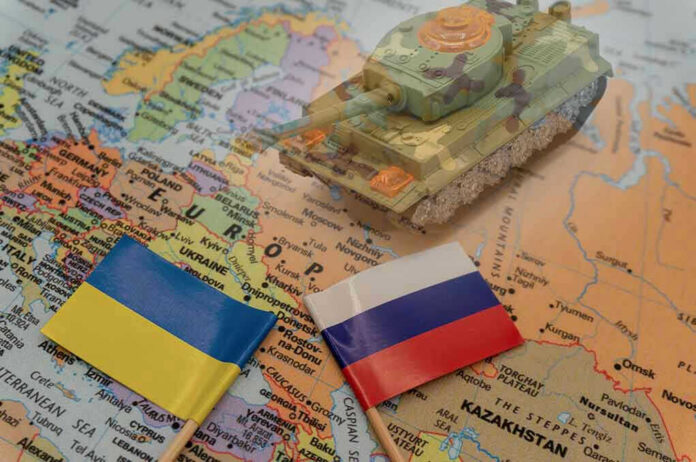
Washington is racing to force an end to the Russia-Ukraine war by summer—yet the “peace” on the table still hinges on whether Putin will even show up and whether Ukraine is pushed into concessions.
Story Snapshot
- Zelenskiy says the U.S. wants Russia and Ukraine to end the war by summer, tying diplomacy to a fast-moving deadline.
- Putin proposed direct talks in Istanbul; Zelenskiy publicly challenged him to attend in person and said he would wait in Ankara with Turkey’s president.
- The Trump administration has pursued direct engagement and ceasefire discussions, after years of stalled talks and broken temporary truces.
- Past negotiation efforts repeatedly collapsed over Russia’s demands about Ukraine’s neutrality, territory, and limits on Western alignment.
Trump’s Summer Clock Collides With a War That Never Stays “Paused”
Ukrainian President Volodymyr Zelenskiy has said the United States wants Russia and Ukraine to end the war by summer, a timetable that raises the stakes for every diplomatic move in the coming weeks. The urgency comes after years of failed attempts to freeze or end the fighting, including short holiday truces that unraveled quickly. The central question now is whether a deadline can produce real leverage—or just another round of talk.
U.S. diplomacy in early 2025 focused on a 30-day ceasefire concept discussed with Ukrainian officials in Saudi Arabia, which Kyiv accepted. Russia, however, has repeatedly rejected ceasefires unless what it calls the conflict’s “root causes” are addressed first, including Ukraine’s future security posture. That gap matters because a ceasefire without enforcement or agreement on core terms can become a tactical pause rather than a durable settlement.
Turkey Returns as the Negotiating Stage, With Zelenskiy Demanding a Direct Putin Meeting
Turkey has re-emerged as the venue for potential face-to-face engagement, with Putin proposing direct talks in Istanbul and Zelenskiy responding with a challenge: meet personally. Zelenskiy’s public posture sets a high bar and frames attendance as a test of intent, saying he and Turkey’s president would wait in Ankara. After years of indirect formats and summit meetings that excluded Russia, this approach aims at a clear yes-or-no moment.
The diplomatic choreography also reflects a reality conservatives understand well: symbolism doesn’t stop bullets, but it can expose who is stalling. A leader-to-leader meeting would be a major shift from earlier processes where intermediaries carried messages and each side blamed the other for delays. At the same time, the record of the war suggests that even high-profile gatherings can fail if the underlying conditions—territory, security guarantees, and enforcement—remain unresolved.
Why Negotiations Keep Failing: Territory, Neutrality, and the “Root Causes” Trap
From the earliest days after Russia’s full-scale invasion in February 2022, talks repeatedly ran aground on demands Moscow considers non-negotiable. Reports on prior negotiating rounds describe Russia pressing for Ukrainian neutrality, demilitarization, recognition of Crimea as Russian, and acceptance of separatist claims in parts of eastern Ukraine. Ukraine and many Western partners have resisted those conditions, viewing them as rewriting borders by force rather than ending a war fairly.
That history matters because it limits what any U.S. deadline can realistically achieve. A “summer” target may push movement, but it cannot erase the core dispute over land and sovereignty. When previous truces and limited ceasefires collapsed, both sides accused each other of violations and returned to strikes, especially around energy and infrastructure. Without a credible mechanism to monitor compliance and consequences, temporary halts have proven fragile.
U.S. Leverage: Aid, Ceasefire Terms, and the Risk of Open-Ended Commitments
The Trump administration has positioned itself as a central broker, engaging Russia while also pressing Ukraine toward ceasefire discussions that could unlock continued support. This approach relies on leverage Washington actually controls: the pace and conditions of U.S. security assistance and diplomatic recognition of negotiating frameworks. For Americans tired of endless foreign commitments, the key issue is whether a deal ends the killing without locking the United States into another blank-check obligation.
Supporters of limited government and constitutional priorities also watch how “security guarantees” are defined. The public record shows talk of different structures—U.S., European, or combined roles—but the details remain uncertain in the reporting available here. With incomplete clarity on enforcement and funding, the safest conclusion is that any agreement must be specific, time-bound, and accountable to taxpayers, rather than an open-ended promise that outlasts public oversight.
What to Watch Next: Attendance, Preconditions, and Whether a Deadline Becomes a Deal
The next signal is simple: whether Putin accepts Zelenskiy’s demand for a direct meeting and whether talks proceed without preconditions that predetermine the outcome. The second signal is whether any proposed 30-day ceasefire includes monitoring and consequences that prevent a repeat of earlier short-lived pauses. The third signal is how Washington balances speed with substance, since a rushed agreement can create incentives for future aggression if borders become negotiable.
Limited public detail in the provided research leaves open major questions about what a “summer” endpoint would look like in practice, including the shape of security guarantees and how territorial disputes would be handled. What is clear is that the negotiating record is littered with failed formats, and that a deadline alone does not force compromise. Americans should demand transparency on costs, objectives, and enforcement before any long-term commitment is treated as inevitable.
Sources:
Russia-Ukraine war: A timeline of peace talks in 3-year quest to end war
Putin Alaska Ukraine Trump interactive
Peace negotiations in the Russo-Ukrainian war (2022–present)
U.S. Security Cooperation With Ukraine
Ukraine’s Struggle for Independence: Russia’s Shadow