The U.S. military’s aggressive airstrikes on alleged drug boats in the Eastern Pacific have raised the stakes in the fight against narcotics trafficking, leaving a trail of controversy and international tension.
Story Snapshot
- Two killed in latest U.S. military airstrike on suspected drug boat.
- Total death toll from similar strikes since September 2025 reaches 66.
- Operations part of a broader campaign against alleged narco-terrorists.
- U.S. actions spark diplomatic tensions and human rights concerns.
Escalating Anti-Drug Campaign
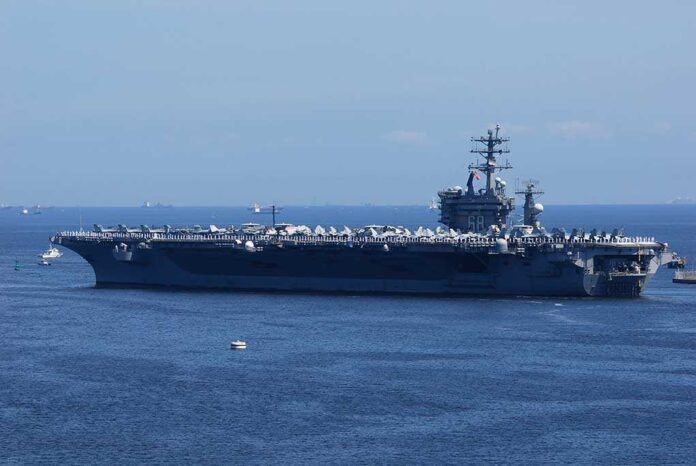
The U.S. military, under orders from President Donald Trump, has ramped up its operations against suspected narcotics traffickers, launching airstrikes on vessels in international waters. The latest strike on November 4, 2025, in the Eastern Pacific, resulted in the deaths of two men identified as narco-terrorists. This operation is part of a broader campaign targeting drug boats in the Caribbean and Pacific, with 16 strikes since September, resulting in at least 66 deaths.
The strikes began in September 2025 with an attack on a Venezuelan drug boat in the Caribbean, killing 11. By October, the operations expanded to the Eastern Pacific, with the most recent strike further escalating the death toll. These actions represent a significant shift in U.S. military strategy, utilizing direct lethal force against suspected traffickers, a move not seen since the 1989 Panama invasion.
The Rationale Behind the Strikes
The Trump administration justifies these airstrikes as a necessary response to maritime drug trafficking threats. By labeling the targeted groups as “narco-terrorists,” the U.S. frames its actions as essential for homeland protection. Secretary of War Pete Hegseth has been vocal about the commitment to disrupting drug routes, stating, “We will find and terminate EVERY vessel with the intention of trafficking drugs to America.”
These strikes have sparked diplomatic tensions, particularly with Venezuela and Colombia, whose governments accuse the U.S. of extrajudicial killings. Human rights organizations have also expressed concerns about the legality and humanitarian impact of these operations, questioning the evidence and necessity of such forceful measures.
International Tensions and Reactions
The U.S. actions have strained relations with several Latin American countries. Venezuela and Colombia, in particular, have condemned the airstrikes as violations of their sovereignty. These governments argue that the U.S. is overstepping international legal boundaries and question the motives behind the strikes, suggesting potential regime change agendas.
Human rights groups have criticized the strikes as illegal, pointing to the lack of public evidence supporting the U.S. claims of narco-terrorist involvement. They argue that the strikes constitute extrajudicial killings, raising serious legal and ethical questions about the use of military force in anti-drug operations.
Potential Implications and Future Outlook
The immediate impact of these strikes includes a significant loss of life among alleged traffickers and increased diplomatic tensions in the region. In the long term, the use of military force in anti-drug operations could set a precedent, potentially leading to further escalation of conflict and a deterioration of U.S.-Latin America relations.
The strikes have disrupted drug trafficking routes, but they also risk inciting social unrest in affected communities. The ongoing operations and international scrutiny are likely to shape future developments, with continued attention on the legality and humanitarian impact of these military actions.