One anonymous message from a vigilant teenager tipped the scales between tragedy and triumph—reminding America that the most effective weapon against school violence may be a student’s voice, not security hardware or bureaucratic policy.
Quick Take
- A student’s anonymous tip through the Sandy Hook Promise hotline prevented a potential school shooting in California.
- The Say Something Anonymous Reporting System has reportedly stopped at least 19 planned school attacks since 2018.
- Swift collaboration between a nonprofit, local police, and school administrators led to the suspect’s detention and the recovery of weapons.
- This incident demonstrates the growing power of peer intervention and anonymous reporting in thwarting violence before it begins.
How a Single Tip Derailed a Deadly Plan
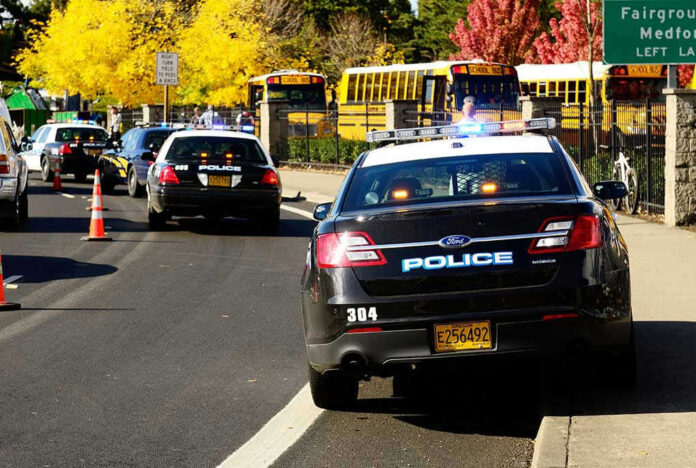
Sequoia Union High School District in Redwood City, California, nearly became ground zero for another tragedy. Instead, a student scrolling through Instagram noticed something chilling: a peer’s posts about guns, ammunition, and a mapped-out attack plan targeting their own school. The student, uncertain yet undeterred, submitted an anonymous tip through the Say Something system—an initiative of Sandy Hook Promise, itself born from horrific loss more than a decade ago. The National Crisis Center leapt into action, alerting local police who immediately ordered lockdowns at Menlo-Atherton High and a neighboring middle school. Officers swiftly tracked down the suspect, a former student, and recovered firearms from the suspect’s home. No shots fired. No lives lost. The only headline was the one no parent expects to read: a massacre averted, thanks to a teenager’s courage and a nonprofit’s infrastructure.
Possible school shooting prevented with Sandy Hook tip line, police say https://t.co/z0CJuYIDTX
— ABC11 EyewitnessNews (@ABC11_WTVD) September 24, 2025
This episode marks more than just a lucky break; it’s a validation of years of advocacy, innovation, and sometimes, uncomfortable conversations about who really notices the warning signs before violence erupts. Sandy Hook Promise, founded by parents who lost children in Newtown, Connecticut in 2012, has spent the past decade teaching students to spot and report threats before they escalate. Their Say Something system is designed not for administrators, but for kids—the digital natives who see red flags on social media long before adults catch wind. The result? Since 2018, at least 19 planned school attacks have been stopped in their tracks, according to the organization. Critics might debate the role of nonprofits in public safety, but the record speaks: tip lines work when students trust them and authorities act decisively.
School Safety: From Security Cameras to Student Vigilance
For years, the American answer to school shootings has vacillated between hardened campuses and stricter laws. But research confirms that most would-be attackers leak their intentions—usually online, often to peers. The Sequoia case underscores a crucial truth: students, not faculty, are often the first line of defense. The Say Something program trains students to see warning signs as real threats, not just attention-seeking. When the reporting student submitted that tip, it triggered a protocol that blurred the lines between nonprofit activism, public education, and law enforcement. Within hours, police had detained the suspect and secured weapons. The schools, meanwhile, returned to normal operations—shaken, but safe. No amount of surveillance technology can replicate the speed and intuition of a concerned peer who knows what to look for and where to report it.
School administrators and the Atherton Police Department credited the partnership with Sandy Hook Promise for the seamless response. District officials and law enforcement alike acknowledged that without the tip, the outcome could have been catastrophic. In public statements, both the district and Sandy Hook Promise leadership reaffirmed the importance of student empowerment and anonymous reporting—not as a replacement for security, but as a force multiplier that closes the gaps where bureaucracy or suspicion might otherwise slow action.
Ripple Effects: Policy, Partnership, and the Future of Prevention
This averted tragedy has already sparked ripple effects beyond Redwood City. Other districts are eyeing the Say Something system and similar tip lines as essential tools, not optional extras. Immediate benefits include a surge in student confidence—knowing their concerns will be taken seriously—and a renewed sense of safety for parents and teachers. In the longer term, the case may fuel legislative interest in funding anonymous reporting infrastructure nationwide. The economic and social costs of a single school shooting—trauma, litigation, lost learning—are staggering. Preventing even one attack yields returns far beyond what any camera, metal detector, or armed guard can offer.
Possible school shooting prevented with Sandy Hook tip line, police say – 6ABC Police in Atherton, California were contacted by the nonprofit Sandy Hook Promise on Sept. 10, who claimed they received a tip that a former student … https://t.co/34BzeRvWPF
— Oremus4Pacem (@1032shotsfired) September 23, 2025
Academic research supports these interventions. Studies from the University of Michigan and others show anonymous tip lines flag thousands of firearm threats each year, and have measurable success in preventing violence when paired with education and rapid response. Some experts caution about the risk of false alarms or misuse, but the overwhelming consensus is clear: empowering students to speak up, and ensuring adults respond quickly, is a proven formula for safer schools. This incident is not an isolated success, but part of an emerging pattern where community vigilance and nonprofit innovation save lives.
Sources:
KSHB: Sandy Hook Promise says hotline helped prevent potential school shooting in California
Sandy Hook Promise: School shooting prevented in California
University of Michigan: Anonymous tip line flags thousands of firearm threats in schools