One man’s unchecked authority now stands between the United States and a war that could redraw the map of Latin America, leaving Congress—and the Constitution—on the sidelines.
Story Snapshot
- Senate failure to limit presidential war powers enables Trump to expand military action against Venezuela
- Marco Rubio, as Secretary of State, emerges as the pivotal figure who could escalate or restrain U.S. intervention
- Military strikes justified as anti-narcotics operations mask ambitions for regime change
- Congressional checks erode, setting precedent for future executive-led wars without public debate
Congress Sidelined as War Powers Fade
October’s Senate votes buried any illusion of congressional oversight on war. By failing—twice—to pass resolutions restricting President Trump’s authority, the Senate effectively surrendered its constitutional role. The executive branch now claims sweeping power to wage war under the banner of anti-narcotics operations, citing the War Powers Resolution for legitimacy. Congressional figures like Tim Kaine and Adam Schiff warn of a constitutional crisis, but the machinery of escalation churns on, unchecked by legislative brakes.
With the USS Gerald Ford stationed in the Caribbean and airstrikes targeting alleged drug trafficking vessels, the United States has moved from sanctions to open military action. At least 69 have died in 17 strikes, yet no formal declaration of war exists. This blurring of lines between “operations” and “war” sets a precedent: future presidents could bypass Congress entirely, reshaping foreign policy with little public scrutiny.
Rubio’s Influence: The Next Domino
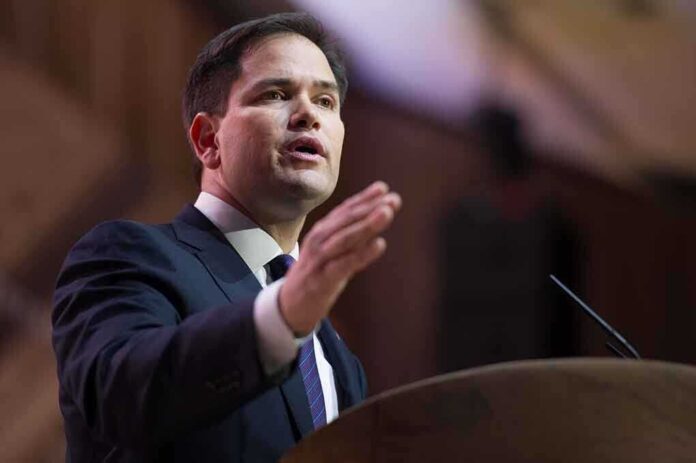
Marco Rubio, long a hawk on Venezuela, now holds the State Department’s levers. His public statements support more strikes; his private counsel may tip the balance toward a larger conflict. Rubio frames the campaign as a fight against “narcoterrorists,” yet his critics see an ideological project aimed at regime change. Rubio’s influence is magnified by Congress’s paralysis, making him a kingmaker—or kingbreaker—in this unfolding drama.
Senator Rubio’s fingerprints are all over the administration’s Latin America policy. His advocacy for hardline measures predates Trump’s second term, and he is widely credited with shaping the narrative that links Venezuela’s government to drug cartels. Whether Rubio will advocate for land strikes—now under consideration—remains the open question. His next move could determine if the current campaign remains limited or slides into a broader war.
From Drug War to Regime Change: The Slippery Slope
Officially, U.S. actions target drug traffickers. In reality, the pattern echoes past interventions: the “War on Drugs” as pretext, regime change as the objective. International observers, human rights groups, and even some U.S. officials dispute the evidence for Venezuelan government involvement in trafficking, arguing that the strikes violate international law and risk humanitarian catastrophe. The historical playbook—from Panama to Iraq—shows how anti-crime operations can morph into wars for political transformation.
Inside Venezuela, the government frames the strikes as imperialist aggression. The humanitarian toll is mounting, with civilian casualties and mass displacement fueling a regional crisis. Oil markets tremble, neighboring countries brace for fallout, and the specter of uncontrolled escalation looms—especially with Congress now sidelined. The consequences of unchecked executive action ripple far beyond Caracas, threatening the norms that have governed international relations for decades.
America’s Next Forever War?
The question now is not whether Trump can escalate, but whether anyone will stop him—or even try. The erosion of congressional checks, the concentration of power in the executive, and the blurring of military and law enforcement missions converge in Venezuela. Legal scholars debate the administration’s broad reading of the War Powers Resolution; critics warn that the strikes are illegal, extrajudicial, and likely to spiral. Few expect a quick resolution, and fewer still believe the United States can remake Venezuela at the barrel of a gun.
History offers cautionary tales. Once the machinery of intervention is set in motion, it rarely reverses. Marco Rubio’s next move will reveal whether this is another short-lived campaign—or the opening chapter of America’s next forever war. The stakes, for Congress, for Latin America, and for the future of American power, could not be higher.
Sources:
Common Dreams: Senate GOP Kills Bill That Would Block Trump Boat Bombings and War on Venezuela
Wikipedia: 2025 United States military strikes on alleged drug traffickers
Tricontinental: US threats Venezuela