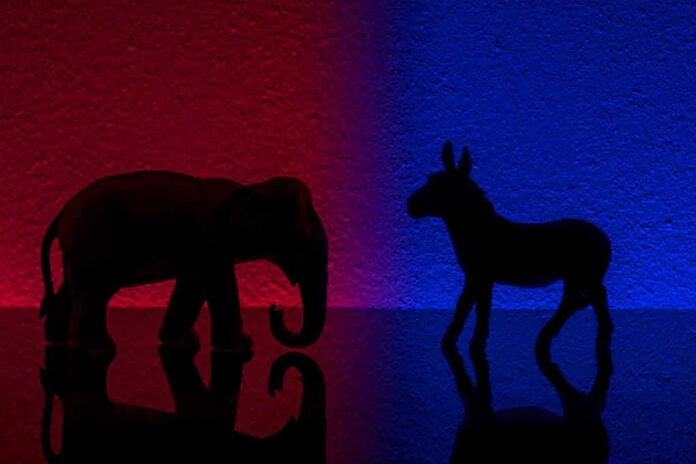
A blue state on the brink of a red surprise—New Jersey’s 2025 governor’s race has upended every political assumption, and the ripple effects may stretch far beyond the Garden State.
Story Snapshot
- Jack Ciattarelli and Mikie Sherrill are locked in a statistical tie, defying New Jersey’s partisan history.
- The race is viewed nationally as a referendum on Donald Trump’s second term and the future of both major parties.
- Voter enthusiasm is at fever pitch, with suburban independents holding the keys to the governor’s mansion.
- Record-shattering spending and relentless campaigning have made this the most closely watched contest since 2013.
How New Jersey Became America’s Most Unlikely Battleground
New Jersey’s 2025 gubernatorial race was never supposed to be close. The state’s Democratic tilt seemed ironclad: no Republican has won statewide office here since Chris Christie’s re-election in 2013, and Democrats have owned the governor’s mansion for more than a decade. But a series of political earthquakes—Phil Murphy’s unexpectedly tight 2021 win, a shrinking Democratic margin in the 2024 presidential race, and mounting suburban discontent—have set the stage for a showdown that’s captivating the nation. Voters who once shrugged at November elections now find themselves bombarded with campaign ads and targeted by pollsters, their votes more coveted than ever before.
Democrat Mikie Sherrill, a Navy veteran and current Congresswoman, carried the torch for her party, pledging to extend Phil Murphy’s policy legacy. Republican Jack Ciattarelli, who nearly stunned the political class with his 2021 run, returned with sharper messaging, a bigger war chest, and the backing of national figures—including a certain president whose shadow looms large over the contest. The groundwork for a bruising campaign was set, but few expected the race to tighten so dramatically as the leaves began to fall.
Polls, Pundits, and the New Jersey Electorate’s Awakening
The release of the Quinnipiac poll on September 17 lit a fire under both campaigns. Sherrill held an 8-point edge—49% to 41%—but the headline was the 6% of voters still sitting on the fence, refusing to commit in a state where commitment to party once seemed a given. The data revealed a surge in enthusiasm: nearly nine in ten supporters from both camps described themselves as “very” or “somewhat” fired up to vote. For seasoned observers, this level of intensity signaled a contest that could turn on a single misstep or a late-breaking national headline. The close numbers emboldened Ciattarelli’s team, while Sherrill’s strategists ramped up efforts to shore up suburban and independent voters, the ultimate swing bloc in a state where party lines are blurring.
In the days that followed, the media seized on the “dead heat” narrative. Headlines blared about a red surge threatening blue dominance, and commentators parsed every debate zinger and campaign ad for clues about the electorate’s mood. Both parties unleashed a torrent of spending, with national organizations pouring resources into ground games and digital outreach. The stakes, insiders whispered, had quietly shifted: this was no longer just about New Jersey, but a warning shot for 2026 and beyond.
High Stakes, Hard Choices: Issues and Implications for Every New Jerseyan
Taxes, crime, and education have dominated the airwaves. Sherrill touts her bipartisan credentials and promises pragmatic stewardship, while Ciattarelli vows to slash property taxes and rein in state spending—an evergreen Republican pitch, but one that now finds renewed resonance among restless suburbanites. The candidates’ debate performances have been dissected by pundits and voters alike, each soundbite weighed for signs of momentum. The national context is inescapable: with Donald Trump’s second presidency polarizing voters, the governor’s race has become a proxy war over his legacy and the direction of American politics. Both sides agree on one thing—the outcome could upend assumptions about what’s possible for their parties, here and across the country.
Communities across New Jersey sense the stakes. Suburban voters, long the kingmakers in tight races, are being courted with promises of fiscal sanity and educational excellence. Independents, increasingly skeptical of both parties, demand substance over slogans. With nearly $50 million already spent, the campaign has become a test of whose message—and whose messenger—can cut through the noise. The impact will be felt not just in Trenton’s corridors, but in living rooms from Bergen County to Cape May.
Why New Jersey’s 2025 Governor’s Race Matters for America’s Future
A Republican win would shatter decades of Democratic dominance and send a shockwave through national politics, emboldening conservatives and forcing Democrats to rethink their hold on suburban America. A Democratic victory, while preserving the status quo, would do little to quell anxieties about eroding support in blue bastions. Political strategists see New Jersey as a bellwether for 2026, with both parties testing messages and mobilization tactics that will shape campaigns coast to coast. For voters, the question is simple but stark: will the Garden State’s future be defined by change, continuity, or something in between?
Analysts and academics alike point to the state’s history of electing governors from the party out of power in Washington—broken only once since 1989—as a wild card that could tilt the outcome. National party spending and relentless media coverage guarantee that every twist will reverberate far beyond New Jersey’s borders. As the campaign enters its final stretch, one certainty remains: for the first time in a generation, New Jersey’s voters hold the spotlight—and their decision may shape the direction of American politics for years to come.
Sources:
Wikipedia: 2025 New Jersey gubernatorial election
NorthJersey.com: NJ governor race 2025 spending
InsiderNJ: Sherrill v. Ciattarelli debate