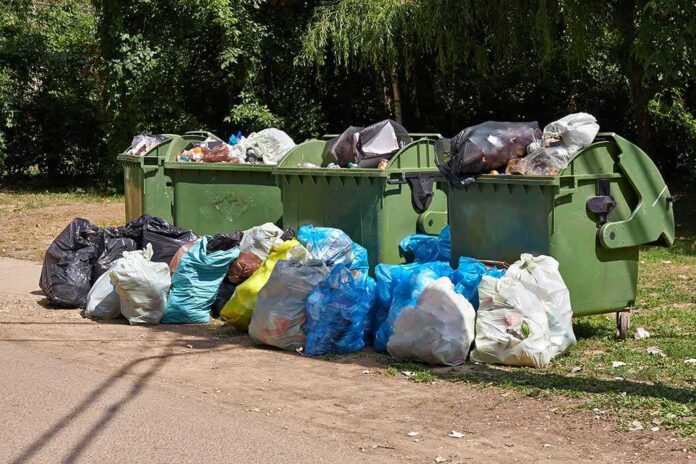
While Americans dutifully sort plastics and paper into recycling bins, only 8% of plastic waste actually gets recycled, revealing a shocking gap in the waste management system that political leaders have failed to address.
Key Takeaways
- Despite widespread recycling programs, only 53% of U.S. households have universal curbside recycling access, with plastic waste recycling at a dismal 8%.
- The often-cited statistic that 9% of global plastics are recycled is outdated and based on uncertain estimates, suggesting actual numbers may be even worse.
- China’s “National Sword” policy has disrupted global recycling markets, exposing America’s dependence on foreign nations to handle our waste.
- Digital solutions including blockchain and AI could dramatically improve waste tracking transparency and create accountability in recycling systems.
- The lack of standardized global waste tracking contributes to climate change, plastic pollution, and wasted economic opportunities worth trillions.
The Great Recycling Deception
For decades, American families have been taught that recycling is our civic duty and personal contribution to saving the environment. We’ve spent countless hours washing containers, removing labels, and sorting materials based on often confusing local guidelines. Yet behind this feel-good environmental activity lies a troubling reality: the recycling system in America is fundamentally broken. Under the Biden administration, wasteful spending on environmental programs has continued while actual problems like recycling infrastructure have been ignored in favor of global climate initiatives that benefit foreign nations.
“There is a glaring lack of tracking for global recycling,” stated Faisal Shennib, Environmental Specialist and PhD Candidate at Concordia University.
The hard truth is that the materials we carefully separate often don’t end up where we think they do. The statistic that only 8% of plastic waste actually gets recycled should be shocking to every American taxpayer who funds these municipal programs. Meanwhile, environmental activists continue pushing costly recycling initiatives without addressing the fundamental flaws in the system. The lack of transparency about what happens after materials leave our curbs has created an illusion of environmental progress while the actual benefit remains minimal.
China’s “National Sword” Policy Exposed America’s Vulnerability
In 2018, the recycling world was upended when China implemented its “National Sword” policy, effectively banning the import of most plastic waste and other materials that had previously been shipped there for processing. This decision exposed America’s dangerous dependence on foreign nations to handle our waste. For years, our recycling system wasn’t actually processing materials domestically but rather shipping our problems overseas where they were often mishandled or dumped. The Biden administration has failed to prioritize building domestic recycling infrastructure that would create American jobs and ensure proper processing.
“In some settings, ‘recycling’ may mean that the material was collected for recycling, but not necessarily recycled,” said Faisal Shennib, Environmental Specialist and PhD Candidate at Concordia University.
This distinction between collection and actual recycling reveals the deceptive nature of recycling statistics that environmental groups often cite. What happens after materials are collected remains largely unknown to the public. Without transparency and proper tracking systems, Americans have no way to verify if their recycling efforts are making any difference or simply providing a false sense of environmental accomplishment. This lack of accountability benefits those pushing expensive climate policies while actual environmental progress stagnates.
Digital Solutions and Accountability
Real solutions exist to fix America’s recycling system, but they require accountability that many politicians seem unwilling to embrace. Emerging technologies like blockchain and artificial intelligence could revolutionize waste tracking by creating immutable records of material flows from collection to processing. Such systems would expose which programs are actually working and which are merely performative environmental theater. President Trump’s emphasis on accountability in government spending could be applied to ensure recycling programs deliver the environmental benefits they promise.
“National Sword,” said Faisal Shennib, the Chinese government policy that restricted waste imports, revealed just how fragile America’s recycling infrastructure truly is.
The economic impact of poor waste management extends beyond environmental concerns. By failing to properly recycle materials, America is literally throwing away trillions of dollars in resources that could be reused in manufacturing. A true America First approach would prioritize developing domestic recycling capabilities that create jobs while reducing dependence on foreign resources. Conservative leadership recognizes that environmental stewardship and economic prosperity can work together when policies are based on transparency and results rather than virtue signaling.
Moving Forward with Real Solutions
Fixing America’s recycling system requires moving beyond performative environmentalism to results-based solutions. Local governments need standardized reporting requirements that accurately track where materials end up after collection. Federal agencies should establish clear definitions of recycling that measure actual reprocessing rather than mere collection. And most importantly, Americans deserve transparency about whether their recycling efforts are making a meaningful difference or simply providing political cover for ineffective environmental policies.
The next phase of environmental stewardship in America must be built on accountability, transparency, and results. When citizens sort their recyclables, they deserve to know those materials will actually be recycled and not shipped overseas or sent to landfills. True conservation is about effectively managing resources, not creating feel-good programs that waste taxpayer money while accomplishing little. By bringing transparency to recycling systems, we can ensure that environmental programs deliver actual benefits rather than just environmental theater.