Justice, closure, and outrage collided behind closed doors as the man at the center of one of America’s most notorious attacks on reproductive rights died in federal custody before ever standing trial—a resolution as unsatisfying as it is unsettling.
Story Snapshot
- The accused gunman in the 2015 Colorado Springs Planned Parenthood shooting, Robert Lewis Dear Jr., died in federal custody in 2025 without facing trial.
- The case spotlighted deep-seated issues: anti-abortion violence, mental health in the justice system, and the limits of legal closure for victims’ families.
- Dear’s mental incompetence stalled proceedings, leaving both federal and state charges unresolved at his death.
- The aftermath reignites debates over security for reproductive health providers and the prosecution of mentally ill defendants in high-profile crimes.
When Justice Meets a Wall: The Unfinished Story of Robert Lewis Dear Jr.
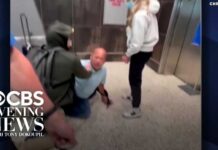
Colorado Springs, November 27, 2015—three killed, nine wounded, and a nation transfixed. Robert Lewis Dear Jr. barricaded himself in a Planned Parenthood clinic, exchanging gunfire with police for hours. When the standoff finally ended, the world expected the legal process to bring answers and accountability. Instead, a decade of legal inertia followed, defined by a single word: incompetence.
State prosecutors moved swiftly, charging Dear with 179 felonies—murder, attempted murder, and more. Yet the process ground to a halt in May 2016. Court-appointed psychiatrists declared Dear mentally unfit to stand trial, citing delusional thinking and an inability to participate in his own defense. The criminal justice system shifted him from jail to psychiatric care, where he would remain for years, his fate no longer in the hands of judges or juries, but doctors and wardens.
The Legal Labyrinth: Incompetence, Indictments, and Inaction
When the state case stalled, federal prosecutors stepped in. By December 2019, a grand jury indicted Dear on 68 counts, including violations of the Freedom of Access to Clinic Entrances (FACE) Act and firearm-related murders. Optimists believed the federal system might succeed where the state had failed. Yet any hope for swift justice evaporated as Dear’s mental status again became the central obstacle. For half a decade, he remained in federal custody at the Colorado State Mental Health Institute in Pueblo, unfit for trial, his case a symbol of the legal system’s limitations in the face of severe mental illness.
Victims’ families watched the years tick by, each delay compounding grief with frustration. Those hoping for a public reckoning or answers about Dear’s motives and methods received only silence. Closure, so often promised by legal proceedings, proved elusive. The process exposed a fundamental tension in American criminal justice: What happens when the accused cannot be tried, yet the trauma and questions left in their wake refuse to fade?
Impact Reverberates: Security, Policy, and Political Fault Lines
The Colorado Springs attack was not an isolated act of violence, but part of a grim pattern. The murders of Dr. John Britton, Dr. Barnett Slepian, and Dr. George Tiller had already placed abortion providers on high alert. Dear’s attack was the deadliest against a Planned Parenthood clinic, reinforcing fears among reproductive health staff and patients. Providers increased security, while lawmakers and advocates reignited debates on gun control, the definition of domestic terrorism, and the persistent vulnerability of clinics across the country.
Dear’s death in 2025 closed his case, but not the wounds left behind. For some, relief; for others, outrage that he never faced a jury. The Department of Justice offered little comment, and families split between resignation and anger. The episode underscored how mental health remains a weak link in the justice system—neither courts nor clinics are equipped to resolve the fallout when accused mass killers are too ill to stand trial. Meanwhile, the political divide over abortion, gun rights, and mental health care only deepened as the case faded from headlines but not from memory.
Expert Perspectives: A Case Study in Systemic Challenges
Criminal justice experts point to the Dear case as evidence that the system struggles to reconcile public demand for accountability with the realities of mental illness. Legal scholars see it as a test case for the limits of both state and federal prosecutions in the absence of a competent defendant. Reproductive rights advocates cite the attack as proof that anti-abortion violence is not only persistent but uniquely challenging to prevent and prosecute.
The story’s ending—a defendant’s death in custody, no trial, no verdict—offers little comfort. Instead, it serves as a stark reminder: in some of America’s most divisive and violent episodes, neither justice nor closure comes easily. The questions left behind—about security, accountability, and the intersection of ideology and illness—linger, unresolved, reminding us that the hardest cases may never truly close.
Sources:
Colorado Springs Planned Parenthood shooting (Wikipedia)
Search Warrant Redacted PDF (Colorado Judicial Branch)
Robert Dear Indicted by Federal Grand Jury (U.S. Department of Justice)