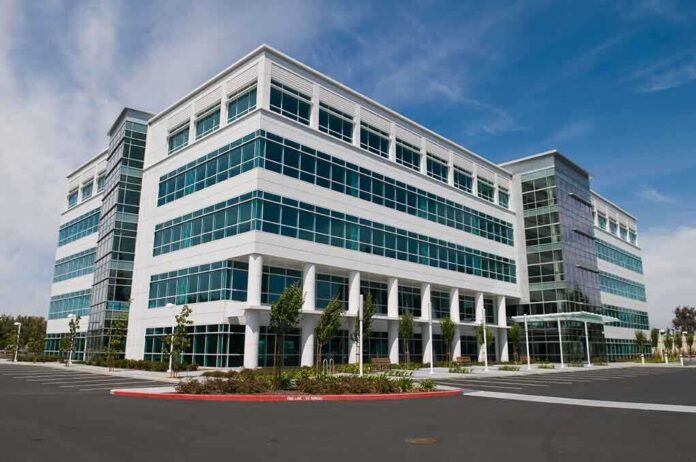
After one of New York’s deadliest mass shootings in decades, Manhattan office towers are racing to harden defenses with armed guards and K‑9 units—raising urgent questions about safety, access, and civil liberties in America’s business capital.
Story Snapshot
- Four people were killed at 345 Park Avenue; the suspect died by apparent self-inflicted gunshot.
- NYC officials call it one of the city’s deadliest mass shootings in a quarter century.
- Midtown office buildings are adding armed guards, canine patrols, and tighter access controls.
- Investigators traced the suspect’s multistate route; motive remains under investigation.
What Happened at 345 Park Avenue and Why It Matters
On July 28, 2025, a gunman entered 345 Park Avenue—home to blue‑chip tenants like the NFL and Blackstone—opened fire at the entrance, then moved inside before being found dead on the 33rd floor from an apparent self‑inflicted wound. Four victims were killed and one person was critically injured. City and national coverage identified the deceased as NYPD Officer Didarul Islam, Wesley LePatner, Julia Hyman, and security guard Aland Etienne, underscoring the attack’s reach across public safety and private‑sector leadership.
Law enforcement identified the suspect as Shane Devon Tamura and traced his vehicle traveling through multiple states into New Jersey hours before the attack. Reports described the suspect “spraying” the lobby with a long gun before taking an elevator to the 33rd floor, where he died soon after. Police have not publicly confirmed a motive or any connection to Rudin Management, whose offices are on that floor, leaving open questions about target selection and security vulnerabilities in public‑facing lobbies and elevator banks.
How Midtown Towers Are Responding on Security
Property managers across Midtown are tightening security in visible ways—posting armed guards at entrances, expanding K‑9 patrols, refining visitor screening, and auditing elevator access. Landlords aim to deter would‑be attackers and reassure tenants as workers return. Corporate security directors are pushing layered defenses: trained armed posts at front‑of‑house, stricter badge checks, and coordinated drills with building staff. These measures raise costs but are increasingly viewed as baseline requirements for Class A buildings hosting C‑suites and high‑profile tenants.
Executives and workers are demanding faster incident response and clearer protocols after the shooting’s rapid escalation from the street to upper floors. Security teams are reevaluating choke points—lobbies, elevator banks, and open reception areas—where attackers can gain momentum before interdiction. While comprehensive, building‑by‑building tallies are not public, post‑incident reporting indicates a citywide drift toward visible deterrence. Insurance and lease requirements may soon formalize these upgrades, from armed posts to canine units, codifying a higher security baseline across premium towers.
Public Safety, Civil Liberties, and the Conservative Lens
City leadership framed the attack as among the deadliest mass shootings in decades and urged use of mental‑health supports, reflecting a public‑health overlay to public safety. For many conservatives, the private‑sector response—armed guards, K‑9s, tighter access—aligns with common‑sense deterrence without new gun restrictions that burden law‑abiding citizens. The key constitutional balance runs through private property rights and public access: secure buildings can protect life and commerce while respecting lawful carry regimes and avoiding mission creep into broad surveillance or bureaucratic overreach.
NYC Offices Bulk Up Security With Armed Guards, Dogs https://t.co/cZAYnsTq4A
— James Stephens (@Jamesw74) August 11, 2025
Investigators continue to probe motive and path to the target, a priority for preventing copycats and refining risk assessments. Separate incidents—such as an August 10 Times Square shooting injuring bystanders—keep pressure on visible deterrence in central Manhattan, even when not directly linked. The near‑term trajectory points to institutionalized guard staffing, canine deployments, and stricter access control, with coordination between NYPD, City Hall, and corporate security to standardize response playbooks without eroding civil liberties or normalizing permanent emergency powers.
Sources:
2025 Midtown Manhattan shooting
Shane Devon Tamura identified as suspect in Midtown Manhattan shooting; motive under investigation