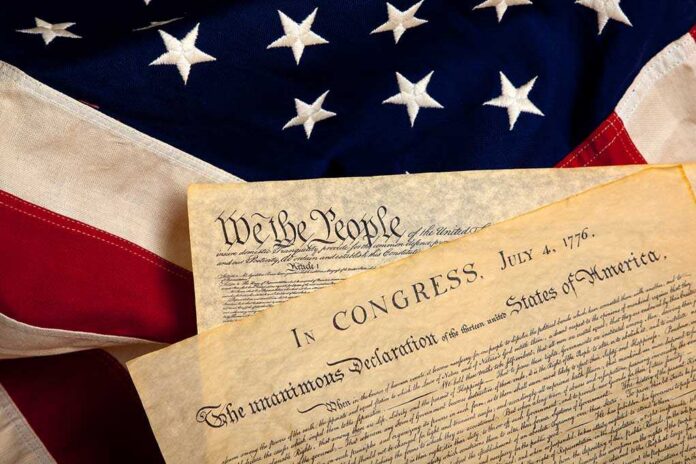
Joy Reid’s July Fourth comments landed because they turned a holiday argument into a deeper fight over history, memory, and who America was really built for.
Story Snapshot
- Reid said she does not know many Black people who feel excited about the Fourth of July.
- She called it a celebration of slaveholders and contrasted it with Juneteenth.
- Her point fits a long Black tradition of criticizing July Fourth as incomplete freedom.
- Her critics say the holiday still matters as a national symbol for all Americans.
Why Reid’s Remark Hit a Nerve
Reid’s comment was not random chatter. It tied a familiar holiday to a hard historical claim: that the nation celebrated liberty while slavery still shaped daily life. In her telling, the Fourth of July marks political freedom for the founders, not freedom for Black Americans. She then framed Juneteenth as the truer marker of Black liberation because it marks the end of slavery in the United States.[1][11]
That is why the reaction moved so fast. Reid did not just question one holiday’s mood. She questioned the moral meaning behind it. On her show, she said the Fourth was “the celebration of slave holders” and argued that America was not really a democracy until slavery ended.[1] Supporters hear a blunt truth. Critics hear a needlessly divisive insult. Both sides understood the target.
Joy Reid says Black people won't celebrate July Fourth; they hate it like they do Thanksgiving https://t.co/YJzpxlCang
Why doesn't she just leave our country, we'd be so much better off without her!!!— Peggy Teslow (@JaneKanouse) June 22, 2026
What She Said, and Why She Said It
Reid’s strongest line was simple: “nobody Black I know is really excited about the 4th of July.”[1] She paired that with Frederick Douglass’s famous argument that the holiday exposed the cruelty of slavery, not the glory of freedom.[13] That connection matters. Reid was not inventing a new critique. She was borrowing a very old one and updating it for a modern television audience.
Her broader point also rested on Juneteenth. The National Museum of African American History and Culture says Juneteenth marks the end of slavery in the United States and now stands as a federal holiday.[21] Reid’s framing lines up with that history. In her view, Juneteenth better captures what freedom actually meant for Black Americans because it centers emancipation, not just colonial independence.[1][2][21]
The Conservative Counterargument
The conservative case is straightforward. The Fourth of July is the nation’s founding holiday, not a celebration of slavery. It marks the Declaration of Independence, which announced that the colonies were breaking from Britain.[14] Critics of Reid argue that calling it a slaveholder holiday flattens history and turns every patriotic gesture into a racial test. That view sees the holiday as shared ground, even when the nation’s past was ugly.
INEPT, RACIST, MORON Joy Reid trashes Fourth of July, says her Black friends aren’t celebrating https://t.co/G9XeOn5D2n
— coastalparty2 (@anydazeaol59897) June 22, 2026
There is also a stronger historical counterpoint than people often admit. Black Americans have not always rejected July Fourth. Cornell University notes that early Black Americans used the holiday to press for emancipation and full citizenship, treating it as a protest stage as much as a party.[10] The Smithsonian also says it personally recognizes both Juneteenth and July Fourth as important moments in a shared history.[11] That is a more careful answer than simple applause or rejection.
Why Juneteenth Changed the Debate
Juneteenth changed the tone because it gave Black Americans a national holiday built around emancipation itself. The Smithsonian says the day remembers June 19, 1865, when Union troops brought news of freedom to Texas, and that celebrations today often include family cookouts, music, and storytelling.[21] That makes the holiday feel alive, not academic. It also explains why some people now see it as the day that tells the fuller American story.
Still, Reid’s comment shows how raw the issue remains. For many Americans, July Fourth still means flags, cookouts, and a shared civic ritual. For others, especially those who take slavery’s legacy seriously, the holiday cannot be separated from what the founders did not fix. That tension is why the argument never goes away. It sits under the fireworks, waiting for someone to say the quiet part out loud.
Sources:
[1] Web – Joy Reid Claims “Nobody Black I Know Is Really Excited About the 4th …
[2] YouTube – Why Juneteenth Is the REAL Independence Day
[10] Web – Joy Reid eviscerated for ‘failing US history’ after take on a …
[11] Web – July Fourth and early Black Americans: It’s complicated
[13] Web – Let’s not erase our Black history as we celebrate July 4th
[14] Web – [PDF] The Meaning of July Fourth for the Negro by Frederick Douglass
[21] Web – Juneteenth vs July 4th – SawariMedia
© targetdailynews.com 2026. All rights reserved.