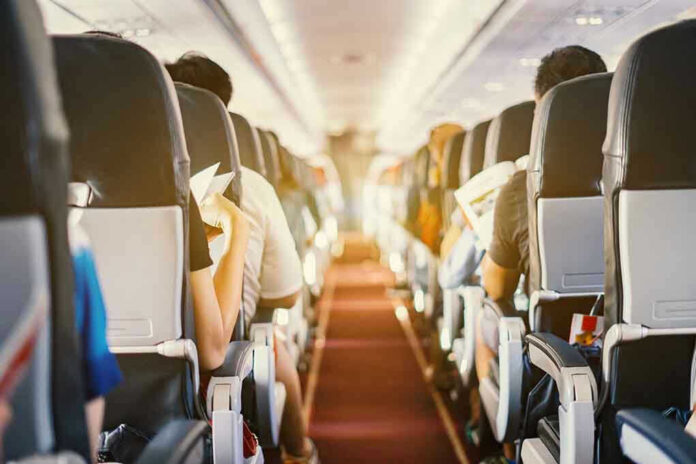
If you ever thought air travel was just about cramped seats and bland pretzels, imagine being trapped on a motionless plane for seven hours with a front-row view of a thunderstorm and a backstage pass to passenger patience—or lack thereof.
At a Glance
- Hundreds of United Airlines passengers spent up to seven hours stuck on the tarmac at Newark Airport during a severe July 2025 storm.
- Federal regulations cap tarmac delays at three hours, but safety exceptions for weather can override this limit.
- Newark Liberty—already infamous for delays—saw nearly 30% of flights canceled and another 28% delayed during the meltdown.
- Passengers faced limited access to food, water, and restrooms, sparking renewed calls for accountability and regulatory reform.
The Anatomy of an Airport Meltdown: When Weather Wins
On July 14, 2025, Newark Liberty International Airport, never known for its hospitality, found itself in the eye of a logistical hurricane. Thunderstorms didn’t just ground planes—they grounded patience. United Airlines, which dominates Newark’s runways like a kid with all the best marbles, watched 183 flights vanish from the schedule and nearly as many limp in hours behind. Passengers boarding Detroit-bound flights expecting a quick hop instead got a crash course in survival, stranded in airplane seats so long they could recite the safety instructions from memory.
United’s official explanation? A “ground stop” was issued to “manage volume and limit congestion” as the sky lit up with lightning and hope for an on-time departure faded like a Wi-Fi signal on the runway. In reality, it was a perfect storm of severe weather, air traffic control gridlock, and a regulatory loophole big enough to fly a Dreamliner through. Federal rules say you can’t keep folks on a plane over three hours—unless, of course, it’s unsafe to move. And when the weather’s bad, everything is unsafe. That’s how a tarmac delay turns into a seven-hour odyssey with only the in-flight magazine for company and the beverage cart as your only friend.
Who Holds the Power? The Players Behind the Delay Drama
In this high-stakes waiting game, the cast is bigger than just pilots and peeved passengers. United Airlines, staring down a PR storm as fierce as the thunder outside, made the call to move planes away from the gate—possibly to clear space, possibly to maintain the illusion of progress. The Port Authority, FAA, and the U.S. Department of Transportation all hovered overhead, each with their own rules, responsibilities, and pain thresholds for angry tweets. The weather service, meanwhile, just kept forecasting more rain.
Passengers, meanwhile, were left in the dark—sometimes literally, if you count the cabin lights flickering as the air conditioning surrendered. Reports rolled in of folks rationing snack bags, eyeing empty water cups, and wondering if the next announcement would promise movement or just another apology. United tossed out a weather waiver and platitudes, but for many, that was as comforting as a damp napkin.
The Fallout: Why This Tarmac Nightmare Matters
By July 15, the storm had moved on, but the chaos was just getting started. Newark’s runways were still jammed, United’s customer service lines buzzed like a beehive, and the media pounced on the story with relish. Delays and cancellations rippled outward, stranding even more travelers and giving travel agents spontaneous migraines. The incident didn’t just spoil summer vacations—it reignited a debate about airport infrastructure, airline accountability, and why, in the year 2025, we can stream movies in midair but still can’t reliably get from gate to gate in a thunderstorm.
Experts and industry insiders pointed out that while safety always comes first, Newark’s chronic congestion and United’s gate-hogging ways turn bad weather into a full-blown crisis. Regulations meant to protect passengers morph into convenient shields for airlines during “extraordinary circumstances.” Calls for reform grew louder, fueled by stories of stranded families and empty snack carts. The only thing more persistent than the rain was the question: how does this keep happening at America’s busiest airports?
Can Airports Weather Future Storms?
This tarmac debacle shines a spotlight on a system badly in need of an upgrade. Aging infrastructure, crowded skies, and a regulatory environment with more gray areas than a Jersey fog bank mean that these delays aren’t going away anytime soon. Airlines and airports will continue to juggle safety, logistics, and public relations, while passengers—especially those with connections or medical needs—pay the price. As weather grows more unpredictable and travel rebounds, expect more headlines, more apologies, and maybe, just maybe, a seat at the gate next time the clouds roll in.
Until then, pack snacks, download a movie, and maybe bring a fan. Because at Newark, the only thing less predictable than the weather is whether your plane will ever leave the tarmac.