Washington is now fighting over whether Donald Trump’s face should be struck in pure gold by the very government he runs—and that quiet little battle tells you almost everything about power, precedent, and who owns America’s symbols.
Story Snapshot
- Senate Democrats are trying to stop both a $1 coin and a 24-karat gold coin bearing Trump’s image.
- Existing law already says only dead people belong on United States currency, but the Trump team found a workaround.[1][2]
- The fight is really about who controls the government’s symbols—and what happens when one man becomes the brand.[1][2][3]
- For conservatives, the core questions are simple: the rule of law, limited government, and basic common sense.
How A Quiet Mint Decision Became A Constitutional-Scale Argument
The spark is not a campaign trinket sold on late-night television but a government-approved, 24-karat gold commemorative coin with Donald Trump’s likeness, greenlit by a federal panel whose members were all appointed by Trump himself.[2] At the same time, the United States Mint has announced plans for a new $1 coin with Trump’s image as part of America’s 250th anniversary program.[1] That moves the argument from souvenir stands into the center of federal power and public trust.
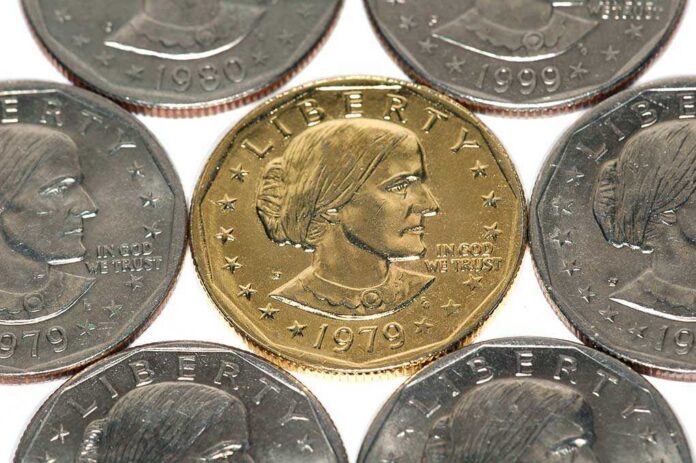
Federal law is not ambiguous on the basic principle: only deceased individuals may appear on United States currency and securities, a rule rooted in the Thayer Amendment of 1866 and codified in Title 31 of the U.S. Code.[1][2] That norm was strong enough that when Franklin D. Roosevelt appeared on a coin during his lifetime, the United States Mint itself later flagged it as an extraordinary departure.[1] Law and tradition both lean heavily against putting living politicians on money for obvious reasons.
What Senate Democrats Are Actually Doing And Why It Matters
Senators Jeff Merkley and Catherine Cortez Masto led a group of Democrats introducing the Change Corruption Act, a bill that would bar federal authorities from issuing any United States currency featuring “the likeness of a living or sitting President.”[1][3] Separate from that bill, Cortez Masto and colleagues urged the Senate Appropriations Subcommittee on Financial Services and General Government to add language to the 2027 funding bill that blocks such coins outright.[2] They are not just tweeting their outrage; they are trying to weld the norm into harder statutory steel.
The senators argue that allowing Trump’s face on either a circulating $1 coin or an official gold commemorative blurs the line between neutral state symbols and personal branding.[1][2] They point to existing law and warn that bending it for one man weakens public confidence in United States money as an institution that is supposed to outlast any administration.[2] From a conservative perspective that values stable rules and distrusts personality cults, that argument is not left-wing; it is basic guardrails thinking.
The Trump Side’s Legal Workaround And Its Risks
Treasury Secretary Scott Bessent did not pretend the prohibition on living presidents in currency does not exist; he effectively sidestepped it.[2] According to reporting, he invoked a separate statutory authority that allows the Treasury to approve special 24-karat gold commemorative coins, using that narrow provision to authorize the Trump coin despite the general ban.[2] The supporting panel, composed entirely of Trump appointees, voted unanimously for the design after the usual independent advisory body reportedly refused to participate.[2]
Dems Want to Halt Production of Trump Coin
Senate Democrats are calling on the Trump administration to stop production of a commemorative 250th anniversary solid gold coin that would feature President Donald Trump.
Sens. Elizabeth Warren of Massachusetts and Ron Wyden of Oregon…
— Elena (@helen44767171) June 6, 2026
Supporters will say this is clever lawyering, not lawbreaking: the gold coin is a commemorative financial instrument rather than “currency” in the strict sense, and therefore it sits outside the standard prohibition.[2] But that defense asks Americans to accept a technical carve-out that happens to benefit the one person who controls both the executive branch and the appointments to the approving body. Conservatives who complain when agencies twist statutes for regulation should be at least as skeptical when a Treasury Secretary twists them for flattery.
Living Leaders On Money: Symbol, Precedent, And Common Sense
Democrats link this fight to a broader pattern: a president using state tools to burnish his personal image.[2][3] They note that Trump himself signed the Circulating Collectible Coin Redesign Act of 2020, which barred living people from appearing on certain commemorative reverse designs, yet his administration later pushed a program that places his own face on a 250th-anniversary $1 coin.[1] That shift feeds the perception that rules are flexible when they stand between Trump and self-promotion.[1][2]
From a conservative vantage point, the question is not whether Trump “deserves” a coin. Many voters think he transformed American politics and would happily buy private medals by the truckload. The question is who should mint those honors. A limited government that respects the rule of law does not put living leaders on the nation’s money, regardless of party, because money is supposed to belong to the country, not the man who signs the appointments.[1][2] When that line blurs, the problem is bigger than any single coin.
Sources:
[1] Web – Senate Democrats Demand Government Stop Minting Gold Coin With Trump …
[2] Web – Democratic senators move to block Trump $1 coins from Treasury …
[3] Web – Cortez Masto, Democratic Colleagues Urge Senate Committee to …
© targetdailynews.com 2026. All rights reserved.