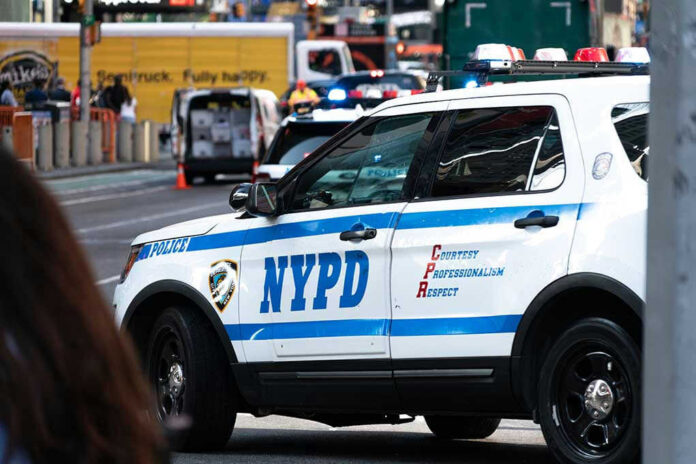
New York City gangs are turning America’s most iconic streets into war zones where innocent families become collateral damage in brazen daylight shootings that expose the complete breakdown of law and order under failed progressive policies.
Story Overview
- NYC gang violence has exploded with 19 gang members indicted for 12 separate shootings targeting rivals but wounding innocent bystanders
- Children and families are caught in crossfire as gangs like 8-Trey Crips, 9Raq, and Thirdside wage territorial wars in Brooklyn and Bronx neighborhoods
- Mayor Adams deployed 1,000 additional cops to the Bronx and is considering inviting gang leaders to Gracie Mansion for “peace talks”
- The crisis mirrors catastrophic gang control in Haiti where over 1,500 civilians died in three months as gangs seize 85% of Port-au-Prince
Gang Wars Terrorize NYC Neighborhoods
The Bronx District Attorney’s office recently announced the indictment of 19 alleged gang members connected to a series of shootings that repeatedly endangered innocent lives. These cases reveal the reckless disregard gangs have for civilian safety, with bullets flying through beauty salons, striking women’s hands during disputes, and narrowly missing children playing nearby. The indictments detail how rival gangs like Thirdside and 9Raq have turned neighborhood streets into battlegrounds where families fear leaving their homes.
Brooklyn prosecutors have similarly charged seven gang members with attempted murder and gun possession after a February shooting at a beauty salon nearly struck three innocent people. In another incident, an innocent woman was shot in the hand during a gang dispute on April 25th, demonstrating how quickly civilian lives become expendable in these criminal conflicts. The pattern is clear: when gangs settle scores, they show zero concern for mothers, children, or working families caught in their line of fire.
Adams Administration Scrambles for Solutions
Mayor Eric Adams has deployed 1,000 additional police officers to the Bronx following a surge in shootings, acknowledging that his administration faces a crisis that demands immediate action. However, his proposed solution of inviting gang leaders to Gracie Mansion for peace talks raises serious questions about whether city leadership understands the nature of the threat they’re facing. This approach suggests a concerning willingness to legitimize criminal organizations rather than eliminate them through aggressive law enforcement.
The mayor’s “full mobilization plan” comes after years of progressive policies that prioritized criminal justice reform over public safety, creating an environment where gang members operate with increasing boldness. While deploying more officers is a step in the right direction, the underlying policies that enabled this crisis – from bail reform to reduced prosecutions – remain largely unchanged. Conservative observers note this represents exactly the kind of soft-on-crime governance that Trump supporters voted to reject.
International Crisis Mirrors Local Breakdown
The situation in New York City mirrors the catastrophic gang takeover occurring in Haiti, where armed criminal groups now control 85% of Port-au-Prince and act as de facto authorities. UN reports document over 1,500 deaths and 609 injuries from gang violence between April and June 2025 alone, with gangs expanding their territory and destroying civilian livelihoods. The parallel is striking: when government authority weakens, criminal organizations fill the vacuum with devastating consequences for innocent people.
Haiti’s gang crisis began accelerating after the 2021 assassination of President Jovenel Moïse, demonstrating how quickly lawlessness can spiral out of control when institutions fail. UN officials describe the situation as an “unending horror story” where gangs commit severe human rights abuses while civilians form desperate self-defense groups. This international example should serve as a warning about where American cities could head if gang violence continues unchecked through inadequate policies and weak enforcement.
The Cost of Progressive Failure
These developments represent the predictable outcome of years of progressive governance that prioritized criminals’ rights over victims’ safety and community security. The previous administration’s approach to criminal justice reform, combined with local policies that reduced consequences for violent offenders, created conditions where gangs could operate with unprecedented boldness. When prosecutors refuse to aggressively pursue gang cases and judges release dangerous criminals on minimal bail, innocent families pay the price with their blood.
The Trump administration’s return offers hope for federal support in combating gang violence through enhanced coordination between local and federal law enforcement agencies. Immigration and Customs Enforcement can again target gang members who are in the country illegally, while federal prosecutors can pursue racketeering cases that state-level officials have been reluctant to bring. However, meaningful change requires local leadership willing to abandon failed progressive experiments and embrace policies that actually protect law-abiding citizens rather than coddling criminals.
Sources:
UN Human Rights Office – Spreading gang violence poses major risk to Haiti and Caribbean sub-region
Bronx District Attorney – Thirdside 9raq Takedown
UN News – Gang violence in Haiti claims over 1,500 lives in three months
UN News – Haiti gang violence spreads beyond capital as humanitarian crisis deepens