President Trump has issued an unprecedented ultimatum to Congress, declaring he will refuse to sign any new legislation until the SAVE America Act—requiring proof of citizenship and voter ID for all federal elections—reaches his desk, effectively halting the entire legislative process to force action on election integrity.
Story Snapshot
- Trump demands SAVE Act passage before signing any other legislation, including critical government funding bills
- The Act requires documentary proof of U.S. citizenship and voter ID for federal elections, with Trump adding provisions banning gender transition surgeries for minors and men in women’s sports
- President claims 89% public support while linking the measure to stopping “rampant” noncitizen voting ahead of 2026 midterms
- House passed the bill narrowly last month, but Senate path remains uncertain amid Democratic opposition and funding debates
Trump’s Legislative Blockade Strategy
President Trump announced during his February 25, 2026, State of the Union address that Congress must pass the SAVE America Act before he signs any other legislation into law. This unprecedented move ties critical government functions, including Homeland Security funding already facing shutdown threats, to election reform demands. Trump framed the legislation as essential to combat what he characterized as “rampant” election cheating, asserting that noncitizens voting undermines American democracy. The White House spokesperson Karoline Leavitt confirmed this hard-line stance, calling the citizenship verification requirements “common sense” measures that enjoy overwhelming bipartisan public support according to the administration’s polling data.
Expanded Provisions Beyond Original Bill
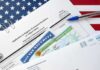
The SAVE America Act initially focused solely on requiring documentary proof of citizenship—such as birth certificates or passports—for voter registration in federal elections. However, following the House passage last month, the White House added controversial provisions unrelated to election administration. These additions include banning gender transition surgeries for minors and prohibiting biological men from participating in women’s sports. The expanded legislation also seeks to eliminate no-excuse mail-in voting, restricting absentee ballots only to military members, those with illness or disability, and voters traveling. These bundled priorities transform what began as an election integrity measure into a broader conservative policy package, raising the stakes for passage ahead of the 2026 midterms.
Election Integrity Claims Versus Reality
Trump repeatedly claims that noncitizen voting represents a systemic threat requiring immediate federal intervention, citing alleged fraud that he argues justifies “nationalizing” elections in fifteen states where Republicans believe counting irregularities occur. Attorney General Pam Bondi has demanded state voter rolls while Director of National Intelligence Tulsi Gabbard investigates election procedures as part of this push. However, voting experts and nonpartisan analysts consistently note that noncitizen voting remains exceedingly rare, with existing federal law already making it illegal and punishable by fines, imprisonment, and deportation. The disconnect between Trump’s fraud allegations and documented evidence mirrors post-2020 election lawsuits that courts dismissed for lacking factual support, raising questions about whether the SAVE Act addresses a genuine problem or creates barriers that disproportionately affect eligible American voters.
Impact on Voters and Election Administration
If enacted, the SAVE America Act would fundamentally alter federal election access by mandating in-person presentation of citizenship documents for mail-in ballot applications. Advocacy groups including the Brennan Center for Justice warn this creates significant obstacles for millions of eligible voters who lack readily accessible birth certificates or passports, particularly low-income citizens, elderly Americans, and rural residents. State election administrators would face substantial new burdens verifying documents and processing challenges. The Brennan Center characterizes the legislation as “the most restrictive voting bill ever” and a “power grab in legislative garb,” arguing it solves a nonexistent problem while potentially disenfranchising Americans who have voted legally for decades. This positions the measure as a flashpoint for 2026 midterm mobilization, with Republicans framing it as election security and Democrats casting it as voter suppression targeting their coalition.
Trump Says He Won't Sign Any New Legislation Until the SAVE Act Is Passed https://t.co/v4NFUDcIJL
— Fearless45 (@Fearless45Trump) March 8, 2026
Congressional Battle and Uncertain Path Forward
The House narrowly passed the SAVE Act last month, but its Senate prospects remain murky as Majority Leader John Thune balances the legislation against urgent funding deadlines including the Homeland Security Department shutdown. Senate Minority Leader Chuck Schumer has declared the bill “dead on arrival,” signaling unified Democratic opposition that could require elimination of the filibuster or budget reconciliation maneuvers for passage. Trump’s refusal to sign other legislation escalates pressure on Republicans to prioritize the SAVE Act despite his historically low approval ratings—60% disapproval overall with only 26% support among independents according to recent polling. This confrontation tests whether Trump retains sufficient influence over Congressional Republicans to halt normal legislative operations for an election measure critics argue lacks factual justification, setting up a defining pre-midterm showdown over voting rights versus election integrity narratives.
Sources:
Axios – Trump demands SAVE America Act passage before any other legislation
Brennan Center for Justice – Trump’s Misleading Pitch for the SAVE Act
Democracy Docket – Trump Adding Anti-Trans Provisions to SAVE America Act
Brennan Center for Justice – The SAVE Act and the Election Power Grab